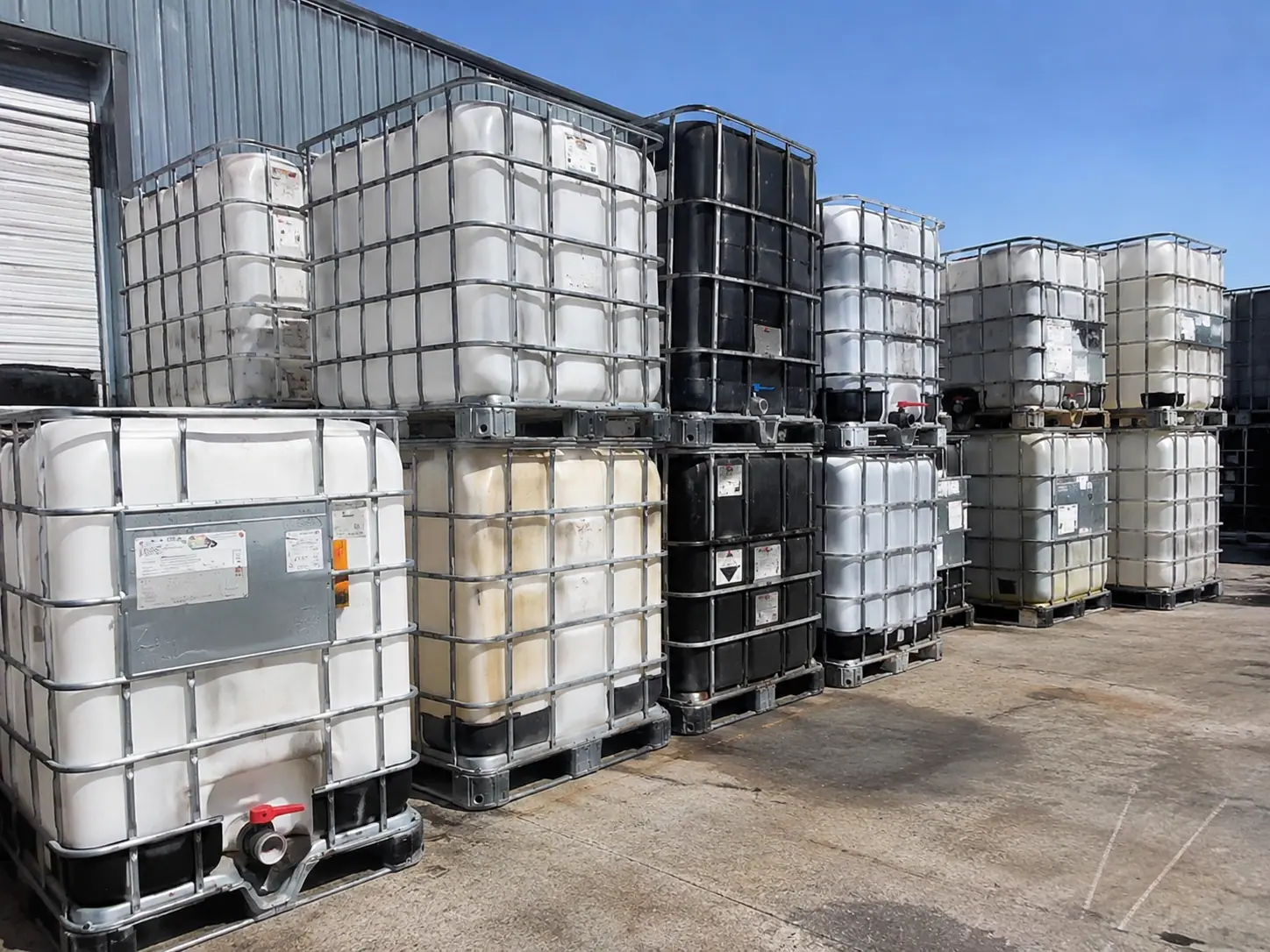
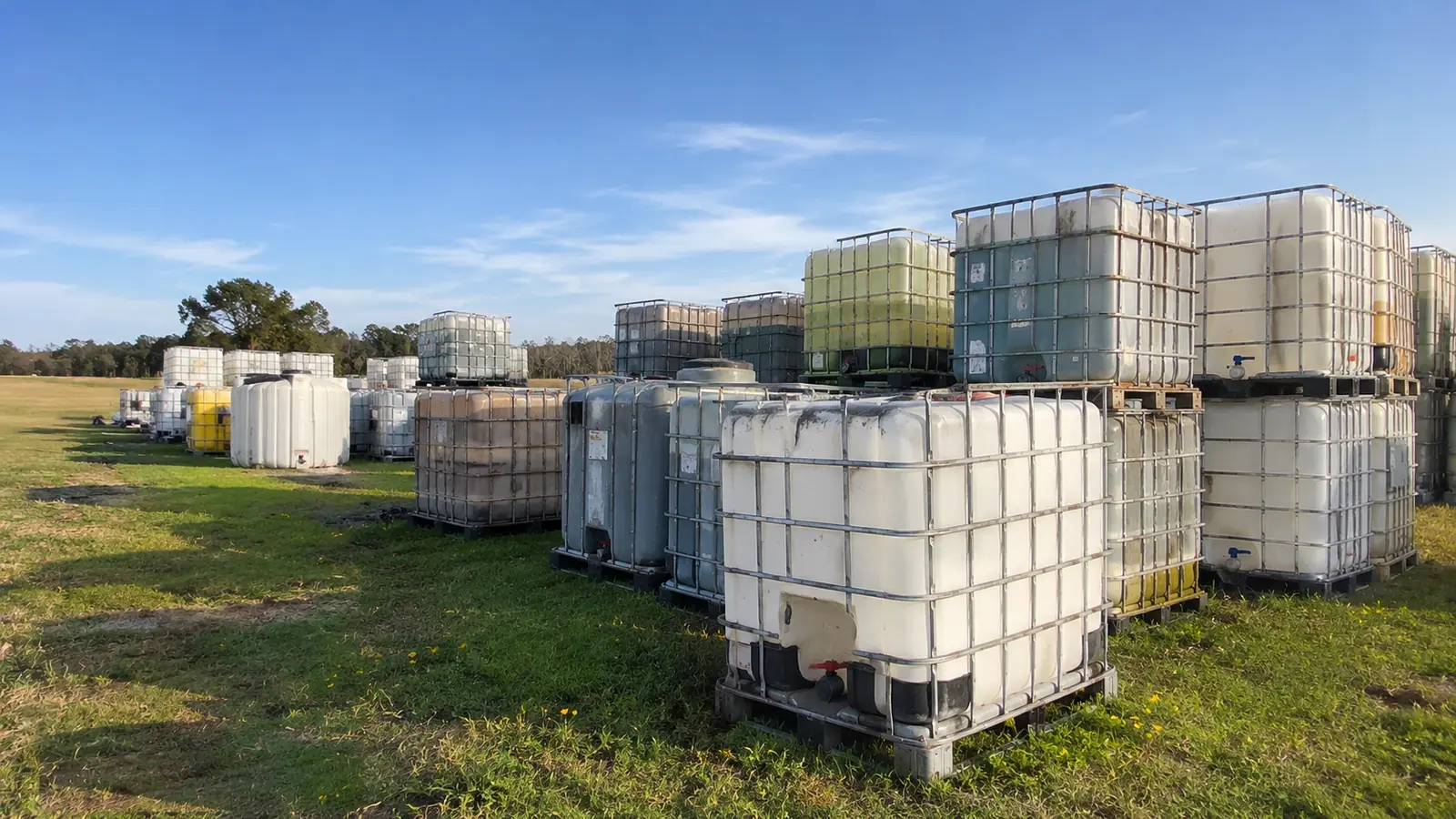
A customer sends in a tote for a cut-top conversion. It comes back with a bright ground patch where the UN marking used to be. Occasionally somebody is annoyed about that. This post exists so that nobody is surprised by it.
What a UN marking claims
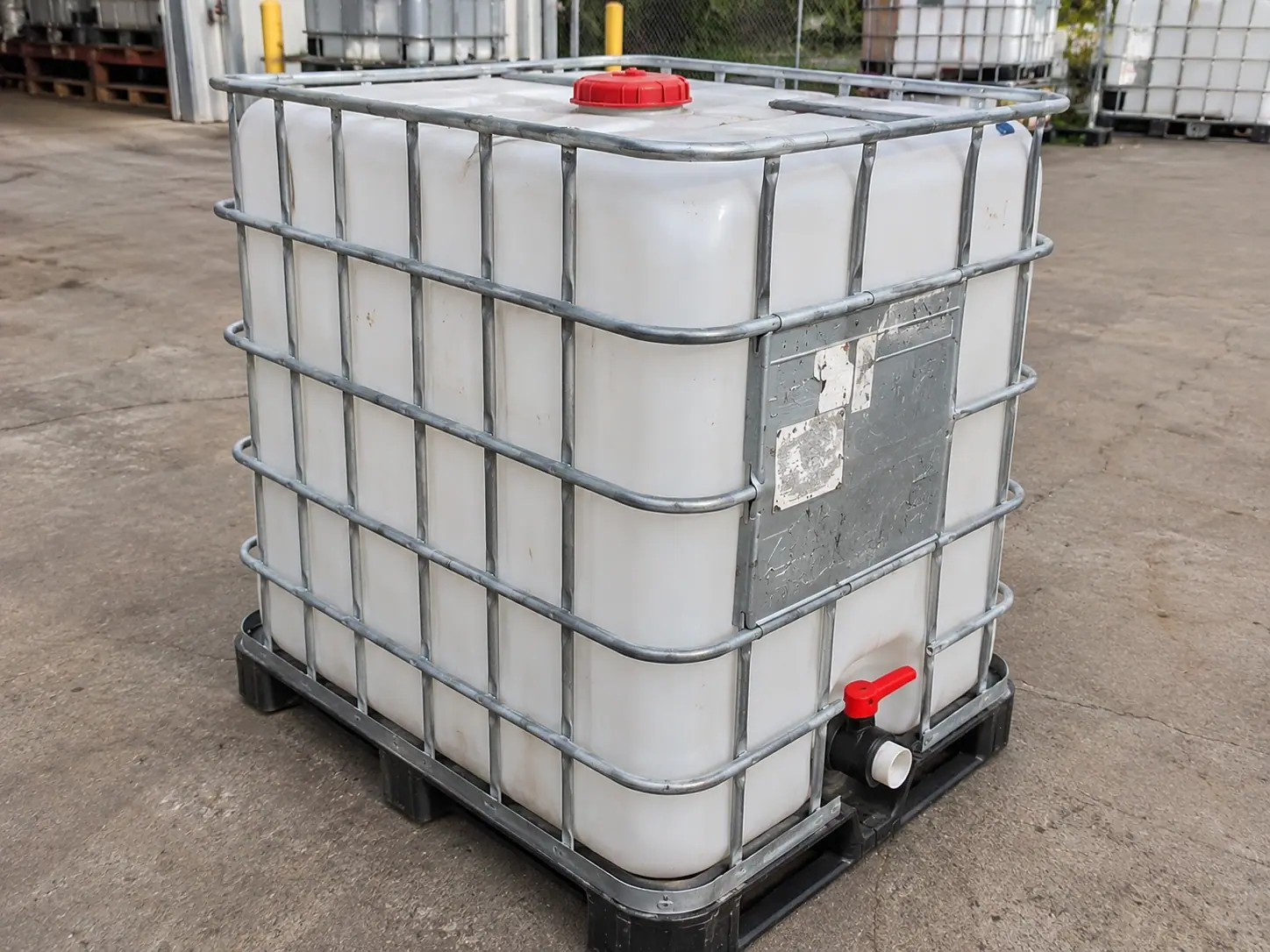
The marking pressed into a composite IBC's frame plate is a specific set of factual claims: this is a type 31 rigid IBC for liquids, with a plastic inner receptacle in a steel outer frame, approved for packing groups II and III, manufactured or reconditioned in this month and year, by this registered party, with this maximum stacking load and this maximum permitted gross mass.
Every one of those claims rests on the container matching the design type that was tested and qualified. That is the whole basis of the system: a specific design passed specific tests, and this unit is an example of that design.
What happens when you cut it
The moment a port is drilled, a dome is removed, a manway is fitted or a cage is modified, the container is no longer an example of the design type that was qualified. It is something new, and nothing about the original testing applies to it.
No subsequent test restores the marking either. Re-marking after test applies to reconditioning — returning a container to its original design type condition. It does not apply to modification, because there is no original design type to return to.
So a modified container carrying its old marking is making a claim that is no longer true. That is not a technicality; it is the kind of thing that turns an incident into a liability finding.
Why we grind rather than deface
A struck-through or painted-over marking is ambiguous. Is it void? Was it damaged? Did somebody decide unilaterally that it did not apply? Six months and two owners later, nobody knows.
A ground-off plate is unambiguous. There is no marking, so the unit is non-regulated service, and anybody looking at it reaches that conclusion in one second without reading any paperwork. Unambiguous beats tidy.
What this means for your order
Every unit that leaves our fabrication bay modified is supplied for non-regulated service only, carries no UN marking, and carries no leak warranty. We say so on the quote, not after.
If you need both — a modification and a regulated container — the honest answer is that you need a purpose-built vessel, not a modified IBC. We will tell you that rather than taking the job.
The related rule on the way in
We also will not re-mark a container whose prior cargo we cannot document, even when it passes every test. A marking states the container is fit for regulated service; without a cargo history we cannot honestly make that claim. That one is our policy rather than regulation, and we hold it for the same reason.
Three practical consequences
- Decide before you modify. If there is any chance a unit will go back into regulated service, do not cut it. Buy a separate unit for the conversion.
- Check markings on anything you buy used from elsewhere. A modified container with an intact marking is a red flag about the supplier, not a bonus.
- Keep the paperwork. Our fabrication jobs ship with a note recording that the marking was removed and why. File it; it is the answer to a question somebody will ask eventually.
The character-by-character guide to what a marking says is on the UN marking decoder, and the testing we do perform is on testing and certification.
The question we get asked instead
“Can you cut it and re-mark it afterwards?” No, and the reason is worth understanding because it clarifies what the whole marking system is for.
Re-marking after test applies to reconditioning — restoring a container to its original design type condition and verifying by test that it still conforms. There is an original design type to conform to, and the tests check conformity.
A modified container has no original design type. It is a new design that has never been qualified, and qualifying it would mean the full design qualification programme at an accredited test laboratory, for a one-off container, which costs vastly more than the container. That is why nobody does it and why the honest answer is to use a purpose-built vessel instead.
What counts as a modification
The line is clearer than people expect. These void the marking:
- Cutting the top off, or cutting an access hatch.
- Drilling or fitting any port in the bottle.
- Fitting a manway.
- Removing or cutting cage members.
- Anything that changes the bottle's geometry or the frame's structure.
These do not:
- Replacing the valve, gaskets or lid with equivalent components.
- Replacing the pallet with an equivalent type.
- Clamping a bridge or bracket to the cage without cutting it.
- Straightening a bent cage in a press.
- Fitting a band heater, jacket or external level gauge.
The practical implication: if you need agitation and a valid marking, specify a clamp-on bridge rather than a fitted manway. Same function, no modification. There is more in mixing and agitating inside an IBC.
Buying modified units from elsewhere
If you are offered a cut-top or ported tote that still carries its marking, that is a signal about the seller rather than a bonus for you. Either they do not know the rule or they have decided it is your problem.
Either way the container is making a claim that is not true, and if it is ever involved in an incident the fact that somebody else left the marking on will not help you. Grind it off yourself if you buy it.
The paperwork we issue
Every fabrication job leaves here with a note recording what was modified, that the UN marking was removed, and that the unit is supplied for non-regulated service without a leak warranty. It is one page.
File it. The question “why does this tote have no marking” will be asked eventually, probably by somebody who was not there when you bought it, and a one-page answer in the file is better than a conversation.
The related inbound rule
We also will not re-mark a container whose prior cargo we cannot document, even when it passes every test. That is our policy rather than regulation.
The reasoning is the same shape: a marking is a statement that the container is fit for regulated service. Fit for what, carrying what, after what? Without a cargo history we cannot make that statement honestly, and a marking we are not willing to defend is worse than no marking at all.
The character-by-character guide to what a marking actually says is on the decoder page, and the testing we do perform is on testing and certification.