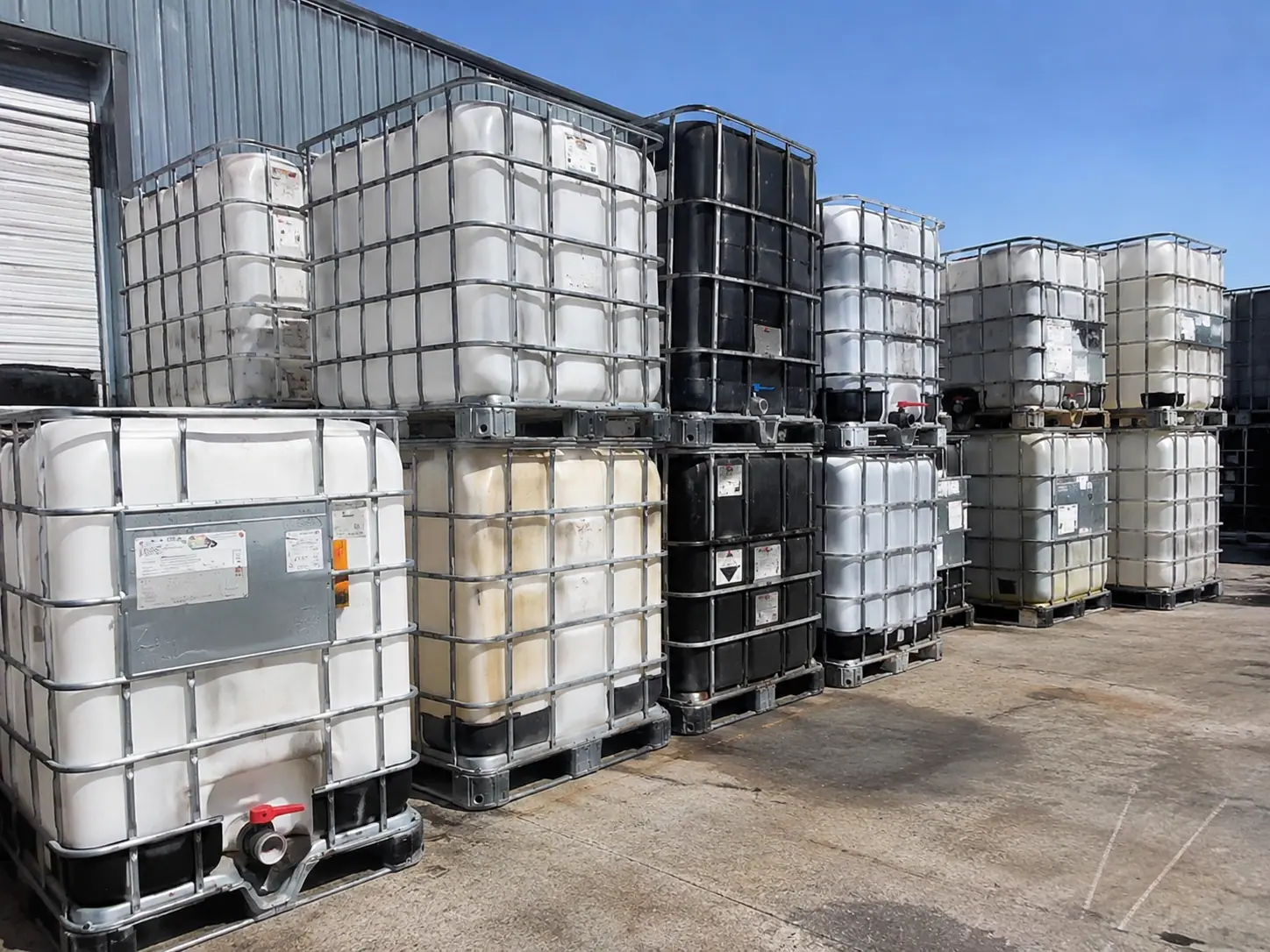
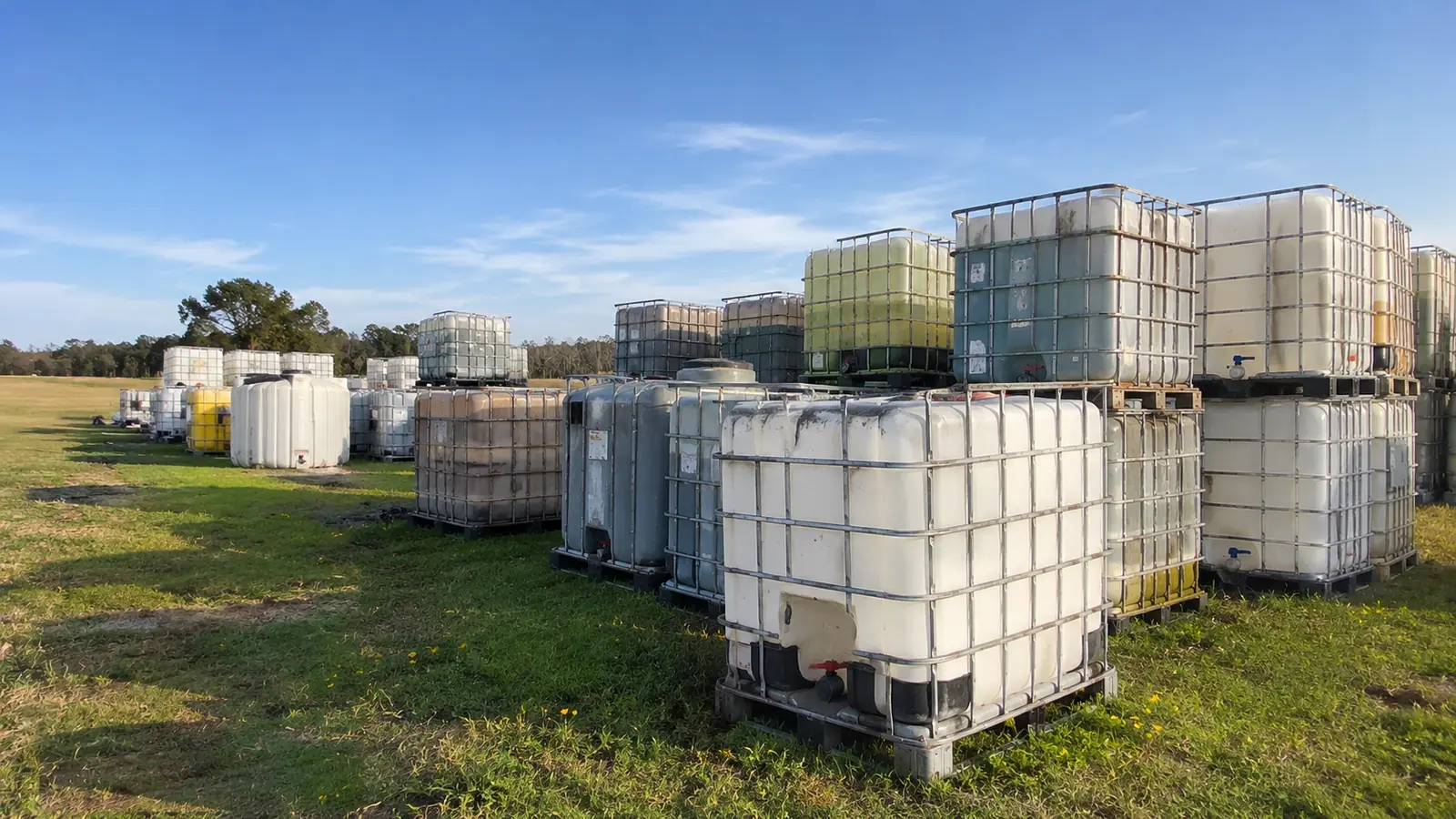
We turn down loads over this every month, and the conversation is always the same: “but they have been cleaned.” They have. That is not the problem. The problem is that the compound is no longer on the surface where cleaning happens.
What terpenes do to polyethylene
HDPE is a semi-crystalline polymer. It has ordered crystalline regions and disordered amorphous ones, and the amorphous regions behave rather like a very viscous solvent.
Terpenes — limonene, pinene, menthol and the rest of the family that gives citrus, pine and mint their smell — are small, non-polar molecules with a strong affinity for exactly those amorphous regions. Given contact time, they do not sit on the wall. They dissolve into it.
Once inside, they migrate back out slowly, over months and years, into whatever is in the container next. A wash cycle removes surface residue. It does not remove a compound that has become part of the wall, because there is no mechanism by which it could.
How we find out
A person opens the lid and smells it.
That is the whole test, and we have looked seriously at alternatives. Gas chromatography finds compounds a nose misses and also flags things nobody downstream would ever notice, at a per-unit cost that makes no sense for a container. At the concentrations that matter commercially, a trained nose is both more sensitive and more relevant.
If a unit smells of anything other than warm plastic after the dry stage, it does not go out as a cargo container. That is inspection point three, and it is a critical failure rather than a grade reduction.
The list we refuse on both sides
- Essential oils of any kind, including diluted blends.
- Flavour concentrates and extracts.
- Citrus terpene cleaners and degreasers — the most common one we see.
- Pine-based cleaning products.
- Fragrance compounds and perfume bases.
- Certain non-ionic surfactants, which behave the same way for the same reasons.
We will not buy them and we will not sell them. If you have them and need them gone, we will tell you honestly that they are a material recovery proposition rather than a reuse one, and the granulator does not care what they smell of.
Why this matters more than it sounds
Because of what comes next. A tote that held a citrus cleaner in 2022 and glucose syrup in 2026 produces glucose syrup that smells faintly of orange. In a food plant that is a batch rejection and an investigation. In a brewery it is a contaminated fermentation.
This is also precisely why a food-grade tote has to have been a food tote from new, and why no amount of washing converts an industrial unit into a food one. It is physics, not policy. The long version is in what food grade really means.
The commercial cost of the rule
It is real. Terpene cleaner totes are plentiful, they look immaculate, and buyers offer them to us constantly at attractive prices. Taking them would be straightforwardly profitable in the short term and would quietly degrade every grade card we issue.
Twelve totes described as “just soap” in 2010 taught us what contamination does to a wash tank and to a reputation. The rules that came out of that week — written cargo declarations, the sniff check, and this refusal list — are the reason a grade card from us means something.
If you are buying used from anyone
Open the lid and smell it. Any smell at all is a no. It takes two seconds, it requires no equipment, and it is the single most informative thing you can do with a used container. We published the whole four-minute inspection in reading a tote before you buy partly so you could use it on somebody else.
Why washing cannot reach it
Worth being precise about the mechanism, because the objection is always “surely a strong enough wash would work.”
Caustic washing removes material from a surface. It saponifies fats, dissolves residues and lifts films. All of that happens at the interface between the wall and whatever is on it.
A terpene that has migrated into the amorphous regions of the polymer is not at that interface. It is distributed through the first fraction of a millimetre of wall thickness. To remove it you would have to remove that layer of polymer — which is not washing, it is machining, and you would be left with a thinner wall and a condemned container.
Heat makes it worse rather than better in the short term: raising the temperature increases diffusion, which draws more compound out of the wall and into the next cargo. You can drive some of it out over a long enough bake, and nobody is baking IBC totes.
Contact time, and the borderline cases
Diffusion needs time. A tote that held a citrus cleaner for two days is in a different position from one that held it for eight months, and in principle there is a window short enough to be safe.
In practice we cannot determine contact time from a declaration with any confidence. The declaration tells us what was in it, not for how long, and sellers systematically underestimate storage duration. So we refuse the category rather than attempting to judge the margin — which costs us containers that might have been fine and avoids the ones that are not.
If a better method of assessing it existed we would use it, because keeping more containers in service is the whole point of this company. It is on our open-problems list, honestly stated in what we learned washing 180,000 totes.
The compounds, by family
- Monoterpenes — limonene, pinene, myrcene. The worst offenders and the most common, because d-limonene is in a great many industrial cleaners.
- Phenolics — thymol, eugenol, carvacrol. Persistent and characterful.
- Esters and aldehydes from fruit and floral flavour compounds. Lower concentration, highly detectable.
- Menthol and camphor. Crystalline, persistent, and unmistakable months later.
- Some non-ionic surfactants. Not aromatic, same mechanism — they partition into the polymer and come back out.
The surfactant case is the one that surprises people, because there is no smell to warn you at the point of purchase. It is also what the 2010 “just soap” batch actually was.
What happens to the ones we turn down
They are not worthless and we will take them for material recovery. The bottle granulates into clean HDPE regrind exactly as well as any other bottle — the granulator does not care what it smells of, and the regrind buyers are moulding drainage pipe and pallets rather than food containers.
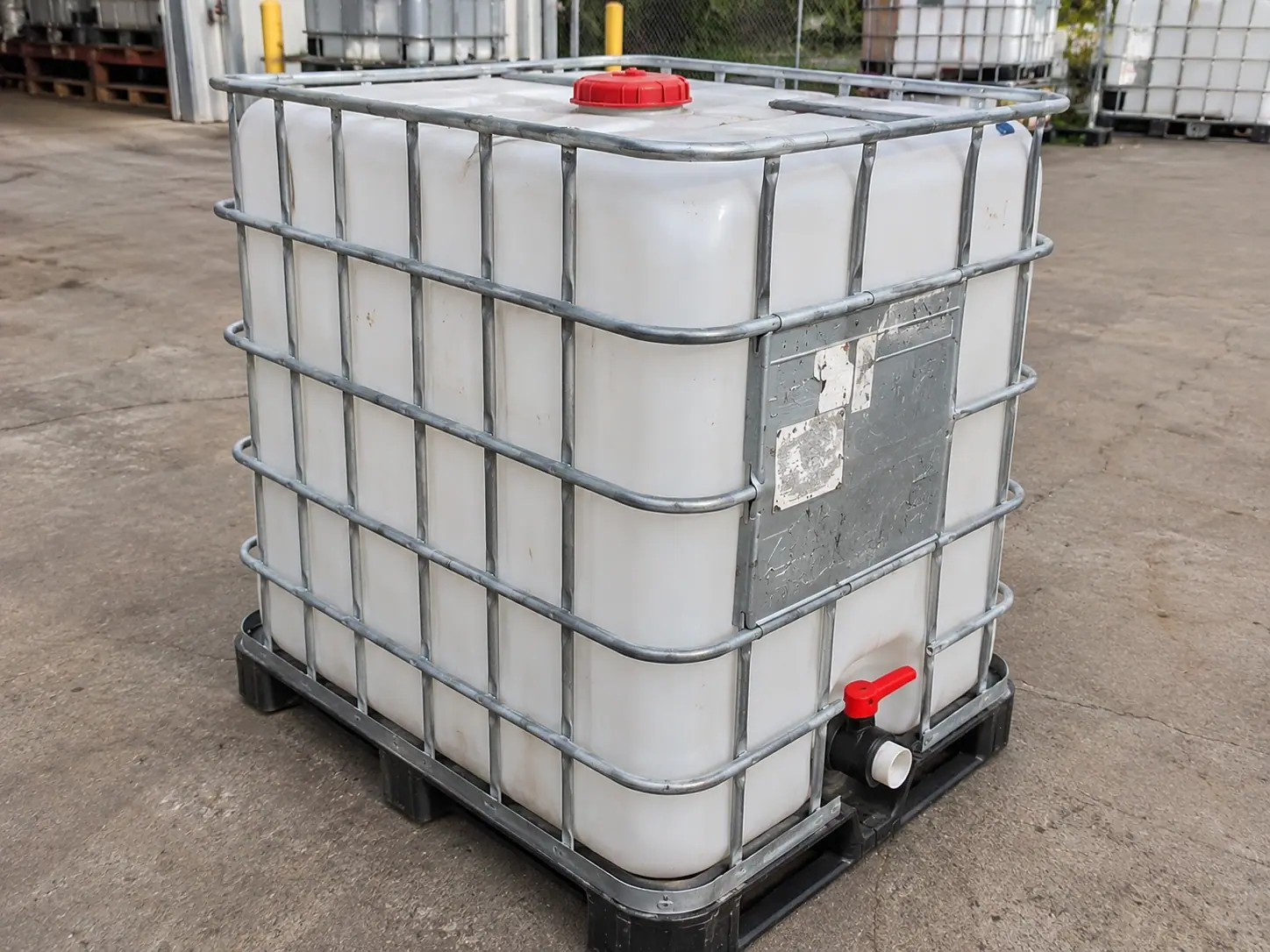
The cage and pallet are unaffected entirely, and a cage from an essential-oil tote is as good as any other cage. So the right outcome for these units is rebottling: scrap the contaminated bottle, keep the steel, drop in a new bottle. That recovers two thirds of the mass and produces a container with no history at all.
Which is a genuinely good answer, and it is why we will quote on these loads rather than refusing them outright. What we will not do is wash them and sell them as cargo containers.
If you are the one holding them
Tell us honestly what was in them and for roughly how long. You will get a quote at material-recovery or rebottling value rather than reconditioning value, which is lower — and it is a real number rather than a refusal, and it is better than a disposal ticket.
What does not work is describing them vaguely and hoping. We will find it at the sniff check, the load gets re-graded at the gate, and nobody enjoys that conversation. The variables that set the price are published on the price factors page.