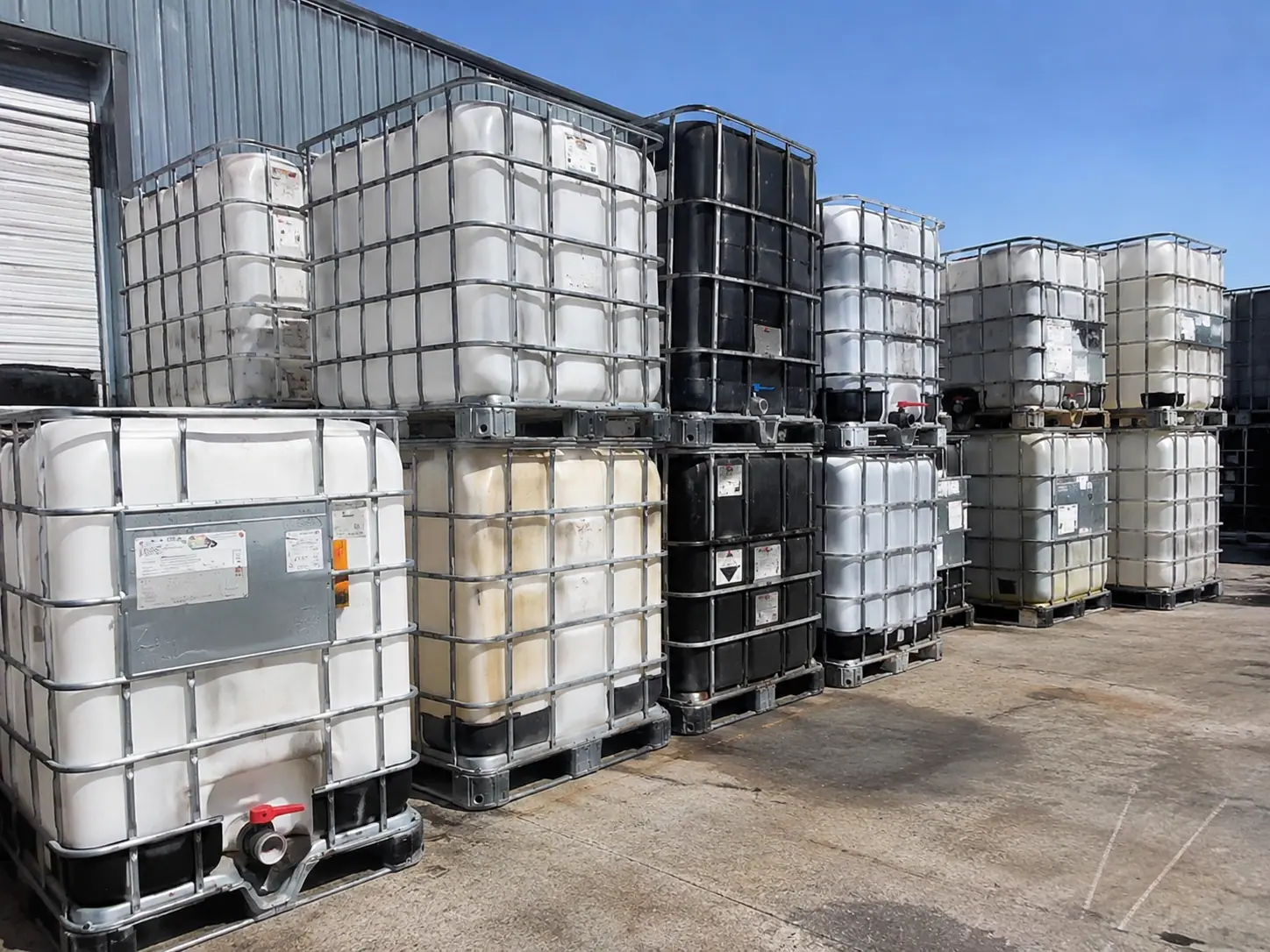
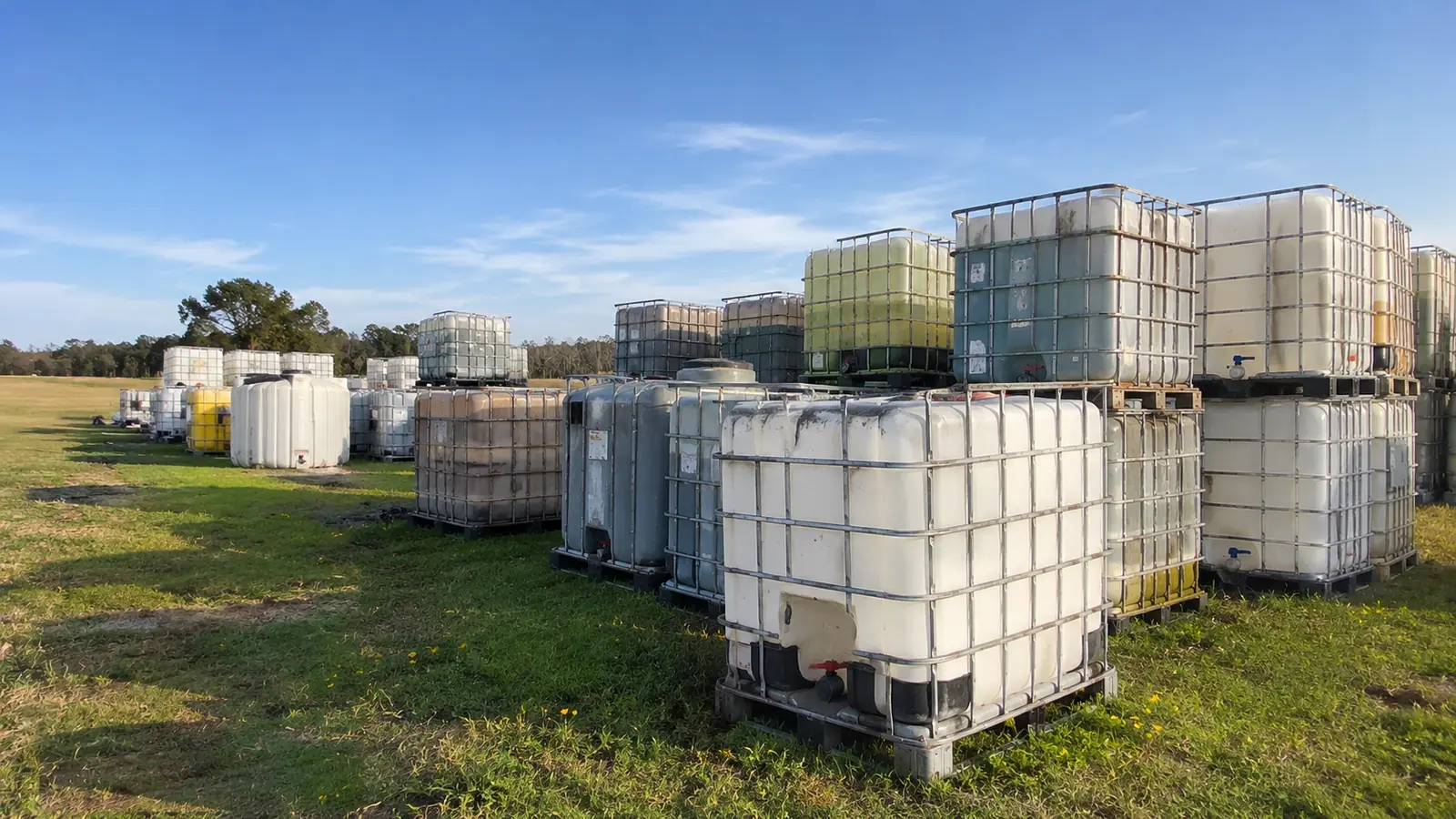
Since 2009 roughly 180,000 containers have gone down our line. Most of them taught us nothing. A few dozen taught us something expensive. This is the second list.
1. Prior cargo matters more than everything else combined
In 2010 we took twelve totes described verbally as “just soap.” It was a cationic surfactant blend. It pitted the gaskets, contaminated a wash tank and left an odour that no cycle would lift. All twelve went to resin recovery and we lost a day of production.
The rule that came out of it — no written cargo declaration, no purchase — has cost us deals every month since and has never once been the wrong call. Everything else we know about washing is downstream of knowing what was in the container.
2. The order of the stations matters as much as the chemistry
We spent our first two years treating the pre-rinse as a formality. It is not. Every pound of residue carried off at ambient temperature is a pound that does not consume caustic at station two, and caustic is the largest variable cost on the line. Moving the pre-rinse from a thirty-second spray to a ninety-second high-volume flush cut chemistry consumption by roughly a fifth.
3. A static soak never cleans the corners
Fill-and-drain looks like it should work. It does not reach the lower corners or the underside of the dome, which are precisely the places residue collects and precisely the places your customer will find it. A rotating internal spray head that drives a fan jet through a full rotation is the single highest-value station on the line. If you are building your own and can only afford one sophisticated stage, build that one.
4. Splitting the rinse is how you get to 86% water reclaim
Most lines run a single rinse and have to choose between water economy and surface quality. We run two passes: the first on reclaimed water from the carbon polish stage, the second a fresh-water polish of about a gallon and a half. The final surface always sees clean water, and the volume economy comes from the first pass.
That design decision is worth more environmentally than anything else we have done, including the granulator.
5. Damp totes cause more complaints than dirty ones
Residual moisture inside a sealed HDPE bottle is how mould and odour begin. We would rather hold a rack an extra ten minutes than ship a damp tote, and the dry station gets eight minutes in July and twenty in February. It is the least interesting station and generates the fewest complaints, which is not a coincidence.
6. A trained nose beats an instrument at the levels that matter
We looked seriously at analytical detection. Gas chromatography finds compounds a nose misses and also flags things no downstream customer would ever notice, at a per-unit cost that makes no sense for a container. So a person opens the lid and smells it. If it smells of anything other than warm plastic, it does not go out as a cargo container.
7. Some things never wash out, and pretending otherwise is fraud
Terpenes, several non-ionic surfactants and a few solvents dissolve into the polymer itself rather than sitting on the surface. The compound becomes part of the wall and migrates back out for years. No cycle removes it.
This is why we refuse units that held essential oils or flavour concentrates in both directions, and why a food-grade tote has to have been a food tote from new. It is physics, not policy.
8. Undersizing water reclaim is the most expensive mistake available
Our 2017 skid was sized for the throughput we had rather than the throughput we wanted. Eighteen months later we replaced the entire filtration stage. If you are building water reclaim, size it for triple your current volume — the incremental cost at build time is small and the retrofit cost is not.
9. Dwell time is the dial, not concentration
The instinct when something will not come clean is to raise the caustic concentration. It is usually the wrong lever: higher concentration attacks gaskets and costs more, while longer dwell at a moderate concentration does the work. Our cargo classes range from four minutes for water-based ag-chem to fourteen for cured resin, at essentially the same concentration.
10. The wash is the cheap part
Eleven gallons of mostly reclaimed water and some thermal energy — about nineteen pounds of CO₂e per unit, which we subtract before publishing any savings figure. Against the 259 pounds of carrying a new container into existence, it is not a close contest.
That ratio is the entire business case for this company, and seventeen years of washing has only made it look better. The full derivation is on Carbon Math, and the station-by-station walkthrough is on Inside the Wash Line.
11. The sniff check cannot be delegated to a machine, but it can be trained
New staff are not good at the dry-and-sniff check for about three weeks. Then they are, and after six months they are better than the equipment we evaluated. What makes the difference is a reference set — we keep a small rack of units with known residual signatures, and new inspectors smell those at the start of a shift the way a lab runs a calibration standard.
It sounds unscientific and it is the most reliable detection system in the building.
12. Throughput and quality are not in tension, but throughput and patience are
Every quality failure we have traced back to the line came from compressing the dry stage. Not the wash, not the chemistry — the drying. It is the only station where the temptation to move a rack early produces a defect that appears weeks later, in somebody else's warehouse, as mould.
So the dry station has a timer that the operator cannot shorten. It is the one place where we removed discretion deliberately.
13. Documented cargo classes beat operator judgement
For years the dwell time was a judgement call. Experienced operators were good at it and inexperienced ones were not, and the variance showed up as regrades. Now there are six cargo classes with fixed dwell times, assigned at the inbound dock from the declaration rather than at the tank from the appearance of the residue.
Judgement is still involved — somebody assigns the class — but it happens once, at the point where the information exists, and it is written down. That change did more for consistency than any equipment purchase.
14. The expensive mistakes cluster in the first two years of any new process
The 2010 surfactant batch. The 2017 undersized filtration stage. The 2019 rebottling cages we pressed before washing, which pushed residue into the welds. All three happened within eighteen months of starting something new, and all three are now rules.
The lesson we actually took is procedural: when we introduce a process, we over-document the first two hundred units and review them as a batch. It feels bureaucratic and it has caught three problems early that would otherwise have been caught late.
15. Most of what arrives is fine
It would be easy to read this list and conclude that used containers are a minefield. They are not. The overwhelming majority of units that arrive here are sound, washable, well documented and back in service within a week.
Roughly two thirds of incoming mass goes straight back out as reused containers after washing and grading. Another eleven per cent gets repaired. The dramatic failures are memorable precisely because they are rare, and seventeen years of doing this has made us more confident about reuse, not less.
What the next 180,000 should teach us
Three open problems, stated honestly:
- Wash sludge. It is 11,400 pounds a year and the only stream we cannot recover. Changing the chemistry so the residue is recoverable is a genuine research project and it may not work. More in the last 0.6 per cent.
- Nine gallons per cycle. We are at eleven. Getting to nine means better reclaim at the rinse stage without compromising the final surface, and we do not yet know how.
- Odour prediction. We can detect fixed odour reliably. We cannot predict from a declaration which borderline cargoes will fix and which will not, so we refuse a whole category rather than risk it. A better answer there would let us keep more containers in service.
None of those are marketing problems. They are the actual engineering backlog, and we publish them because the industry would be better if more people did.