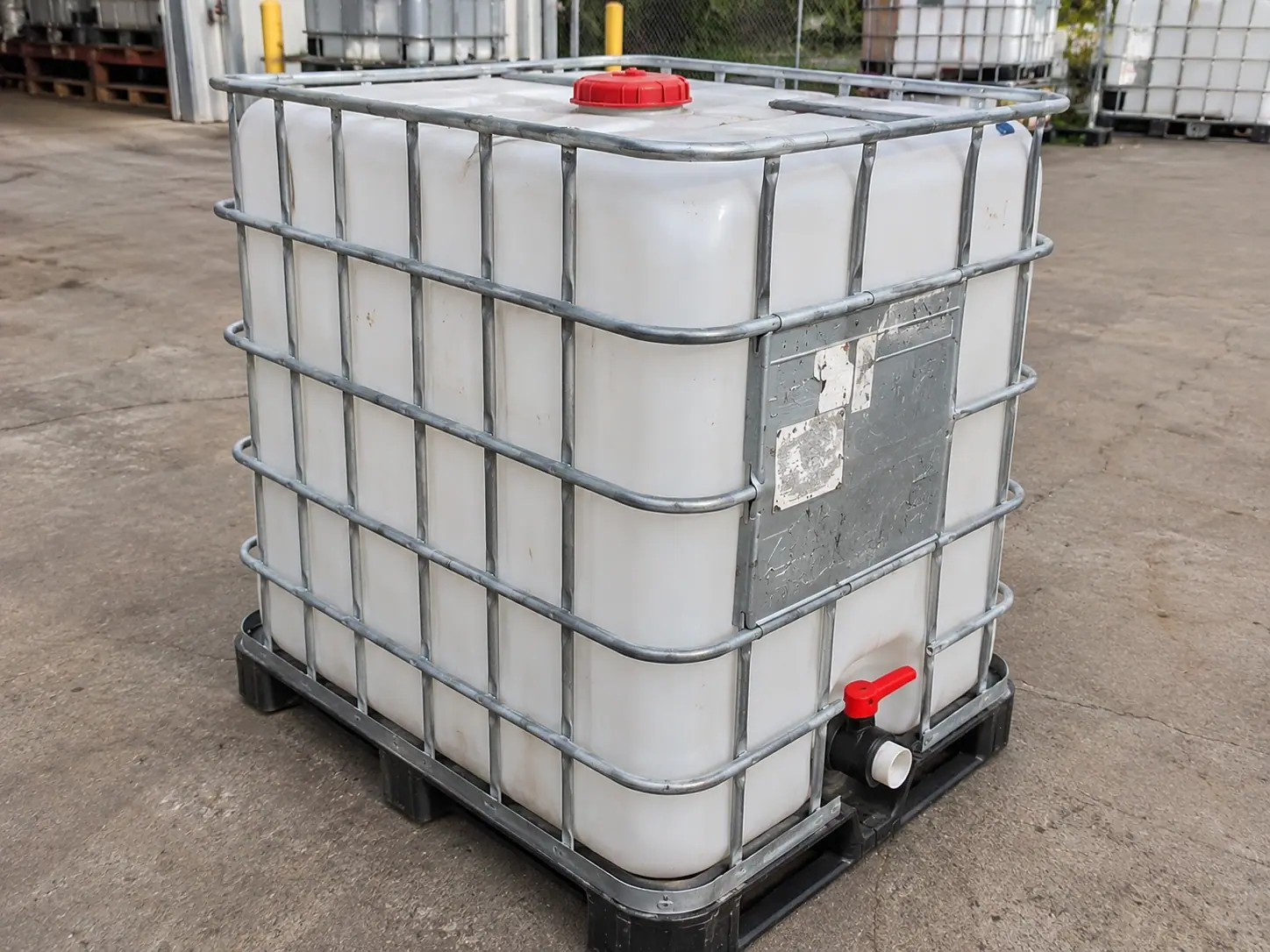
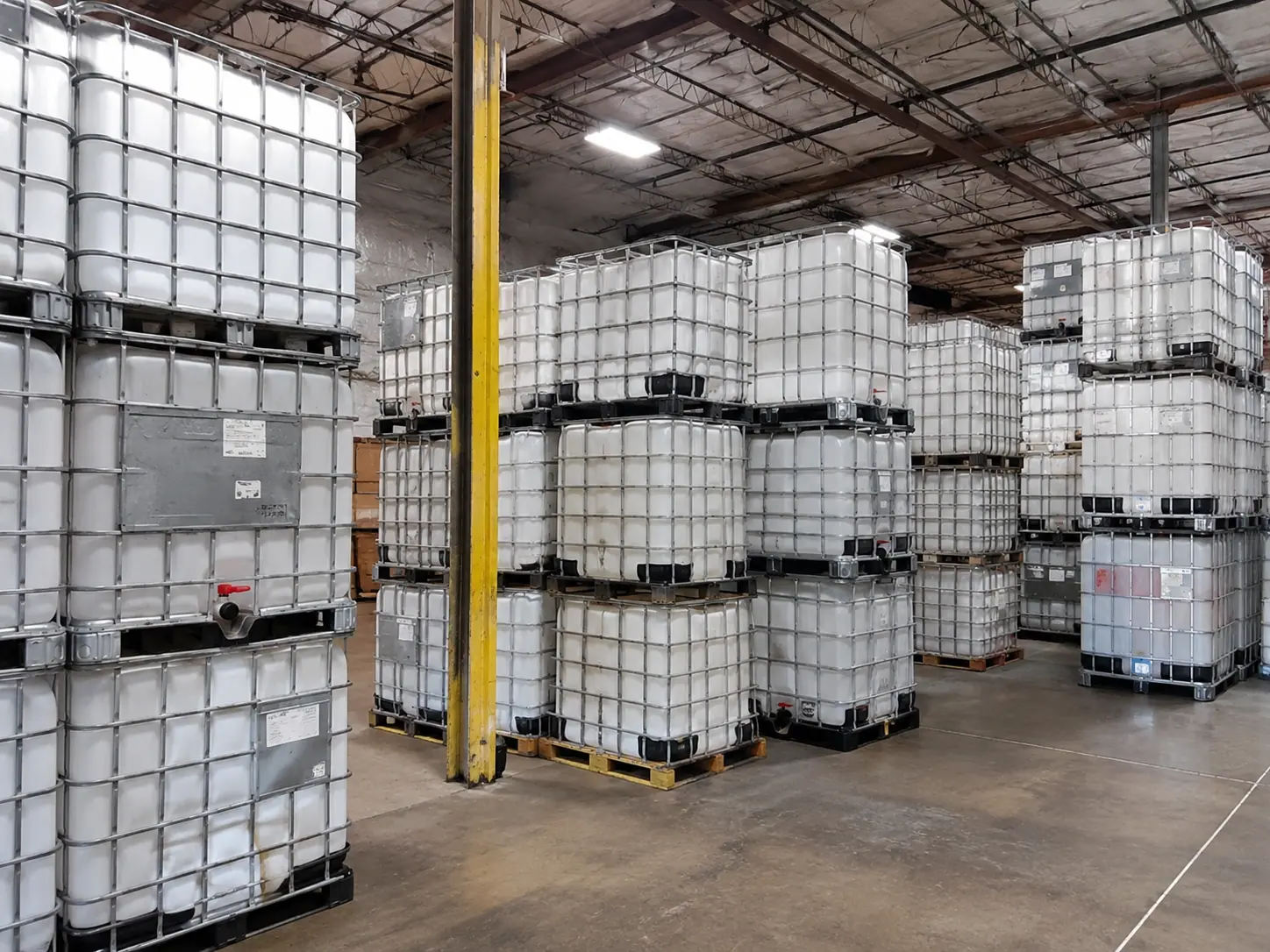
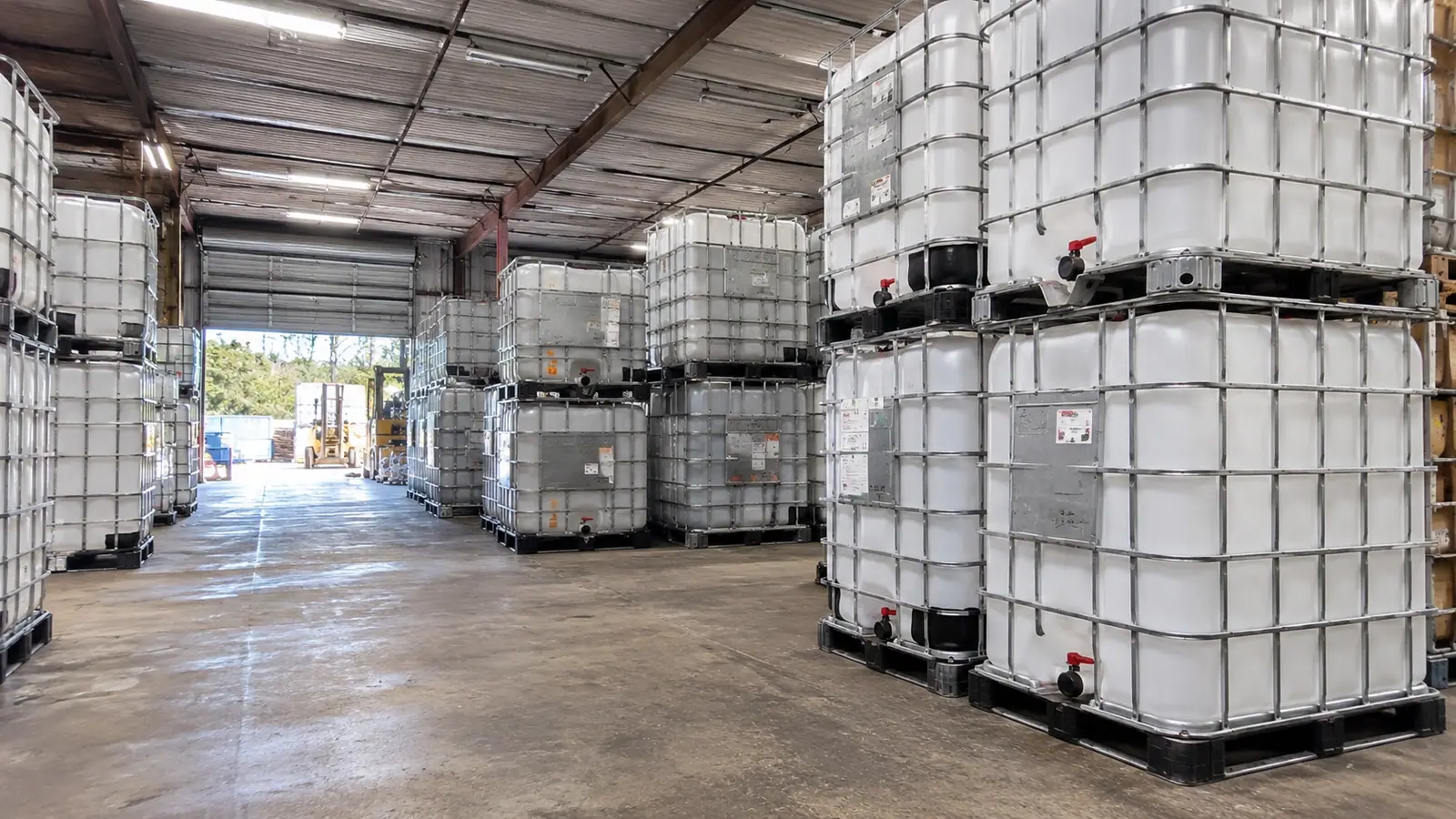
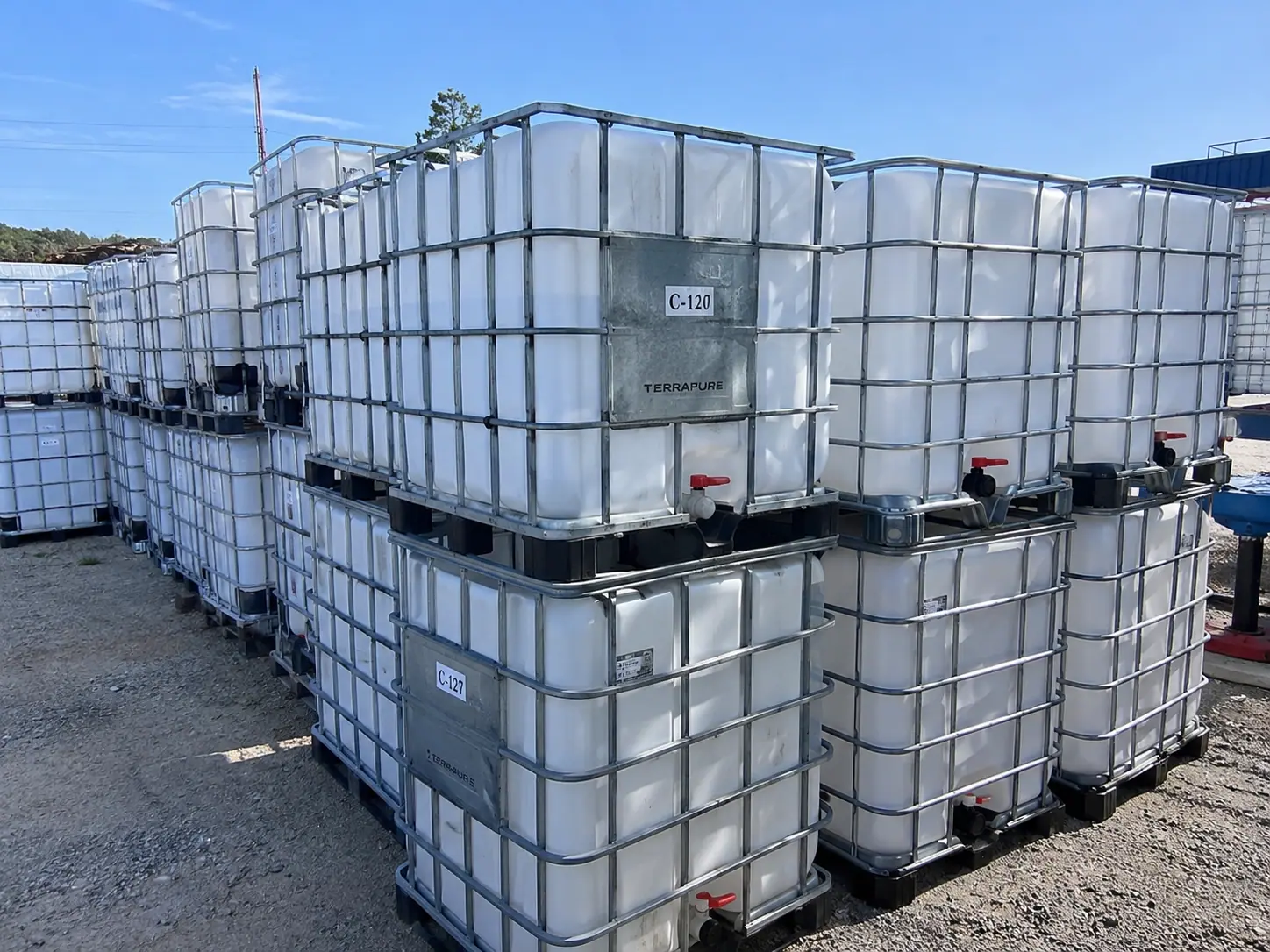
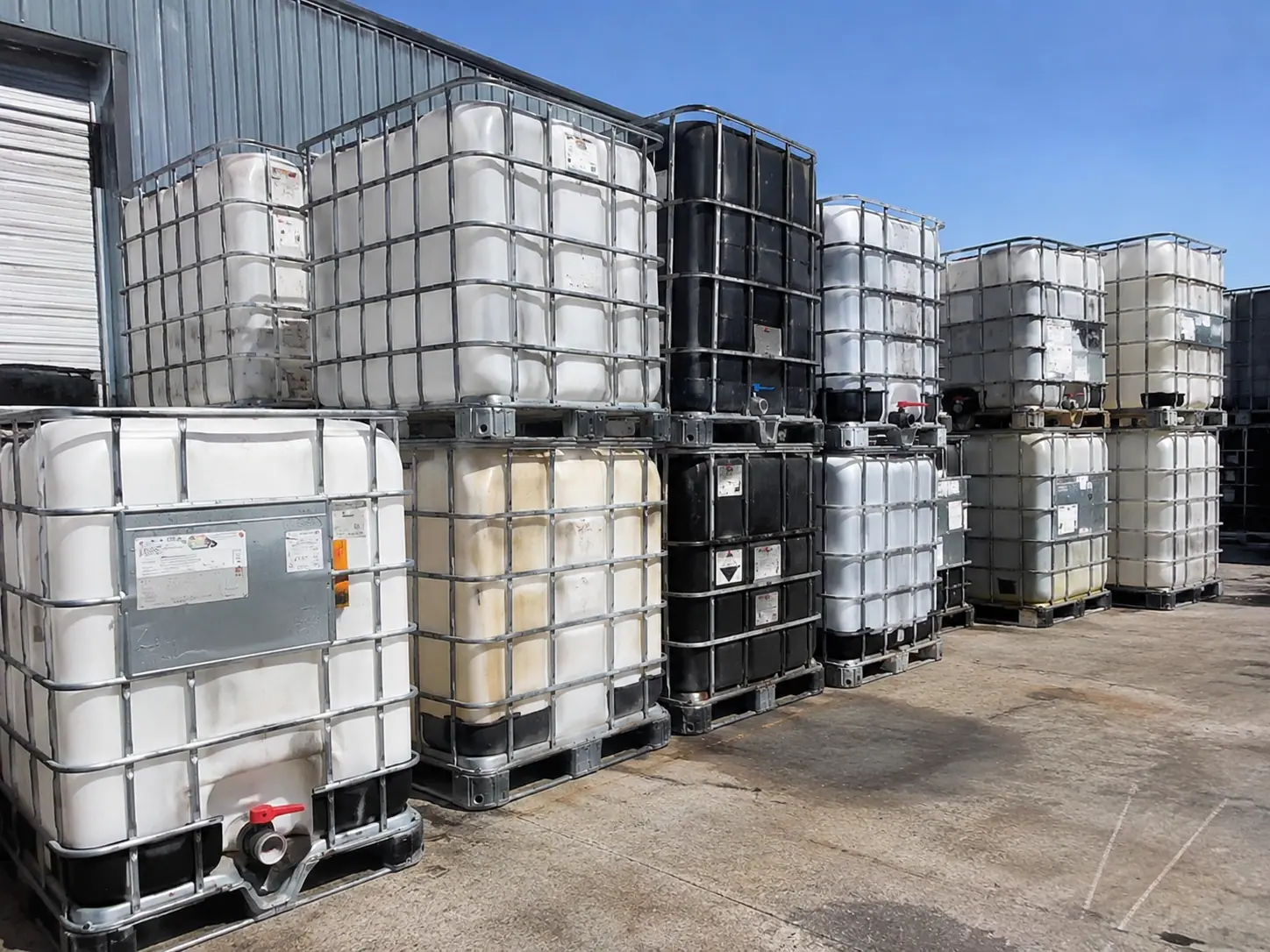
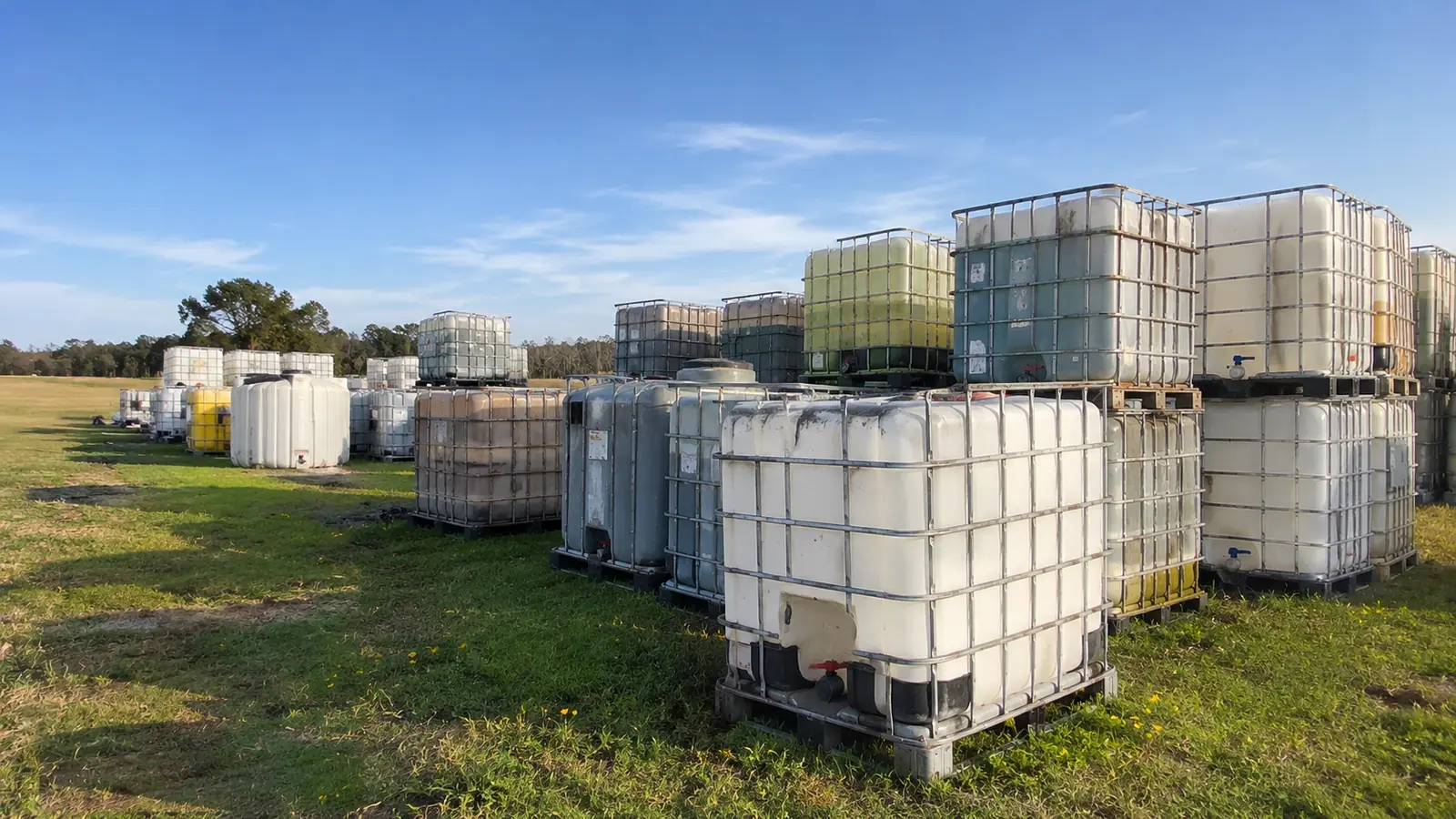
Every October a wave of municipal and contractor enquiries arrives asking the same question: can we store brine in used totes? Yes. Calcium chloride and sodium chloride brine are among the easiest cargoes HDPE will ever hold. The difficulty is everything around the tote.
Why brine is easy on the bottle
Chloride brine does not attack polyethylene, does not swell EPDM, does not permeate and does not fix odour. A Grade B 275 gallon unit with an EPDM seat will hold brine indefinitely without any chemical concern at all. In compatibility terms it is about as benign as cargo gets, which is why de-icer is one of the few applications where we actively recommend the cheapest grade that will physically do the job.
And brutal on everything else
Chloride brine is extremely corrosive to carbon steel, mildly corrosive to galvanising, and hygroscopic enough to find any route out of the container and then stay damp.
- The cage. Galvanised tube handles occasional splash fine and standing exposure badly. Rinse the cage when you fill, not just when you spill.
- Steel pallets. Ironically the best base for abuse is the worst base for brine. Composite is frequently the better answer for de-icer fleets.
- Your forklift and your concrete. Both will show it within a season if you are careless with the fill point.
- Pumps and fittings. Brass and carbon steel fittings corrode; use poly or stainless.
Specific gravity, and your lift-gate
This is the part that catches people. Calcium chloride brine at 32 per cent runs around 1.29 specific gravity. A full 275 gallon tote of water weighs about 2,435 pounds. The same tote of 32 per cent CaCl₂ is closer to 3,140 pounds, and a 330 gallon unit is about 3,750.
A great many lift-gates are rated at 2,500 or 3,000 pounds, and that rating assumes a centred load. Fill a 330 with heavy brine and you are outside the rating of a lot of common equipment. Work the arithmetic before the season, not during it — there is more on this in specific gravity and tote loads.
Settling and stratification
Brine at high concentration will stratify if it sits for months, especially through temperature swings. The bottom of the tote is denser than the top, so the first fifty gallons you draw are not the same product as the last fifty. If your application rate matters, recirculate or agitate before you draw.
A simple way to do this without buying a mixer is to draw from the outlet and return through the lid for ten minutes with the transfer pump you already own. If you need something permanent, a bridge-mounted agitator across the cage top rail is a straightforward fabrication job.
Storage through the season
Chloride brine does not freeze at the temperatures where you need it, which is the whole point, so outdoor storage is viable. Two caveats: natural HDPE embrittles in UV over eighteen months or so, and a vented lid lets moisture in to a hygroscopic cargo. For a fleet that lives outside year-round, specify black UV-stable bottles and solid lids with good gaskets.
What grade to buy
Grade B for anything you will pump through a sprayer, Grade C for bulk storage and pre-wet supply. There is no sensible argument for Grade A here: appearance has no operational value on a brine tote and you will be paying for cosmetics that a season of salt will remove anyway.
We supply a lot of public works departments and plough contractors on exactly this basis, and the units frequently come back to us four or five seasons later still sound. If you want the fleet cleared at end of life, the buyback programme takes them, salt-stained cages and all.
Sizing a municipal brine fleet
The question we get from public works departments is how many totes they need, and the honest answer is that it depends entirely on whether the totes are storage or distribution.
As distribution — filling sprayers from totes on a truck or a trailer — you want fewer, larger units and a fast outlet. One or two 275s with 3 inch butterfly valves beats four with 2 inch, because the constraint is fill time at the sprayer.
As storage — holding brine between events — you want more, smaller units distributed across your yards rather than one large tank. Totes win against a tank here for a specific reason: they are movable. A bad winter in one district can be answered by relocating four totes, which no tank can do.
Pre-wet versus direct liquid application
Pre-wetting rock salt at the spinner uses far less liquid per lane mile than direct liquid application, so a pre-wet operation runs on a handful of totes where a DLA operation runs on dozens. If you are moving from one to the other, the tote count changes by roughly an order of magnitude and so does the refill logistics.
That matters for our conversation because it changes the right answer about grade and fittings. A pre-wet fleet is a small number of hard-working units; a DLA fleet is a large number of lightly-used ones, where Grade C is almost always sufficient.
Corrosion inhibitors, and what they do to seats
A lot of municipal brine carries an organic corrosion inhibitor — beet juice derivatives, molasses by-products, proprietary blends. These are usually benign against HDPE and they do two things worth knowing.
First, they are organic and they ferment. A warm tote of inhibited brine left over summer will produce gas and smell memorable. Vent it, and empty inhibited brine before the off-season rather than storing it.
Second, they are sticky. An inhibited brine residue is considerably harder to wash out than straight chloride, and it moves the unit from a four-minute cargo class to an eight-minute one. That affects buyback value slightly, and it is worth mentioning when you offer units to us so we class them correctly.
End of season
- Empty inhibited brine completely. Straight chloride can overwinter; organic blends should not.
- Rinse the cage and the pallet, not just the inside. Chloride on galvanising is the slow damage.
- Flush pumps and spray bars with fresh water, then drain them.
- Store under cover if you can. UV is the other clock running on these units.
- Inspect valve seats. Brine does not attack EPDM but the grit in hydrant water abrades it.
Buyback at end of life
Brine units come back to us stained, salt-crusted and structurally sound, which is a combination we are entirely happy with. Chloride does not fix odour, does not craze HDPE and does not permeate, so a brine tote at end of its municipal life is frequently still a perfectly good Grade C unit for somebody else's water duty.
What we need is the written declaration — including the inhibitor, if there was one, by name. Public works departments are generally excellent at this because they document everything anyway, which makes them some of our easiest buyback conversations. The variables that set the price are on the price factors page.
One thing worth budgeting for
If you run brine through composite IBCs for more than three or four seasons, budget for cage replacement rather than bottle replacement. It is the inverse of almost every other application we deal with: the HDPE is indifferent to chloride and the galvanising is not.
That is unusual enough that it is worth planning around, and it is the reason we recommend composite pallets over steel for brine fleets despite normally recommending the opposite for outdoor duty.