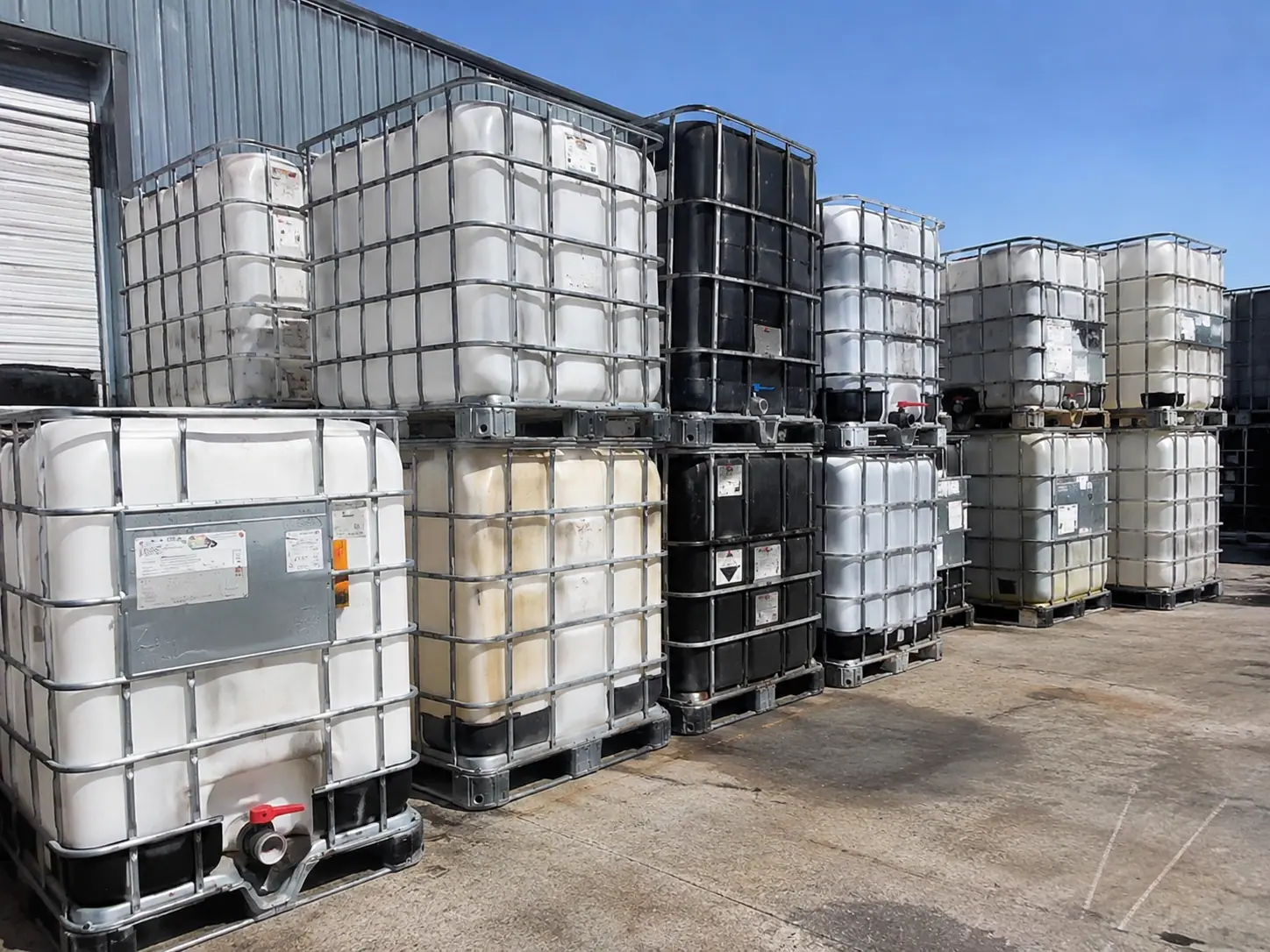
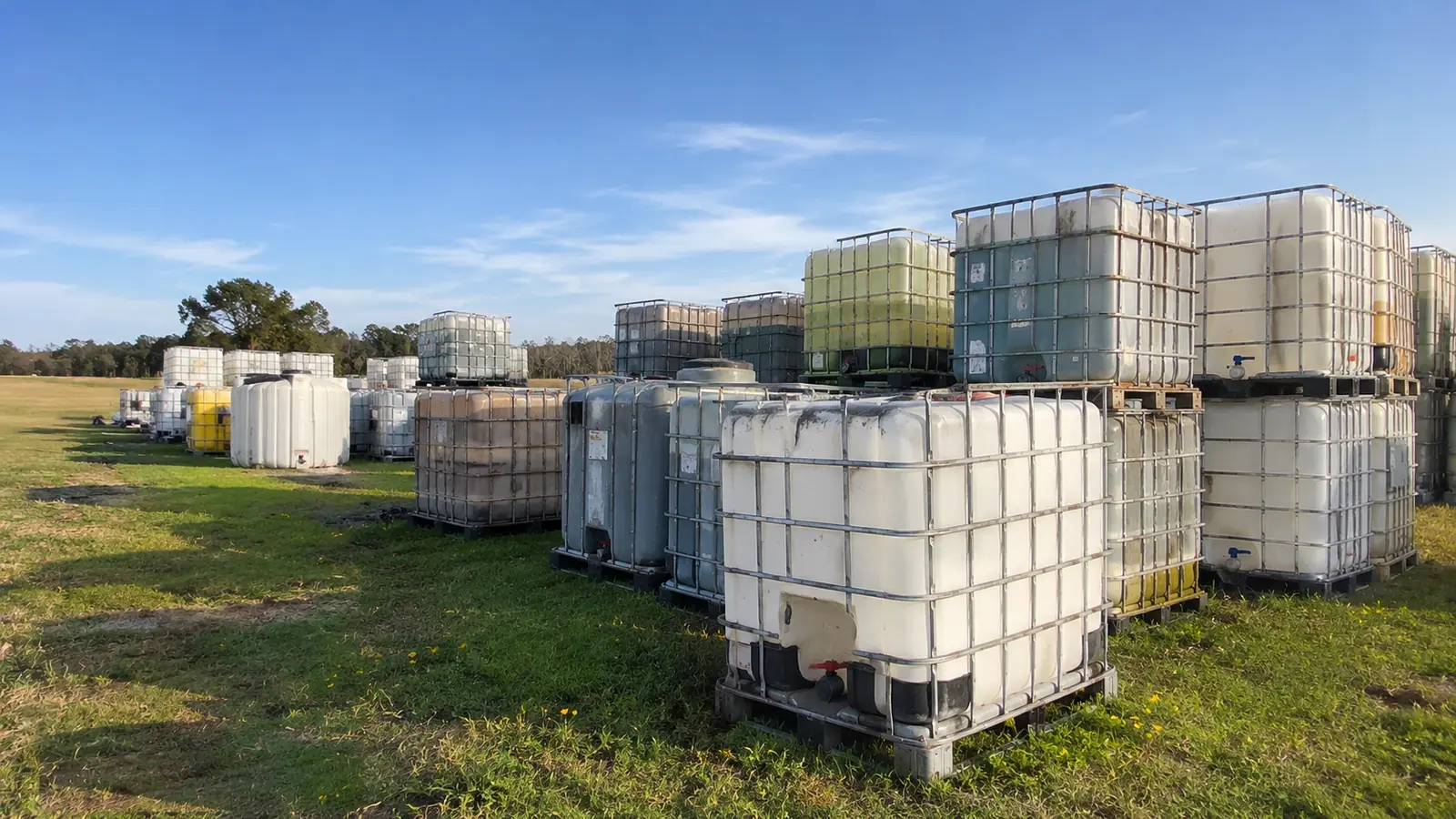
Construction is where Grade C totes earn their keep. It is also where containment gets forgotten, because a jobsite is temporary and everybody assumes the rules are too. They are not.
What is actually in a jobsite tote
Mostly water: hose fill for concrete work, compaction water, dust suppression, hydro-seeding, tool and boot washing. Water has no containment requirement and no compatibility question, which is why most jobsite tote use is genuinely simple.
The exceptions are where it gets interesting: concrete admixtures, curing compounds, form release agents, soil stabilisers and off-road diesel. Those are the ones that attract attention from an inspector, and they are the ones most likely to be sitting on bare ground next to a storm drain.
The four-question containment check
Jobsite containment is the same test as any other site, compressed:
- Volume. Hold the largest single container, accounting for displacement if more than one tote sits in the same berm, and for rainfall if it is open to the sky.
- Compatibility. A polyethylene berm is right for aqueous chemistry and wrong for aggressive solvents.
- Drainage control. A normally-closed manual valve with a written inspect-before-release procedure. An uncontrolled drain is not containment.
- Access. If the operator cannot reach the valve, the containment gets moved within a week.
Flexible berms, and the puncture problem
Flexible berms are the obvious jobsite answer: they fold, they travel, they deploy in minutes. Their weakness is puncture, and the thing that punctures them is almost always the pallet feet of the tote you just set down in one.
Put a mat under the tote. A sheet of plywood or a purpose-made ground mat costs very little and turns a single-season berm into a multi-season one. This is the most common avoidable failure we hear about.
The cage-frame berm
One of our standard upcycled builds, and the cheapest hard containment available: tote cages stripped of their bottles, bolted into a rectangular frame, and lined. It is made entirely from scrap steel that was headed for the mill.
It handles forklift traffic in a way a flexible berm does not, it does not puncture, and it can be sized to one, two or four tote footprints. For a site that will run more than a season, it is usually the better buy.
Spill kits that are actually usable
- Sized to the largest container on site, not to the smallest.
- Stored adjacent to the storage, not in a locked connex on the other side of the site.
- Checked on the same schedule as the containment, which means somebody owns the check.
- Including the right absorbent — universal for water-based, hydrophobic for fuels.
- With a drain cover. On a jobsite the storm drain is the actual risk and a mat over it is the actual control.
Which units to buy
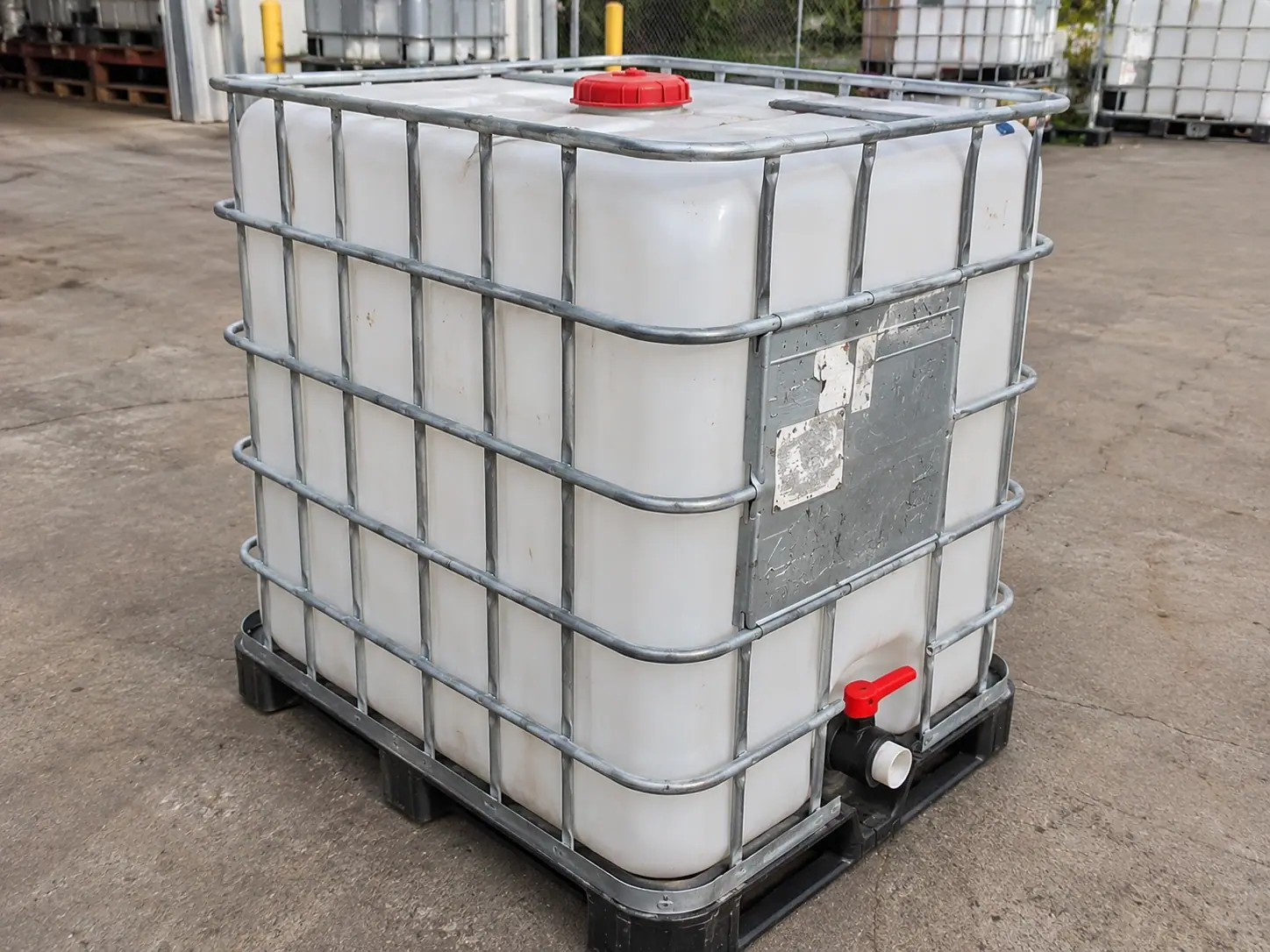
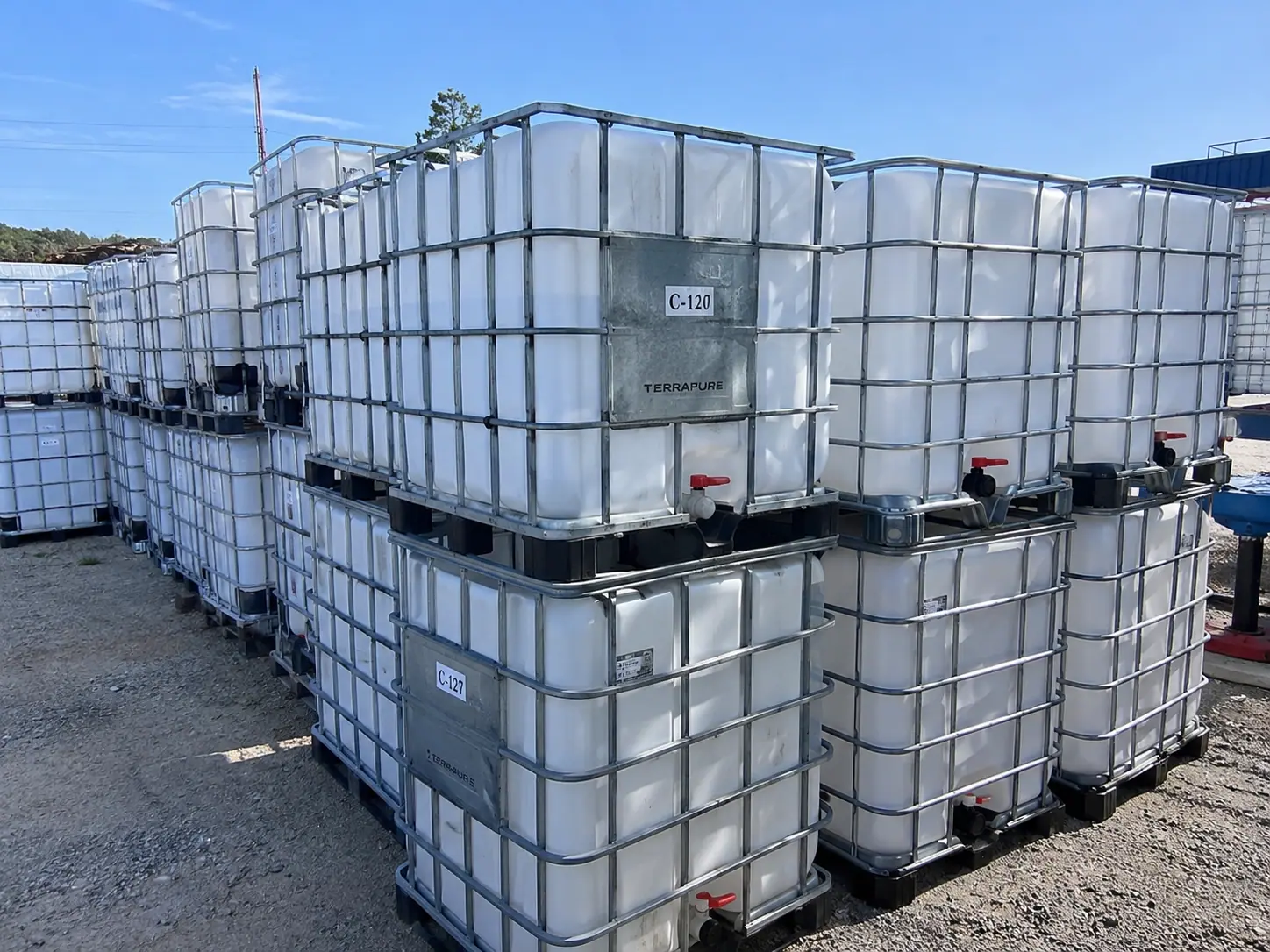
Grade C, steel pallet. Grade C because the duty is non-potable water and cosmetic condition has no operational value here; steel pallet because a jobsite will do things to a plastic foot that no warehouse ever would.
Specify a vented lid and an S60x6 to garden hose adapter and you have covered most jobsite plumbing. Add a lockable valve cover if the site is accessible to the public — an open valve on a 275 gallon tote empties into somebody's problem fast.
Delivery to a site with no dock
Which is most of them. We run a box truck with a lift-gate for up to sixteen units. Tell us the access situation in the form rather than letting the driver discover a muddy entrance and a locked gate — we quote it as a lift-gate delivery from the start and nothing goes wrong.
More in the freight and delivery FAQ, and the construction sector page is here.
The storm drain is the actual risk
On a construction site, the consequence of a release is almost never the material itself. It is where the material goes, and on most sites that is a storm drain with a direct path to a watercourse.
Which means the highest-value control on a jobsite is frequently not the berm around the tote — it is a drain cover in the spill kit and a crew that knows where the nearest drain is. Those two things cost almost nothing and they convert a reportable release into a cleanup.
If you do one thing after reading this, walk the site and note the drains within fifty feet of where liquids are stored. Then put a cover in the kit.
Temporary does not mean exempt
The assumption that jobsite rules are looser than plant rules is the single most common misunderstanding we encounter in this sector. Storage thresholds, containment requirements and release reporting obligations generally do not care how long the container has been there.
What does change on a jobsite is who is responsible — general contractor, subcontractor, or owner — and that is a contractual question worth settling before anybody delivers liquids rather than after a release.
Winter on a jobsite
Jobsite totes are the ones most likely to be forgotten, and water in them is the thing most likely to split them. Three cheap habits:
- Drain below half at the end of the working week once night temperatures drop.
- Leave the valve open on anything drained. Ice needs somewhere to go.
- Pull the hose and the foot pump indoors. They freeze before the tote does.
A split bottle on a jobsite is a nuisance; a split bottle full of admixture inside a berm that is itself full of ice is a bad morning. More in winterising IBC totes.
Security and the lockable valve
An open valve on a 275 gallon tote empties into somebody's problem fast, and jobsites are frequently accessible out of hours. A lockable valve cover is a few dollars and removes both the vandalism risk and the curious-passerby risk.
For fuel, it is not optional. An off-road diesel caddy with an unsecured valve on an accessible site is an invitation, and the cost of the theft is the smaller half of the problem compared with the spill.
What crews actually ask us for
Three builds account for most of our construction fabrication work, and all three came from somebody on a site describing a problem:
- Wash station. Tote on a cage stand, foot-pump tap, soap shelf, greywater catch tray. No power, forkliftable, and it solves hand and boot washing without a plumber.
- Dust suppression skid. Tote, 12 V pump, spray bar, battery box. Runs off a truck battery.
- Cage-frame containment. Stripped cages bolted into a rectangle and lined. Survives forklift traffic in a way a flexible berm does not.
All three are made from Grade C units that failed cargo grading, which is the cheapest input we have. Details on the upcycled builds page.
End of job
When the job finishes, the totes have somewhere to go that is not a skip. Drained, capped, with a written note of what was in them, they are perfectly saleable Grade C units — water duty is water duty, and a tote that held compaction water for six months is in better condition than most of what we buy.
Contractors who run several sites a year frequently end up on a standing collection arrangement for exactly this reason: the empties move between jobs or come back to us, rather than being abandoned on a site somebody else has to clear. The buyback terms are on the we buy your totes page.