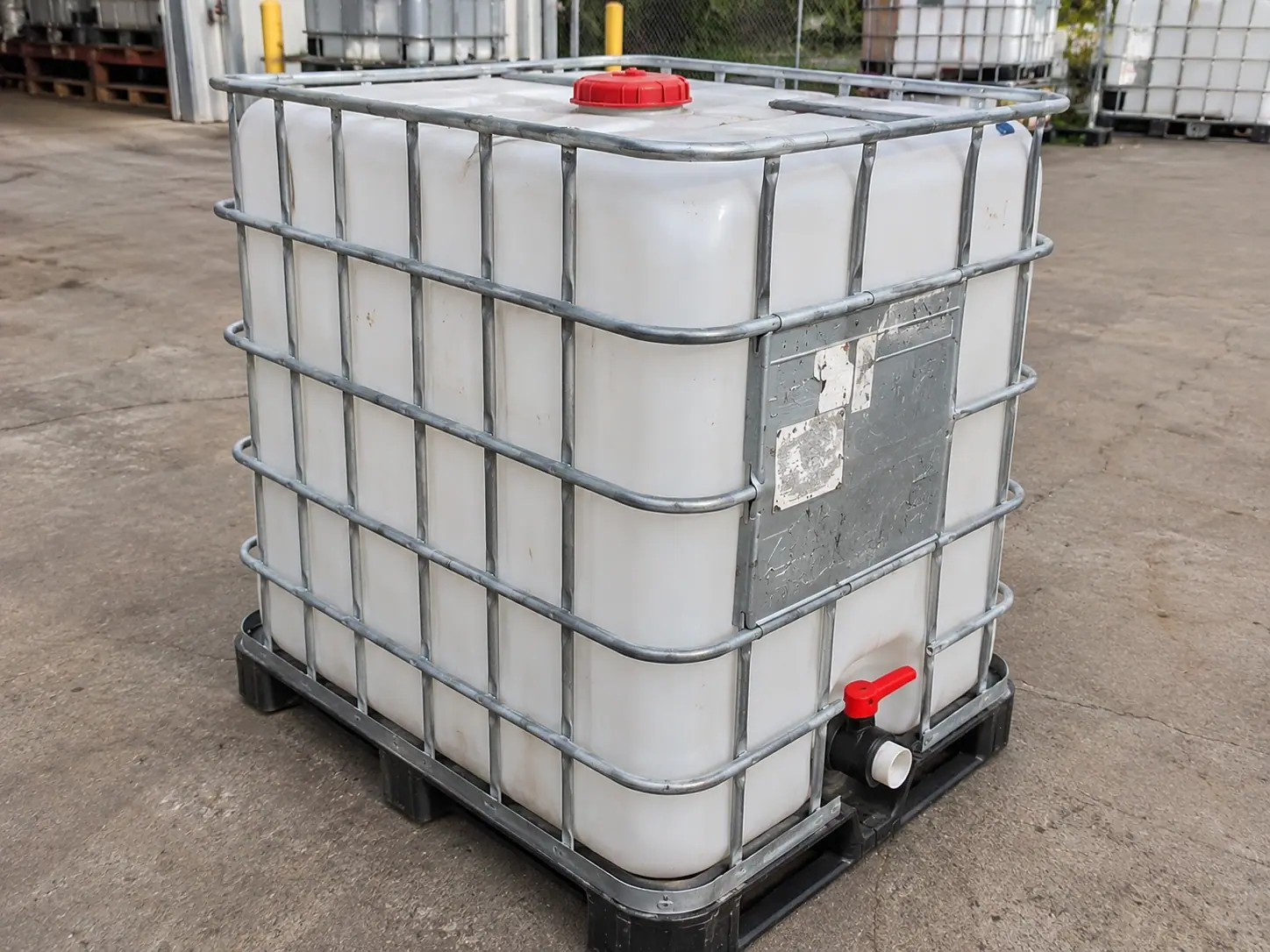
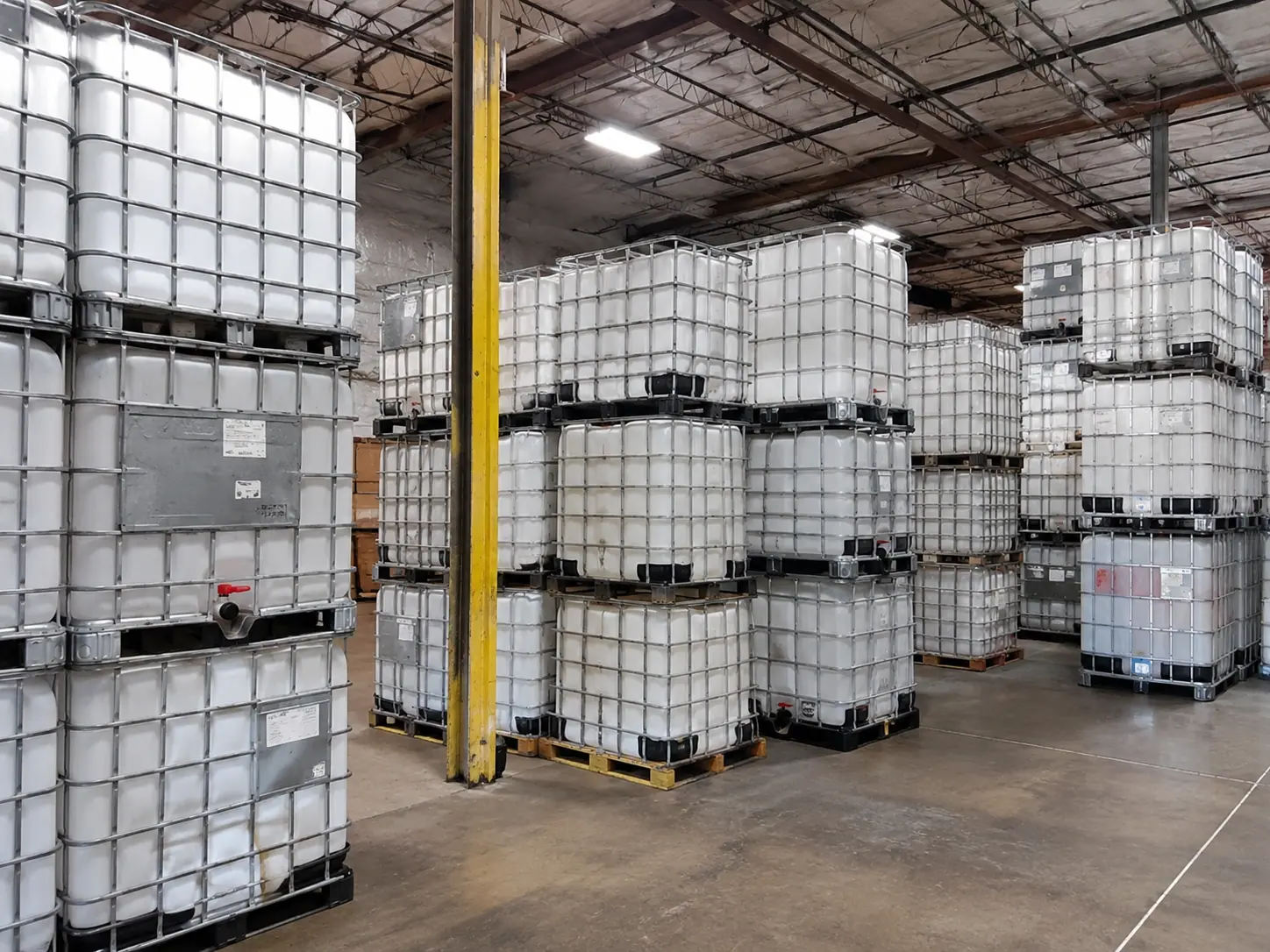
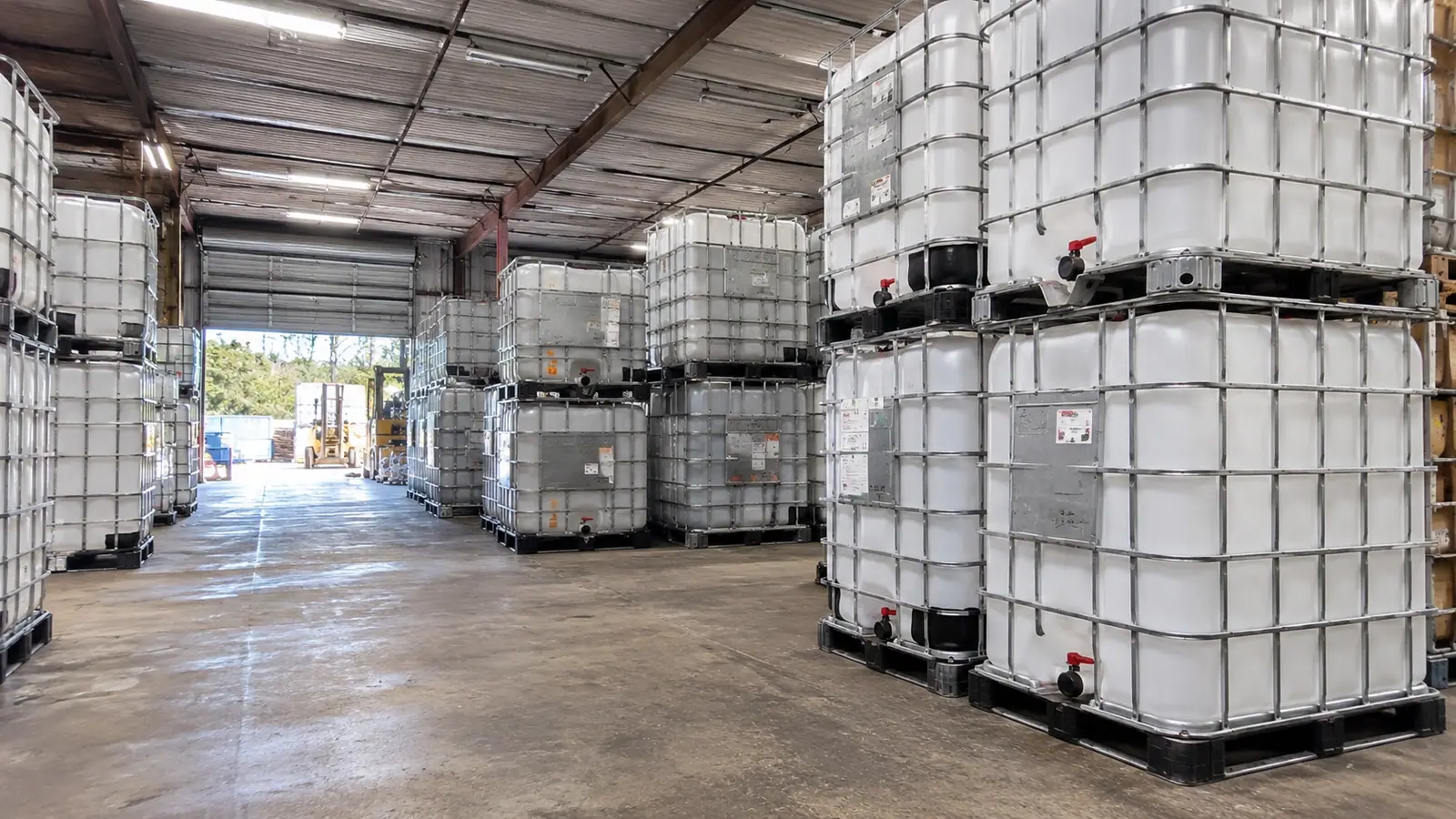
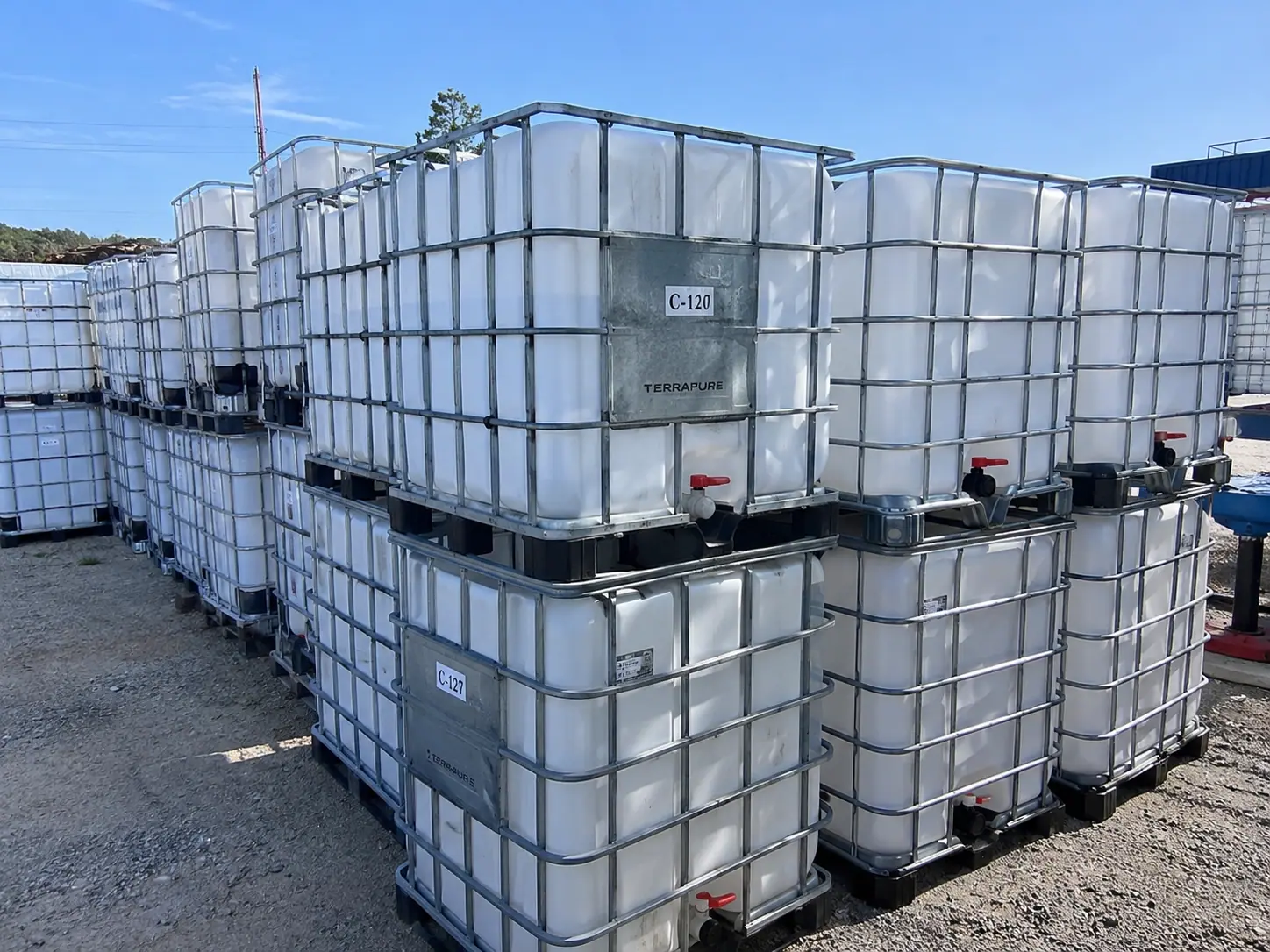
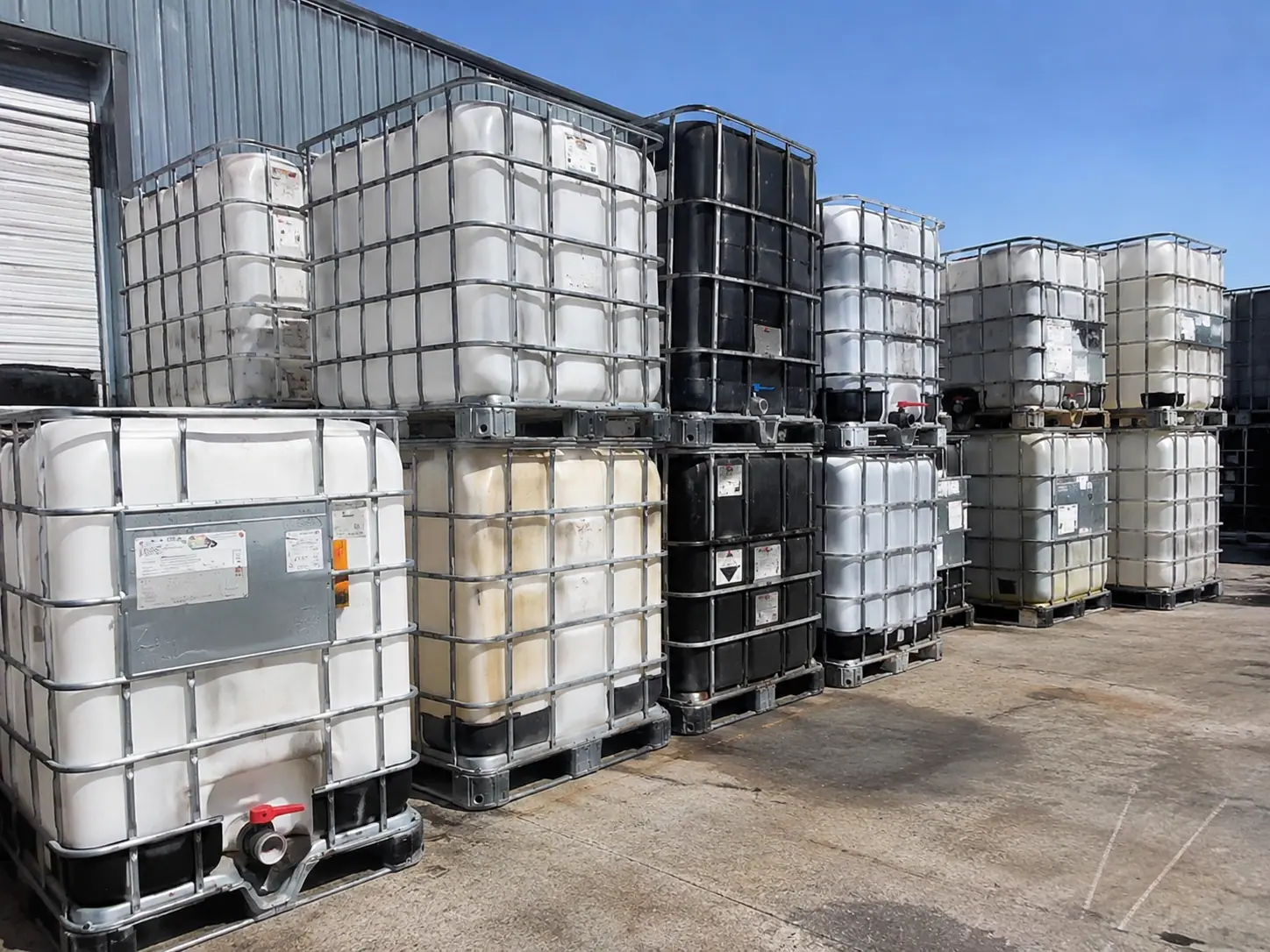
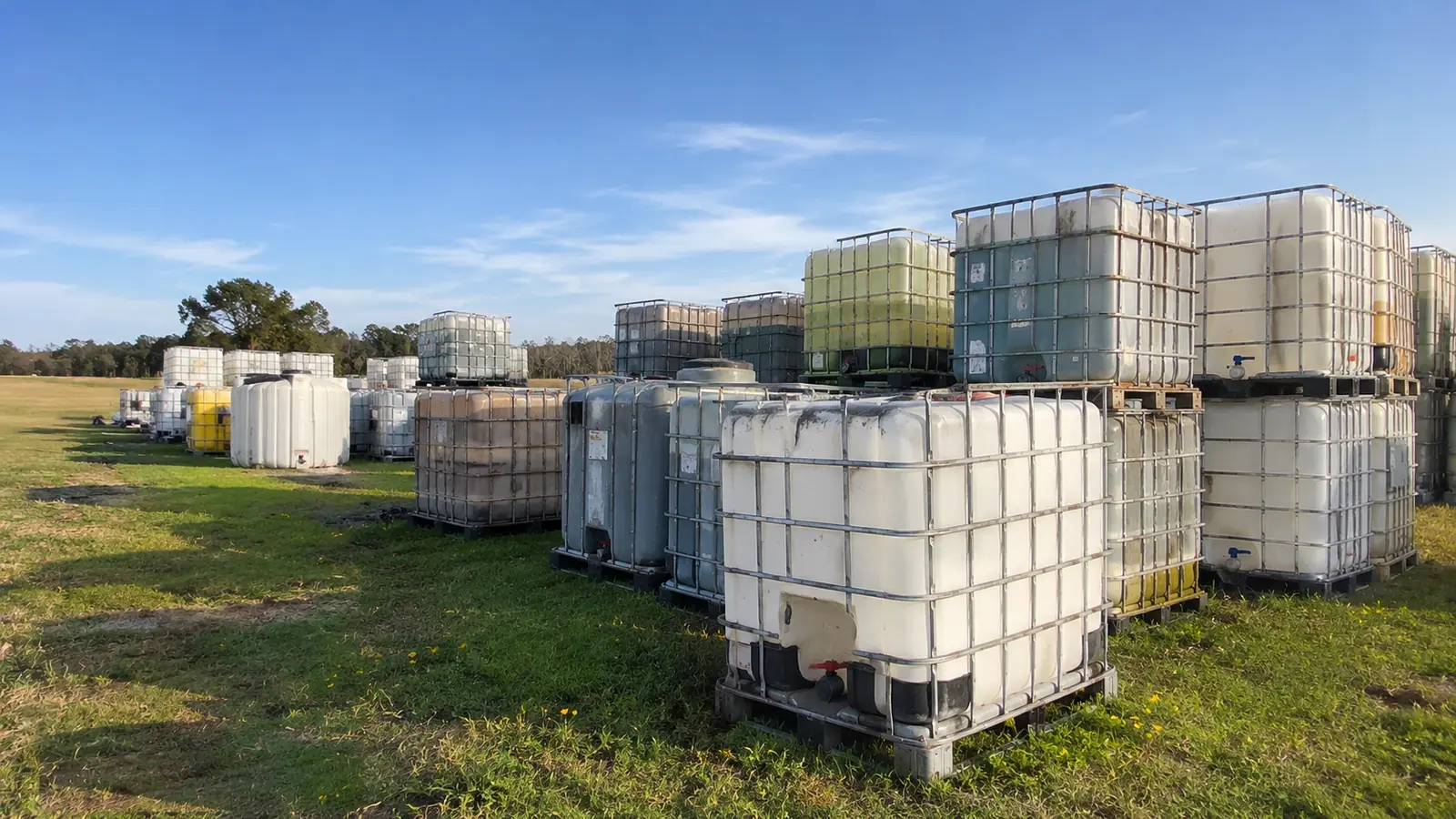
Five 55-gallon drums hold 275 gallons. So does one tote. The volume is identical and almost nothing else is — handling, storage, dispensing, freight, disposal and the shape of your risk all change at once.
The handling arithmetic
Five drums is five lifts, five placements, five connections, five disconnections and five empties to deal with. One tote is one of each. If a drum handling cycle takes four minutes of somebody's time, you have just removed sixteen minutes per 275 gallons — which across a year of real volume is a meaningful number of hours.
It also removes four opportunities for a spill, four opportunities for a strain injury, and four opportunities to connect the wrong drum.
Where drums still win
This is not a one-sided argument and we sell both.
- Doorways and lifts. A drum goes through a standard door on a drum dolly. A tote needs 42 inches and a forklift.
- Small batches and multiple products. Five drums can be five different chemistries. One tote is one.
- Shelf life. If you use 55 gallons a quarter, a tote will sit open for a year. Drums let you open what you need.
- Flammables and solvents. Steel drums can be bonded and grounded; composite IBCs cannot. See static and plastic totes.
- Mezzanines and upper floors. Floor loading for a 2,435 pound point load is a structural question; 500 pounds generally is not.
What changes in dispensing
Drums dispense by pump through a 2 inch bung, or by tipping. Totes dispense by gravity through a 2 inch outlet at the base — which means for most duties you need no pump at all, just elevation and a valve.
That is a genuine simplification, and it is also where thread confusion starts. Drum bungs are NPT; tote outlets are S60x6 buttress. They are not interchangeable, and forcing one into the other is the commonest hidden fault in used containers. Keep an S60x6 to 2 inch NPT adapter in the box and the problem disappears.
What changes in freight
A pallet of four 55-gallon drums occupies roughly the same footprint as one tote and holds 220 gallons instead of 275. So totes are about 25 per cent more volume per pallet position — which on a full truckload is a material difference in freight per gallon.
Against that, drums stack more flexibly and tolerate partial loads better. If you ship mixed small quantities, drums are frequently the more practical unit.
What changes in storage
Secondary containment arithmetic changes completely. Containment for five drums has to hold 55 gallons under the common largest-container rule. Containment for one tote has to hold 275. That is a bigger, more expensive containment solution, and it is the cost most people forget when they model the switch.
There is a fuller treatment in secondary containment, including the displacement arithmetic that catches people.
What changes at end of life
Both are recoverable and both have buyback value. Totes are worth more per unit and more per gallon of capacity, and because they are bulkier they are more likely to be crushed for space — which is the thing worth planning against.
If you switch to totes, set up the collection route at the same time. Five drums tucked behind a rack are invisible; four totes in a fire lane are not, and that visibility is what drives bad disposal decisions.
A sensible transition
- Start with your highest-volume product. The one where five drums a week is already annoying.
- Check the physical constraints first. Doorway width, ceiling height, floor loading, forklift capacity at load centre.
- Price the containment. It is the hidden cost and it is not small.
- Keep drums for the long tail. Low-volume products, flammables and anything going upstairs.
- Set up the empties route before the first delivery, not after the corner fills up.
We supply both and we will tell you honestly when drums are the better answer — roughly a third of the time, in our experience.
The dispensing change, in detail
This is where most of the practical benefit lands and it is worth spelling out.
A closed-head drum dispenses by pump through a 2 inch bung, which means every draw needs a pump, a wand or a siphon, and the pump has to be either dedicated to that product or cleaned between products. An open-head drum can be scooped, which is fine for solids and unpleasant for liquids.
A tote dispenses by gravity through a valve at the base. For most duties you need no pump at all — elevate the tote on a stand and you have a tap. That removes a piece of equipment, a cleaning task and a cross-contamination route in one change.
It also means partial draws are trivial. Taking twelve gallons out of a tote is turning a valve; taking twelve gallons out of a closed-head drum is a whole operation.
Mixed-product sites, and the dedication discipline
Five drums can hold five products. One tote holds one. If you run many products in small volumes, drums are genuinely the right tool and switching will make your life harder.
Where sites get into trouble is the middle case: a handful of products, a few totes, and a temptation to rotate containers between them. Do not. A bolted identification plate per tote per product, permanently, and no swapping — this is the same rule we give breweries and it exists because the failure mode is expensive and invisible until it is not.
Storage and footprint, worked
Four 55 gallon drums on a standard pallet occupy about 13 square feet and hold 220 gallons. One tote occupies the same 13 square feet and holds 275. So totes give roughly 25 per cent more volume per square foot of floor.
Stacked, the arithmetic shifts. Drums stack two or three pallets high easily; loaded totes stack two and only under the conditions described in stacking IBC totes safely. For high-density warehouse storage of many pallets, drums can actually win on cubic utilisation.
Where totes win decisively is anywhere handling dominates — which is most production environments.
The containment cost, which is the real surprise
Worth repeating because it is the line people miss when they model the switch.
Containment sized to the largest container means 55 gallons for a drum store and 275 for a tote store. That is a materially larger and more expensive containment solution, and if you are outdoors it is a larger rain catchment too.
Price it before you commit. For a small site the containment upgrade can exceed the first year's handling saving, which does not make the switch wrong but does change the payback period. The displacement arithmetic is in secondary containment.
Shelf life and the open-container problem
If you consume 55 gallons a quarter, a 275 gallon tote will be open for a year. For many products that is fine. For anything that oxidises, absorbs moisture, settles irreversibly or has a stated shelf life after opening, it is not.
Two mitigations if you want totes anyway: a nitrogen blanket is not possible in a composite IBC, so that route is closed; a desiccant breather on a vented lid handles moisture ingress and is cheap. Beyond that, the honest answer is to match the container to the consumption rate rather than the other way round.
A hybrid is usually the answer
Most of our customers who “switched to totes” did not. They moved their top two or three products to totes and kept drums for the long tail, which is the right outcome.
- Totes for: high-volume products, water-based chemistry, anything dispensed frequently.
- Drums for: low-volume products, flammables needing a bonding path, anything going upstairs, anything with a short open shelf life.
We supply both and we buy both back on the same programme, so there is no commercial reason for us to push you one way. We will tell you when drums are the better answer, which is roughly a third of the time.