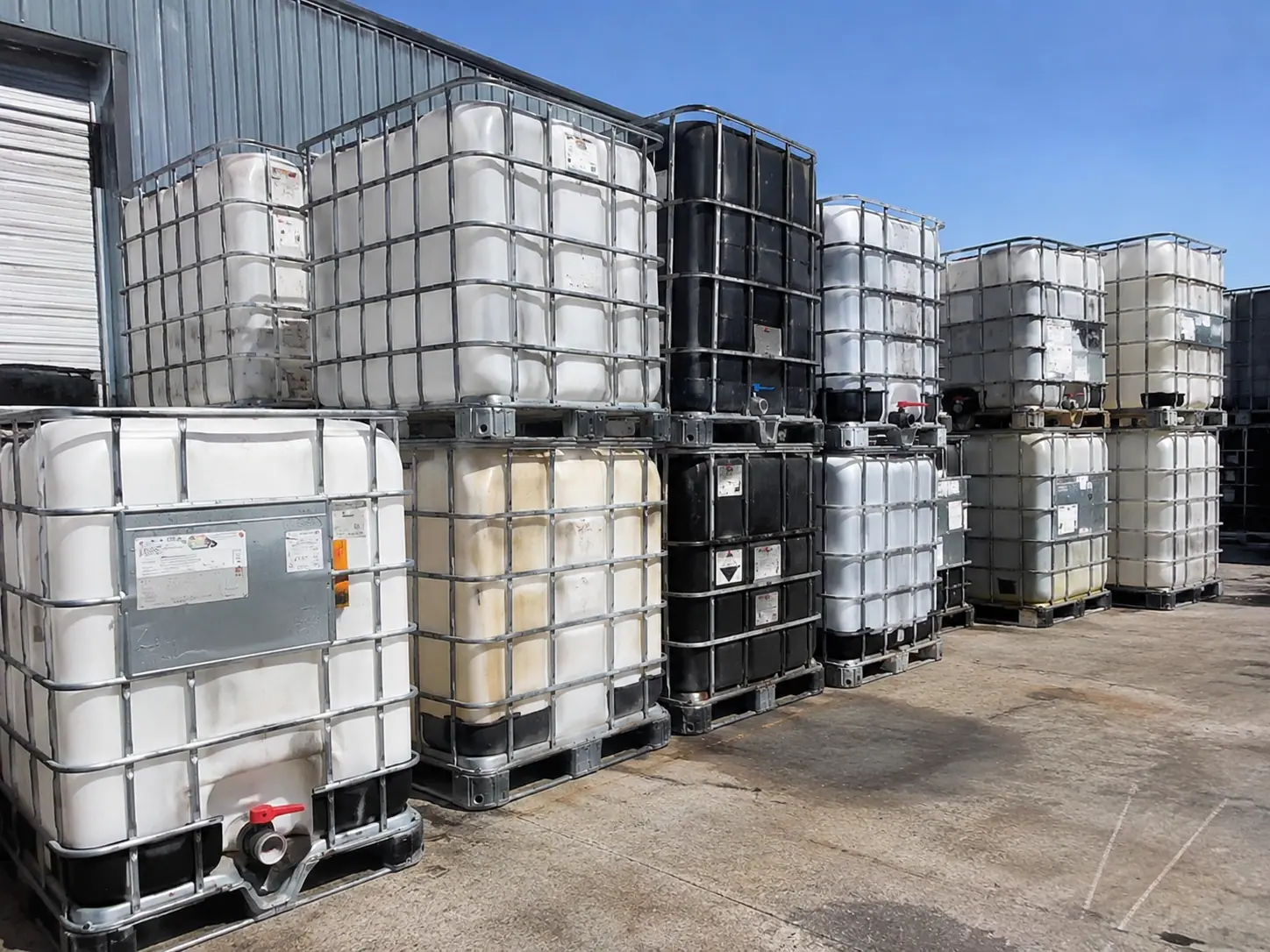
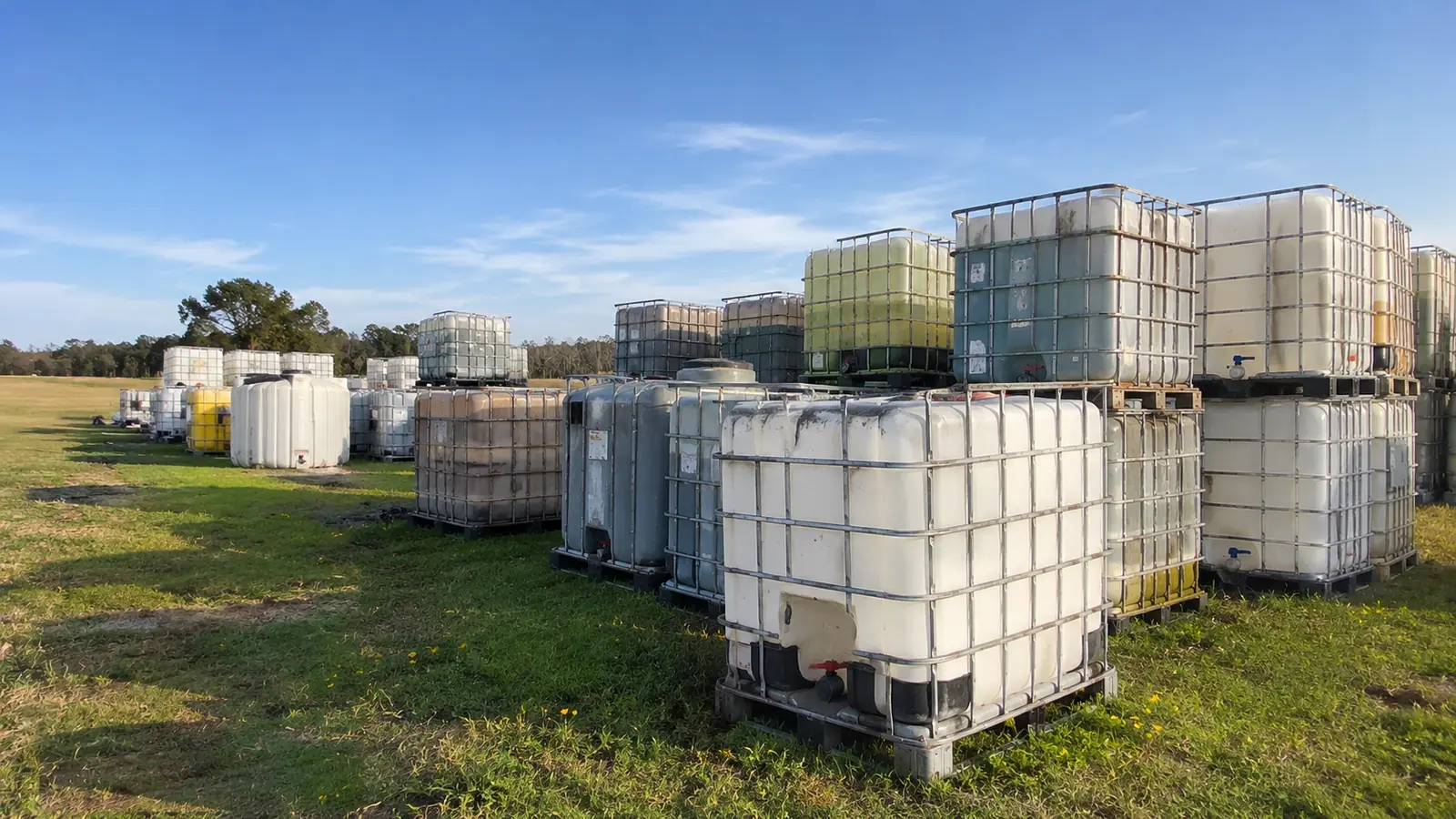
Containers go missing. Everyone in this industry knows it and almost nobody talks about it, partly because “theft” is the wrong word for most of what happens. The honest description is that nobody's job included getting them back.
Three different losses that look identical on a spreadsheet
Attrition
Your customer empties the tote, has no reason to return it, and either keeps it for site water or lets it drift to a scrap dealer. No malice, no event, just the absence of a reason. This is the overwhelming majority of “missing” containers.
Absorption
The container stays on your customer's site doing something useful — rain capture, wash-down water, a parts washer. It is not lost; it has been quietly repurposed, and from your books it has vanished.
Actual theft
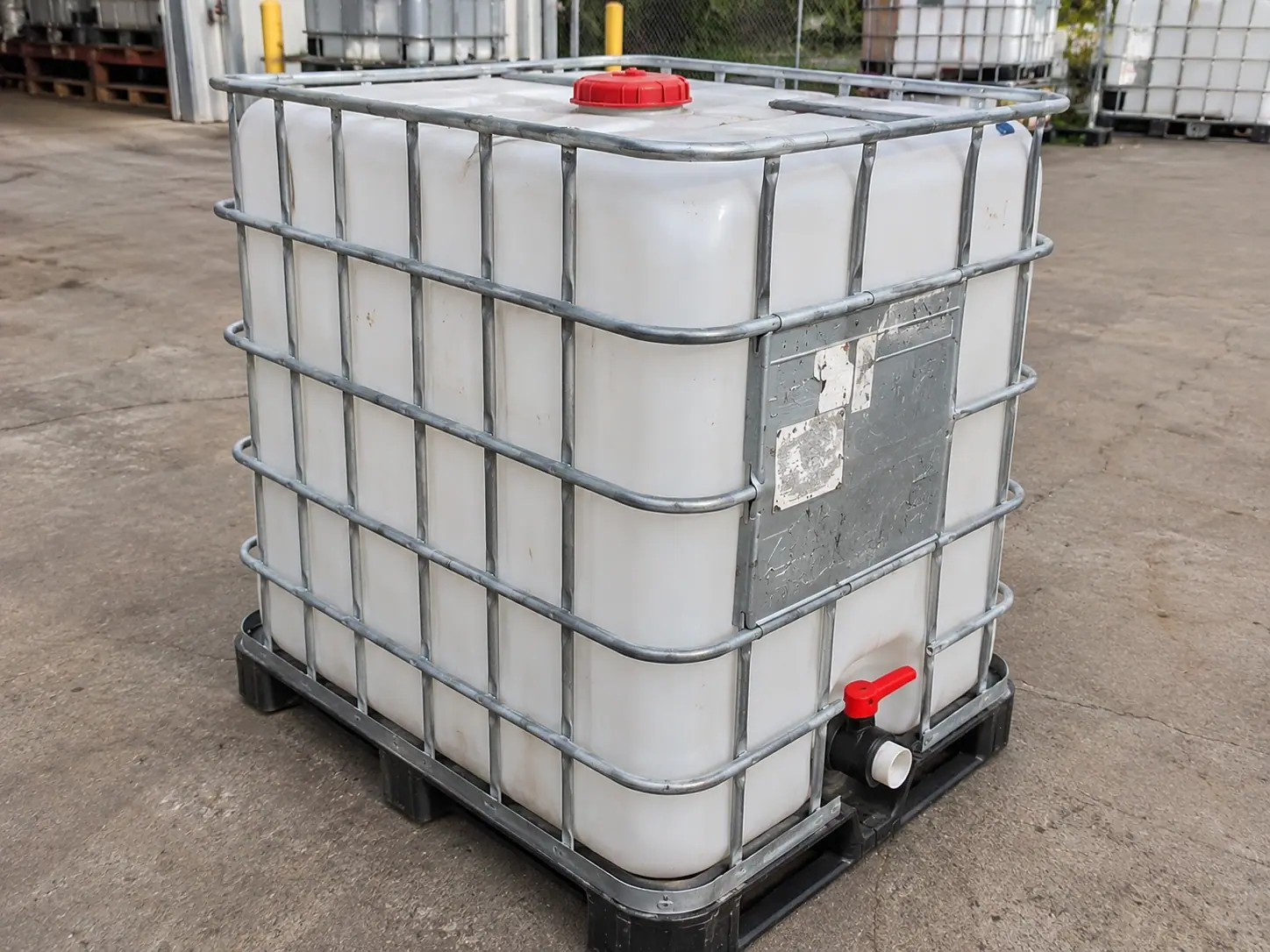
Real, and much rarer than the other two. A caged composite has perhaps thirty to fifty dollars of scrap steel in it, which is enough to motivate opportunistic removal from an unsecured yard but nowhere near enough to motivate organised theft.
The important point is that the first two categories dwarf the third, and no amount of fencing, lighting or cameras addresses them at all.
Why asset tags mostly do not work
Plenty of operations bolt on an asset plate, stencil a number, or fit an RFID tag. These are useful for your own internal tracking and nearly useless as a recovery mechanism, because:
- Nobody downstream has any obligation to read them.
- A tag tells you a container is missing; it does not create a reason for anyone to return it.
- Adhesive labels do not survive a caustic wash; bolted plates do, which is why we fabricate those.
- RFID needs a reader at every point of handling, which means you need the whole chain to participate.
Tagging is necessary infrastructure for a return programme. It is not a return programme.
What actually works: making return somebody's job
There are only three mechanisms that reliably bring containers back, and all three work by aligning an incentive rather than by enforcement.
1. A deposit
Charge for the container, refund on return. Crude, effective, and administratively annoying. Works best when you have repeat customers and a stable commercial relationship.
2. A buyback route your customer can use
Tell your customer that we will collect their empties and pay them. You stop owning the reverse logistics, they get a small cheque instead of a disposal cost, and the container re-enters the loop. It does not come back to you specifically, but it does not become landfill either.
3. Pooling
We own the containers. You fill them, ship them, and we collect from wherever they end up. The container's return is our commercial interest, and we are organised around it — unit-level tracking, a published loss and damage schedule, and a national collection network.
That alignment is the whole innovation. Everything else is trucks. There is a fuller treatment on the leasing and pooling page.
The number that improves when you solve this
A container's entire environmental cost is fixed at manufacture. Divide it by trips. A tote that makes one trip carries roughly 240 pounds of CO₂e for that trip; one that makes nine carries about 27. Nothing about the container changes between those two cases — only whether somebody was responsible for bringing it back.
So container loss is not primarily a cost-control problem. It is the single largest environmental variable in bulk liquid packaging, and it is almost entirely an organisational one.
A practical starting point
If you ship containers out and have no idea where they go, start by measuring it. Count what leaves and what returns over one quarter. Most operations that do this for the first time are surprised, usually unpleasantly, and the number is the argument for doing anything at all about it.
Measuring it, which almost nobody does
Before you can fix container loss you have to know its size, and the measurement is simple: count what leaves and count what returns over one quarter, by unit rather than by value.
The number that comes out is almost always worse than the operations team expects and better than the finance team fears. Either way it converts an irritation into a figure, and figures get budgets.
One refinement worth making: separate containers you expected back from containers you never expected back. A one-way shipment that was always one-way is not attrition, it is a cost of sale, and conflating the two makes the problem look unsolvable.
What tagging is actually good for
We said tags are not a return programme, which is true, and they are not useless either. A bolted asset plate does three real things:
- It lets you count. Serial-level tracking is how you measure attrition at all, and how you identify which customers or routes lose containers.
- It prevents duty rotation. A permanently marked GLYCOL tote does not end up holding caustic. This is a bigger safety benefit than the recovery benefit.
- It survives washing. Adhesive labels do not survive a caustic cycle at 150 °F. Bolted steel plates do, which is why we fabricate them that way.
So tag, by all means. Just do not expect the tag to motivate anybody downstream.
The deposit mechanism, honestly assessed
Deposits work. They are also administratively unpleasant: you are now running a small receivables and refunds operation alongside your actual business, and the deposit has to be large enough to motivate return, which means large enough to annoy customers.
They work best with repeat customers on stable commercial terms, and badly with one-off or price-sensitive buyers. If you only have one lever, this is a usable one — but most operations that try it end up preferring the buyback-route approach because it requires nothing from them.
Pointing customers at a buyback route
The lowest-effort intervention available to you: tell your customers that we will collect their empties and pay them for them.
You lose the specific container and you lose nothing else. Your customer gets a small cheque instead of a disposal cost, their fire lane stays clear, and the container re-enters service rather than being crushed. You have converted an attrition loss into a neutral outcome at zero administrative cost.
Several of our customers put a line on their delivery paperwork to this effect. It costs them a sentence and it measurably reduces the number of their containers that get destroyed.
Security, for the small share that is theft
Worth being proportionate about. A caged composite has perhaps thirty to fifty dollars of scrap steel in it — enough for opportunistic removal from an unsecured yard, nowhere near enough for organised theft.
So the controls that pay off are the cheap ones: store empties inside a fence rather than on a verge, do not stage them next to a gate, and do not leave a stack of twenty visible from a public road for a month. Cameras and lighting are rarely justified by container value alone.
Why this is an environmental post in disguise
A container's entire embodied impact is fixed at manufacture. Divide by trips: one trip is roughly 240 pounds of CO₂e per trip, nine trips is about 27. Nothing about the container changes.
Which means container loss is the single largest environmental variable in bulk liquid packaging, and it is almost entirely organisational. No material substitution, no certification and no recycling programme comes close to the effect of simply getting the container back. That is the argument, and it is also the entire reason pooling exists.