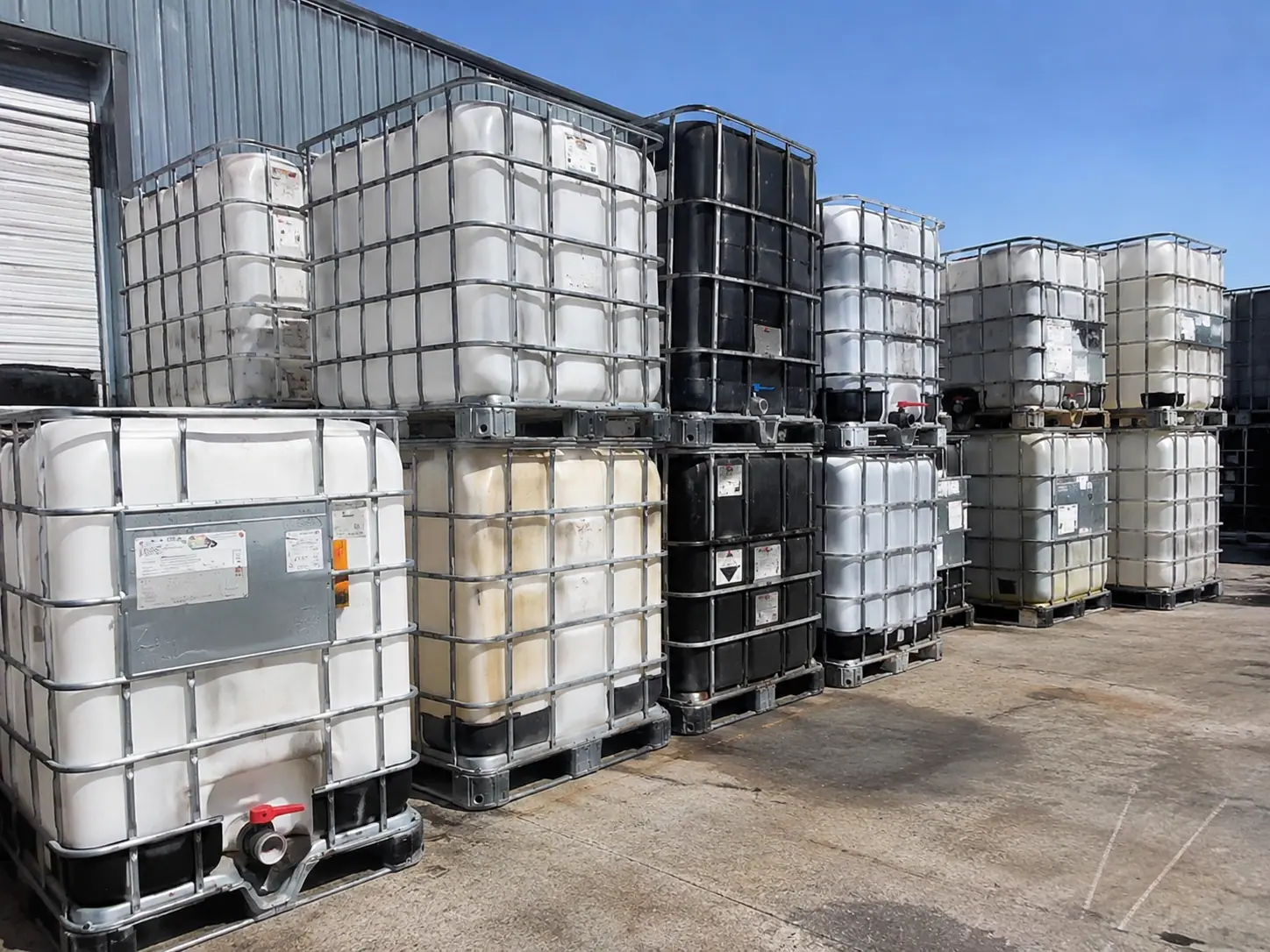
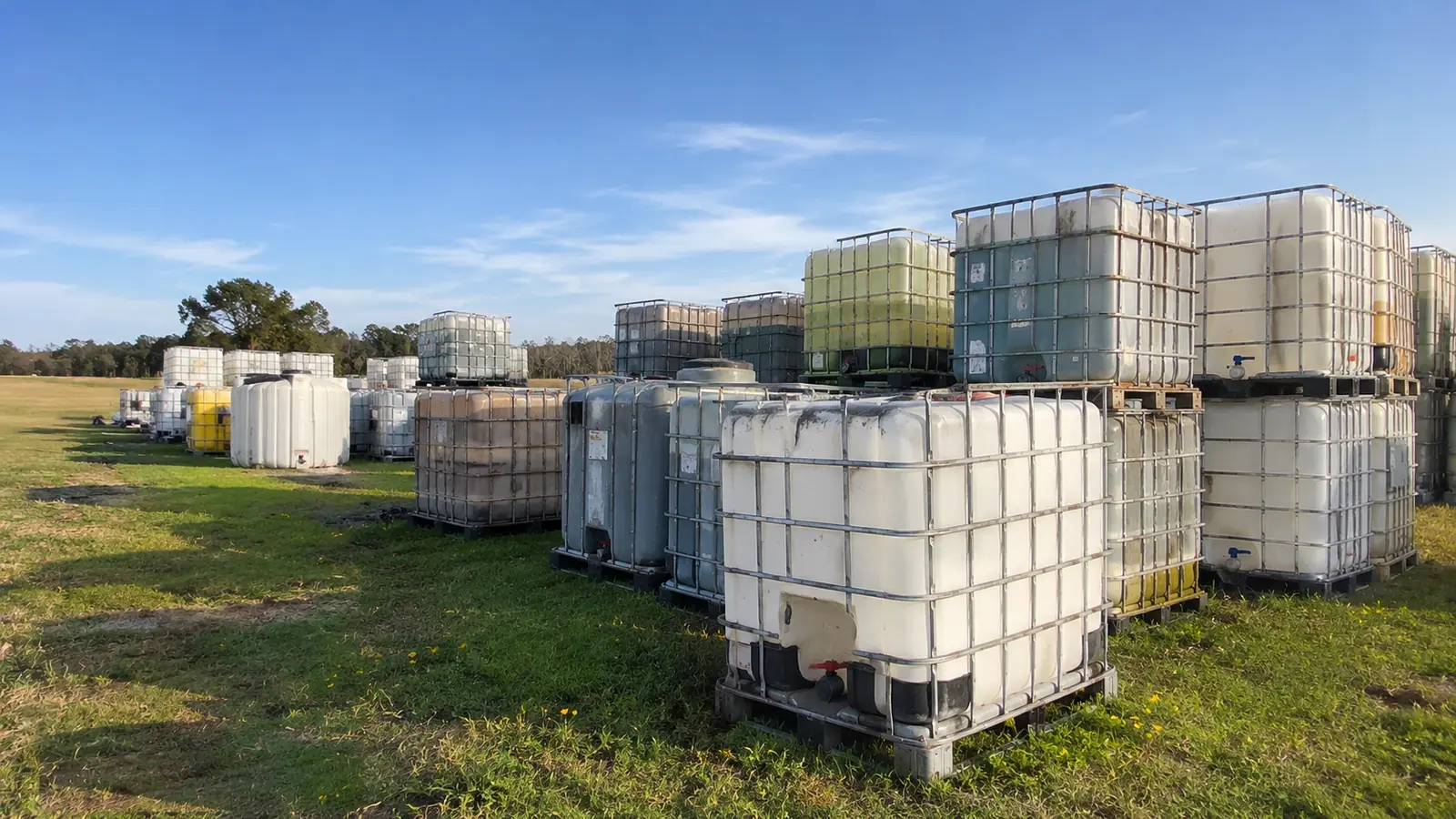
There is always a cheaper tote. Somebody on a marketplace, somebody clearing a yard, somebody with a trailer-load and no questions. Sometimes that is a genuine bargain. Here is how to tell the difference, and what the bad version actually costs you.
What you are not buying
An ungraded, undocumented, untested container is cheaper because four things have been left out, and each of them is a real cost that has been transferred to you.
1. The cargo history
Without a written prior-cargo declaration you do not know what is in the polymer. Not on it — in it. Terpenes, several surfactants and some solvents dissolve into the wall and migrate back out for years. If your next cargo picks up an odour or a contaminant, the investigation cost alone exceeds what you saved.
2. The leak test
Around six per cent of units entering our test cell fail, almost always at the valve flange or lid gasket rather than the bottle wall. Those are cheap faults to fix and expensive faults to discover after filling. A tote that fails after you have put 275 gallons of product in it costs you the product, the cleanup and the downtime.
3. The grade
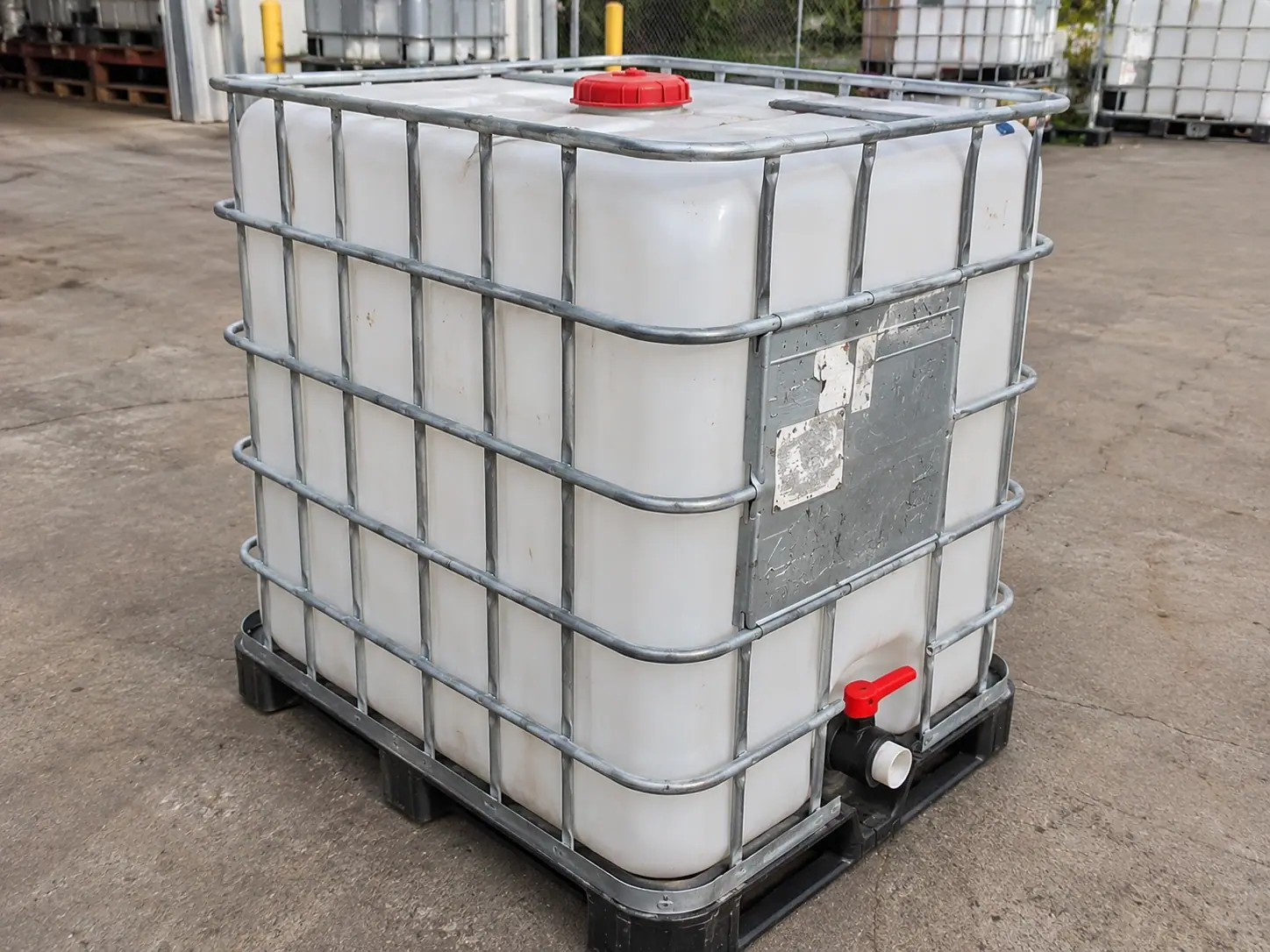
“Good condition” is an opinion with a price tag. Stress whitening, interior crazing, out-of-square cages and cross-threaded ports are all invisible to a casual look and all determine how many trips the unit has left.
4. The marking
If your cargo is regulated, a unit without a legible, current UN marking is not usable for that cargo at any price. Discovering this at the loading bay is a bad day.
The arithmetic on a realistic failure
Suppose you buy forty units and save a meaningful amount per unit against a graded supply. Now suppose three of them fail — one leaks on first fill, one carries an odour into a batch, and one turns out to be unusable because the marking is illegible.
The leak costs you product, cleanup time and possibly a containment incident report. The odour costs you a batch and an investigation. The illegible marking costs you a delayed shipment. Any one of those three typically exceeds the total saving on all forty units.
This is not a scare story; it is just the shape of low-probability, high-cost risk. The saving is certain and small. The loss is uncertain and large.
When a cheap tote genuinely is a bargain
Plenty of the time. Buy ungraded units confidently when:
- The duty is non-potable water — jobsite, dust suppression, irrigation, rain capture.
- You are buying them to cut up for a build, where the bottle's history is irrelevant.
- You can inspect them yourself and know what to look for.
- The seller can tell you the prior cargo even informally, and it is something benign.
- The value at risk downstream is low.
Our own Grade C units are exactly this: sound, honest, cheap and sold for duties where cosmetic condition and cargo history do not matter.
When it is false economy
- Anything touching food, feed or anything ingested.
- Any regulated cargo requiring a current marking.
- Any product where contamination would scrap a batch.
- Any situation where a leak would be a reportable release.
- Any cargo you will store for months — permeation and compatibility matter more over time.
How to inspect a cheap tote yourself
If you are going to buy ungraded, do the four-minute inspection: ask for the cargo history in writing, open the lid and smell it, look down the inside wall against a light for scoring and crazing, check the four lower corners for chalky stress whitening, sight the cage top rail for square, and run a fingernail round the outlet threads for cross-threading.
That sequence is written out in full in reading a tote before you buy, and we published it partly so you could use it on somebody else.
What we are actually selling
A graded tote is not a better container than a good ungraded one. It is the same container with the uncertainty removed, and the price difference is the cost of removing it. Whether that trade is worth it depends entirely on what the uncertainty would cost you — which is a question only you can answer, and we would rather you answered it clearly than bought from us out of vagueness.
Three real cases
Anonymised, but all three are customers who came to us after buying elsewhere.
The odour case
A sauce manufacturer bought thirty units described as “food grade, washed” from a yard clearance. They had held a citrus-based industrial cleaner at some point. Three production batches picked up a faint orange note before anybody connected it to the containers, and the investigation took a fortnight.
The containers cost a fraction of graded units. The three batches cost several orders of magnitude more than the saving.
The marking case
A chemical distributor bought sixty units cheaply for a regulated product. Roughly a third had markings that were illegible or dated outside the test cycle. They could not load them, the shipment slipped, and they ended up buying graded units at short notice anyway — paying twice.
The leak case
An agricultural blender bought forty ungraded units in March. Two leaked on first fill — both at the valve flange, both a reused gasket. The product loss was modest; the containment paperwork and the half-day of cleanup during the busiest fortnight of their year was not.
That one is worth noting because the fault was a few dollars of gasket. It was not a bad container; it was an un-serviced one.
The asymmetry that makes this hard to reason about
The saving is certain, immediate and small. The loss is uncertain, delayed and large. Human beings are reliably bad at that trade, and procurement systems that measure unit price are structurally bad at it.
The useful reframe is to ask what a failure costs rather than what a unit costs. If a failure costs you a batch, the uncertainty is expensive and graded units are cheap insurance. If a failure costs you the price of a replacement tote, buy the cheap ones with a clear conscience.
Questions that reveal a supplier in thirty seconds
- Can I see the written prior-cargo declaration for these specific units?
- What grade standard do you use, and can I read it?
- Do you leak-test every unit, and what proportion fail?
- What happens if the grade is wrong on arrival?
- Did you wash these, or did somebody else?
- What would disqualify a unit from your food programme?
The last one is the most revealing. A supplier with a real programme answers it quickly and specifically. A supplier without one talks about how clean the units look.
Buying ungraded well
If the duty genuinely does not warrant graded units — and often it does not — buy ungraded deliberately rather than by accident:
- Inspect in person, or buy on photographs that include the interior and the corners.
- Ask about prior cargo even informally. Any answer beats no answer.
- Open the lid and smell it. Any odour is a no, at any price.
- Assume one in ten will be unusable and price accordingly.
- Buy them for water duty, builds or non-critical service only.
That is a sound purchasing strategy. What is not sound is buying ungraded units for critical service because the quote looked better.
What we are actually charging for
Not a better container. A reconditioned Grade B unit from us is the same object as a good ungraded unit from a yard clearance — the difference is that we have removed the uncertainty, written down what we found, and accepted the consequences if we were wrong.
That is the whole product, and whether it is worth paying for depends entirely on what uncertainty costs you. We would much rather you worked that out clearly and sometimes bought elsewhere than bought from us out of vagueness. The scoring rules are published on the grade scale page so you can audit the claim.