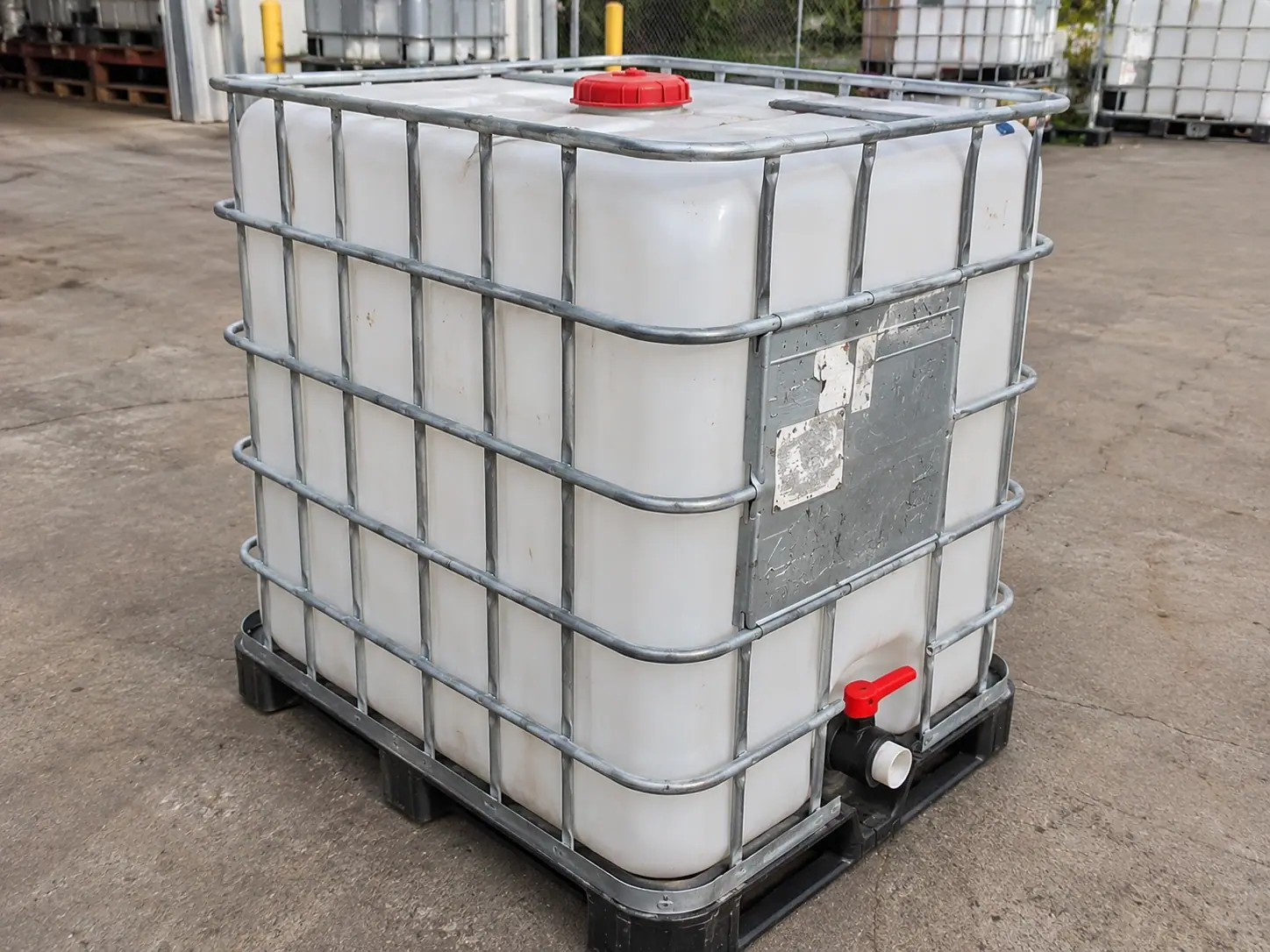
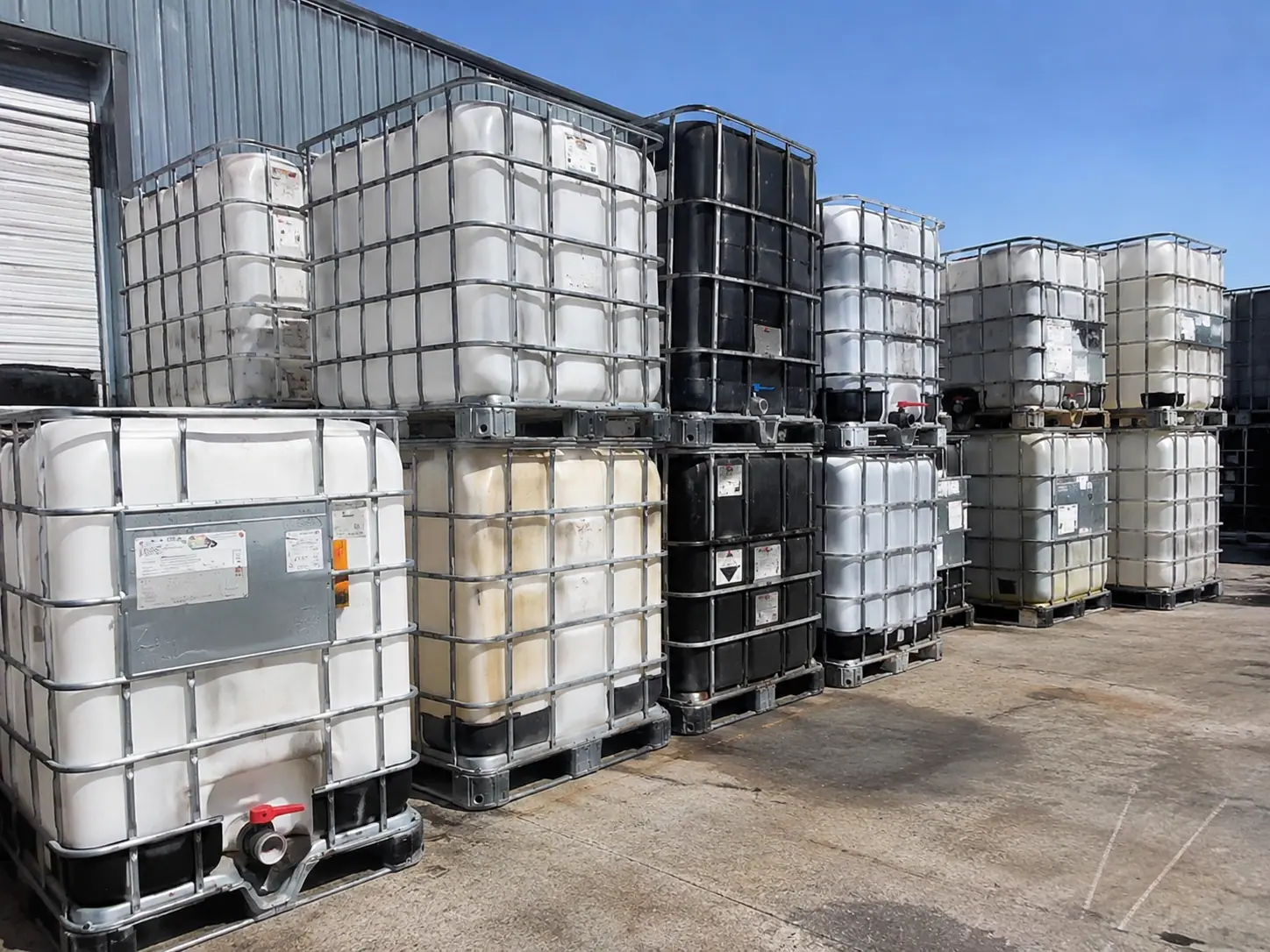
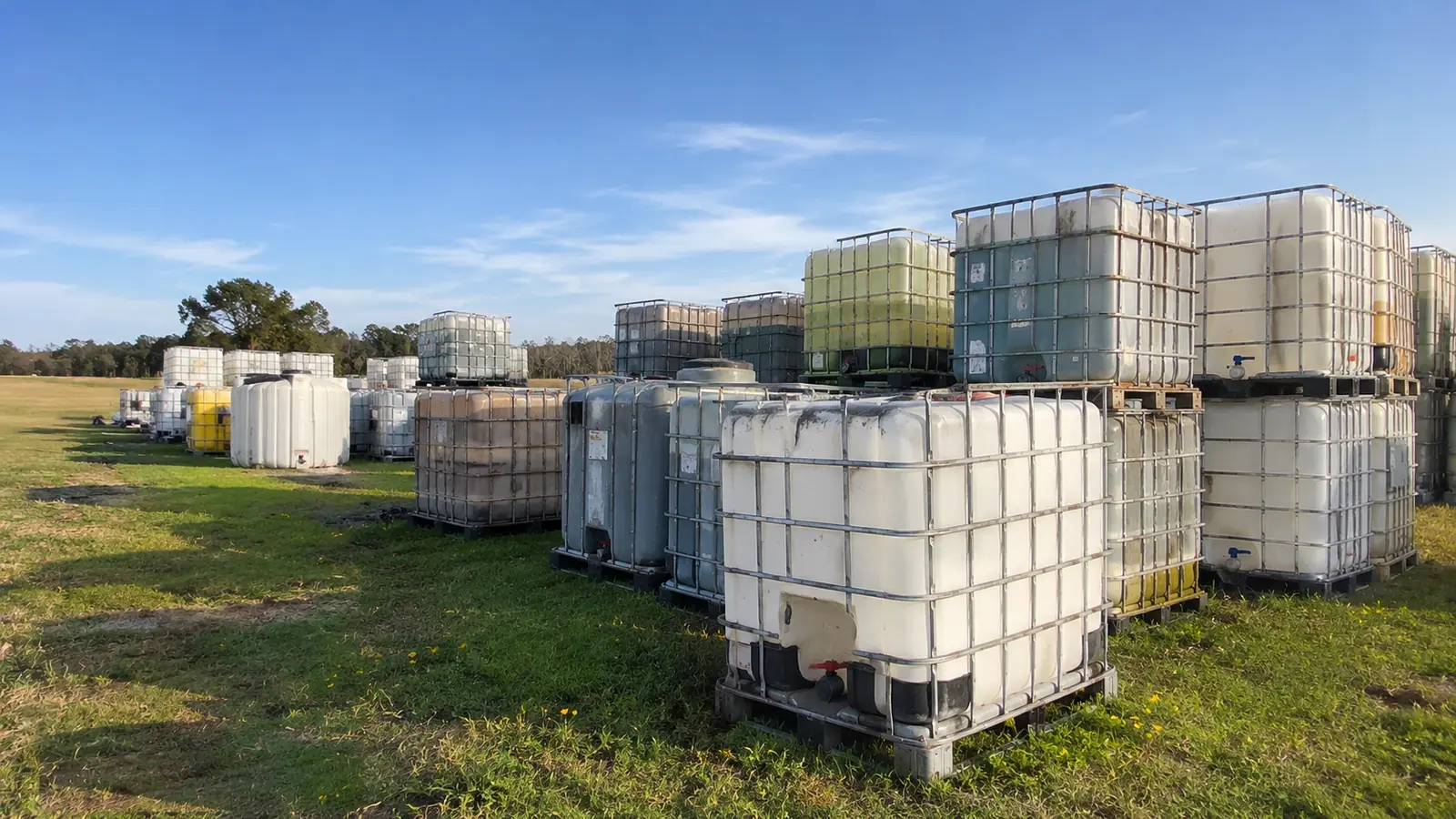
A natural translucent HDPE bottle left in full sun has roughly eighteen months in it before the wall starts to change. Black UV-stable resin has five years or more. Shade has considerably longer than either. Most people discover this ordering, not planning.
What UV actually does to polyethylene
Ultraviolet light breaks carbon-hydrogen bonds in the polymer backbone, which initiates oxidation. The chains shorten, the material loses the ability to deform plastically before fracturing, and the bottle becomes progressively more brittle.
The visible symptoms arrive in a predictable order: a chalky surface bloom, then a loss of translucency, then fine surface crazing, then brittle fracture at a knock that would have bounced off a new bottle. By the time you can see crazing, the mechanical properties have already moved a long way.
The three storage options, honestly
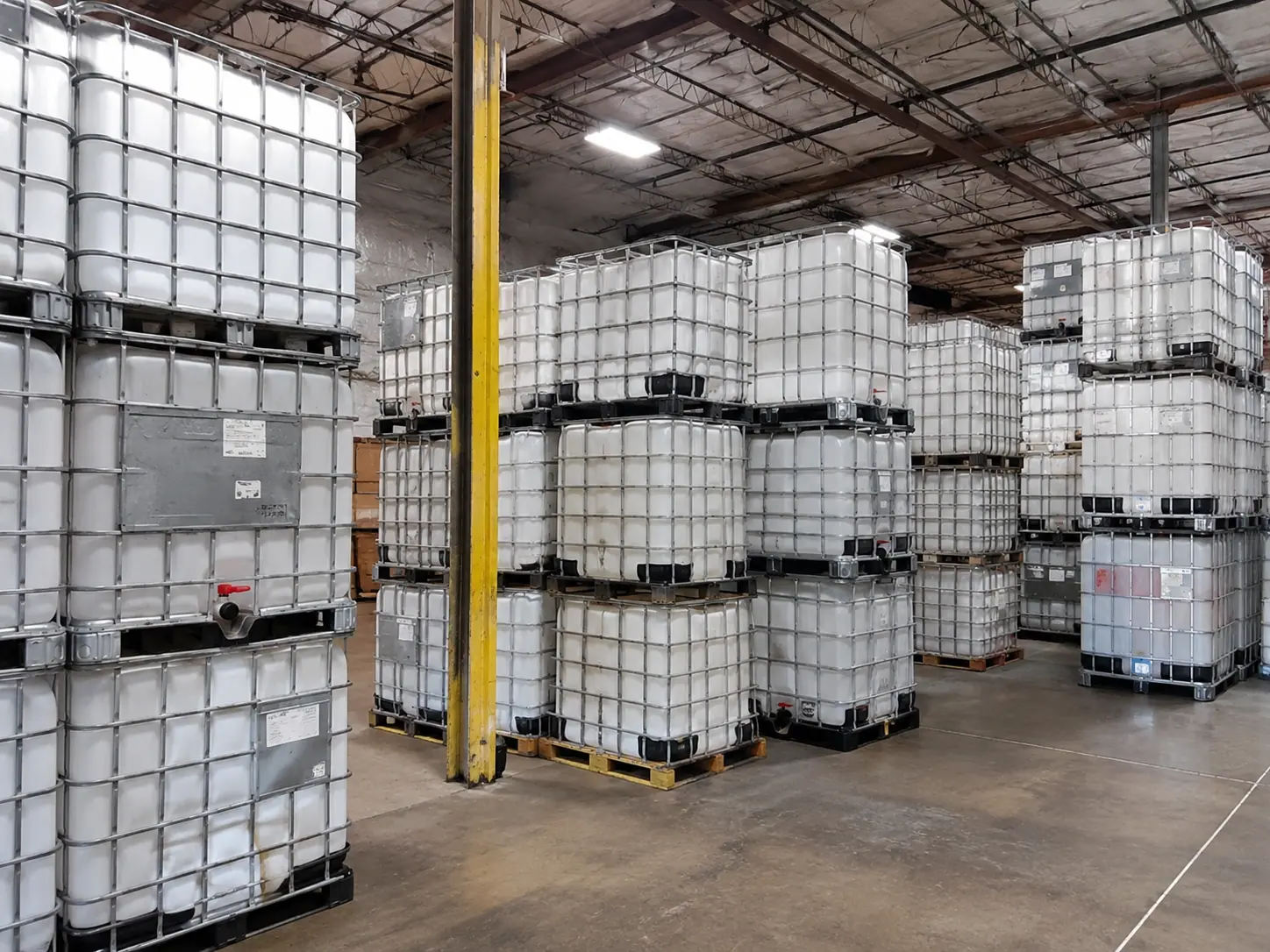
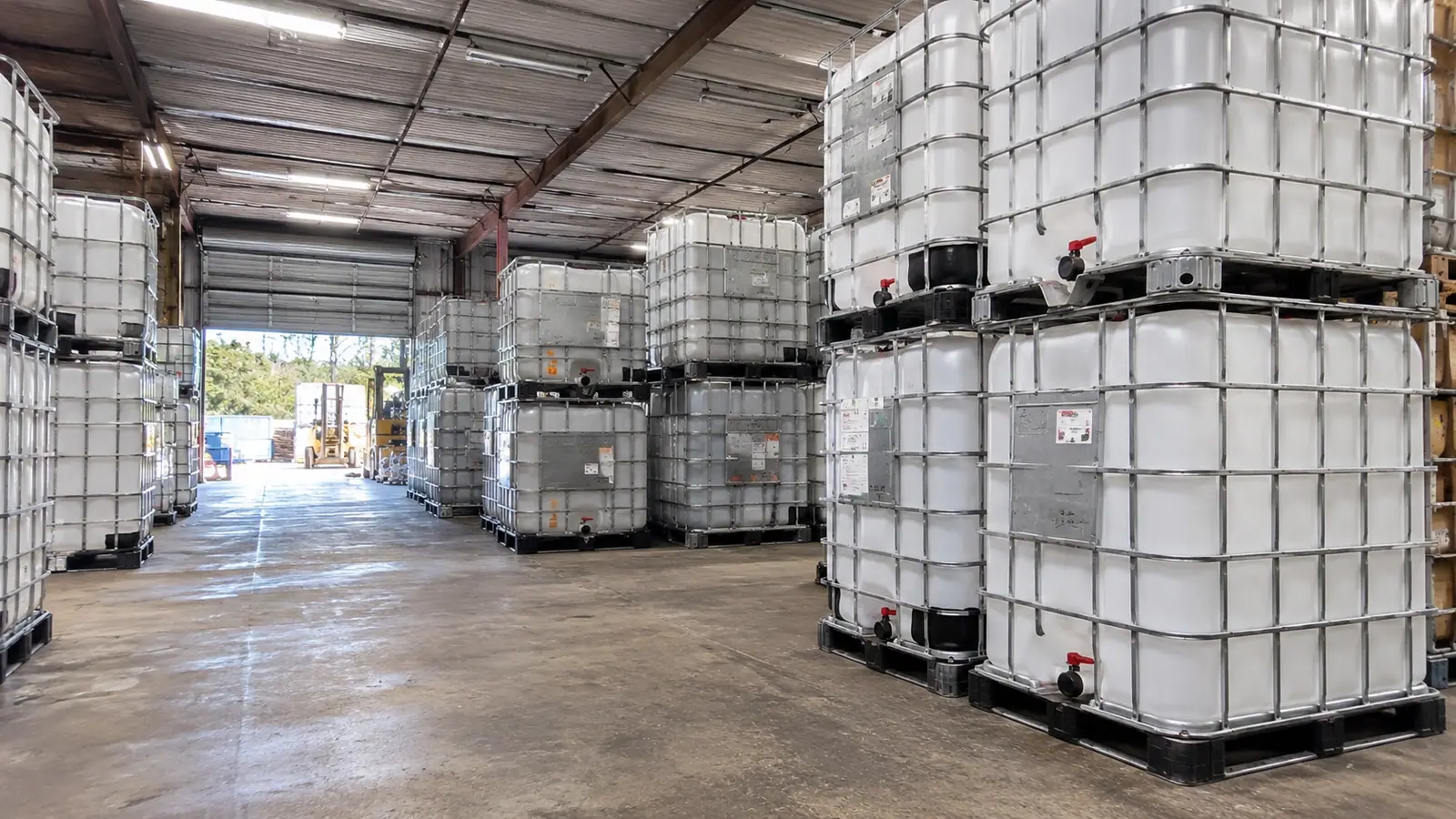
Indoors
The UV clock essentially stops. Fluorescent and LED lighting is not a meaningful UV source at these timescales. An indoor tote ages by handling and chemistry, not by light.
Outdoors, shaded
A canopy, a north-facing wall, a tarpaulin or a purpose-built cover gets you most of the way to indoor performance. The cheapest effective measure on this entire page is a tarpaulin that costs less than a valve.
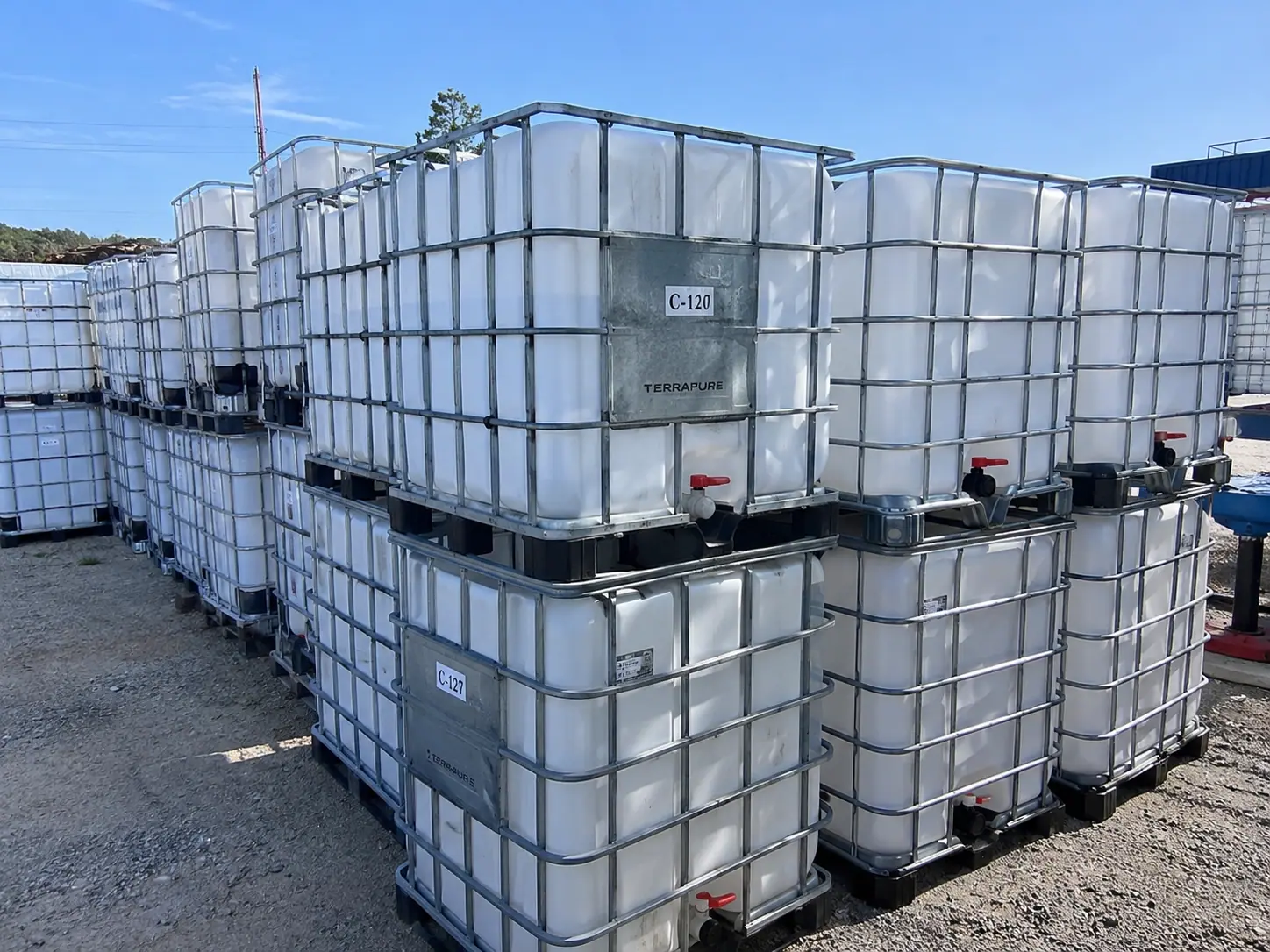
Outdoors, full sun
Natural bottles: plan on eighteen months to two years of structural life, less at altitude or in the Southwest. Black UV-stable bottles: five years and frequently more. The pigment both absorbs and blocks, which is why it works.
Other things sunlight does
- Algae. A translucent tote full of nutrient-bearing water in sunlight will go green. Relevant for rain capture, irrigation and aquaponic sumps.
- Thermal cycling. Daily expansion and contraction fatigues the wall and pumps air in and out of a vented lid, which matters for hygroscopic cargo.
- Cargo degradation. Several agricultural chemistries and most peroxides are light-sensitive in their own right, independent of the container.
Practical storage rules
- Shade, or specify black. If a unit will live outside for more than a season, decide this at purchase. Black bottles are a four-week lead item rather than stock, so plan ahead.
- Keep them off bare ground. Pallet feet in standing water rot wood, corrode steel and freeze in place in January.
- Do not stack loaded units outdoors in summer. Warm HDPE creeps, and the failure shows up in the lower unit.
- Vent or seal deliberately. Vented lids for anything exposed to temperature swing; solid lids where the cargo must stay sealed, and then manage the exposure instead.
- Rotate stock. The empties at the back of the yard are the ones aging fastest, because nobody looks at them.
How this shows up at our grading bench
UV-aged units are easy to spot. The surface has a dull, chalky feel, the bottle has lost translucency, and the wall sounds different when you tap it. We check wall thickness at the thinnest point and look hard for crazing against a light.
A badly sun-aged bottle is a rebottle candidate, not a reconditioning one — and the cage and pallet are usually perfectly sound, because galvanised steel does not care about sunlight. That asymmetry is exactly why rebottling exists.
The buyback implication
If you intend to sell your empties back at some point — and you should — storing them under cover is worth real money. A shaded unit grades a tier higher than an identical one that spent two summers in the open, and the difference is considerably more than the cost of a tarpaulin.
It is the cheapest thing on our price factors list that nobody does.
Why black works and white does not
Carbon black is not a dye, it is a UV absorber. Finely dispersed carbon particles absorb ultraviolet energy and dissipate it as heat before it reaches the polymer chains. At around two per cent loading it is the most effective and cheapest UV stabiliser available for polyethylene.
White pigment scatters rather than absorbs, which helps a little and not nearly as much. A white bottle is somewhere between natural and black, and it runs cooler than black — which is occasionally the deciding factor for heat-sensitive cargo.
The trade with black is simply that it absorbs more heat, so a black tote in full sun runs warmer internally. For most cargo the UV protection is worth far more than the thermal penalty. For heat-sensitive cargo, shade a natural bottle instead.
Regional differences that are real
UV dose varies enough across the country to change the numbers. A tote in Phoenix or Albuquerque receives substantially more annual UV than the same tote in Cleveland or Seattle, and altitude adds to it.
Our own grading data reflects this: units arriving from the Southwest show UV embrittlement at noticeably lower ages than units from the Great Lakes. The same units also arrive with better cages, because the dry climate is kind to galvanising. Net, a Southwest tote is frequently a rebottling candidate with an excellent frame, which is a tidy illustration of why rebottling exists.
Covers, ranked by what we actually see working
- A roof or canopy. Permanent, nothing to maintain, and it also keeps rain out of vented lids.
- Purpose-made tote covers. Fitted, UV-stable, and they stay put. The best value if you have no structure.
- Tarpaulins. Effective and only if they are secured. An unsecured tarpaulin spends half the year on the ground.
- North-facing wall. Free, and surprisingly effective for a small number of units.
- Nothing, with black bottles. Perfectly reasonable and the simplest answer for a fleet that must live outdoors.
Algae, for anything holding water
A translucent tote holding nutrient-bearing water in sunlight will go green within weeks in summer. For rain capture, irrigation and aquaponic sumps this is the dominant practical problem rather than UV embrittlement, because it arrives much sooner.
Shade, paint or black resin all solve it. So does keeping the water moving, which is why a recirculating system greens more slowly than a static tank. If it has already happened, a drain and a scrub is the only reliable fix — and then address the light, or it will return.
Spotting UV damage at the point of purchase
If you are buying used, four signs in order of how early they appear:
- A chalky, dry feel to the outer surface. This is the earliest sign.
- Loss of translucency on a natural bottle — it has gone from cloudy to opaque.
- A duller, harder sound when you tap the wall.
- Fine surface crazing, visible with a light held at a low angle along the surface.
The last one is the point of no return. Distinguishing it from harmless haze is covered in reading HDPE.
The buyback argument for covering your yard
If you intend to sell your empties back — and you should, rather than paying to crush them — storing them under cover is worth real money. A shaded unit grades a tier higher than an identical one that has spent two summers in the open.
The price difference across a fleet of forty units comfortably exceeds the cost of a tarpaulin and some ratchet straps. It is the cheapest item on our price factors list and the one almost nobody acts on.