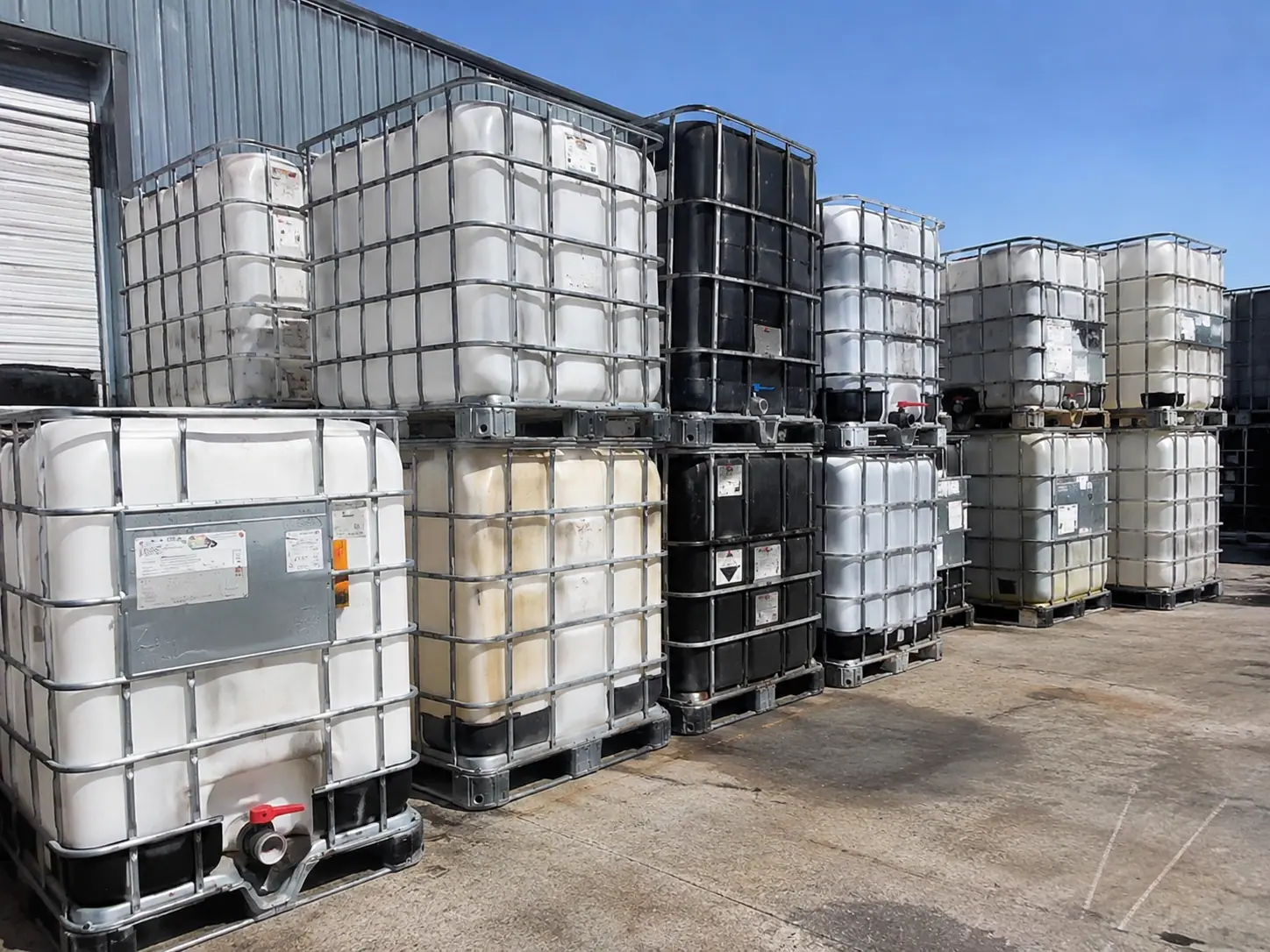
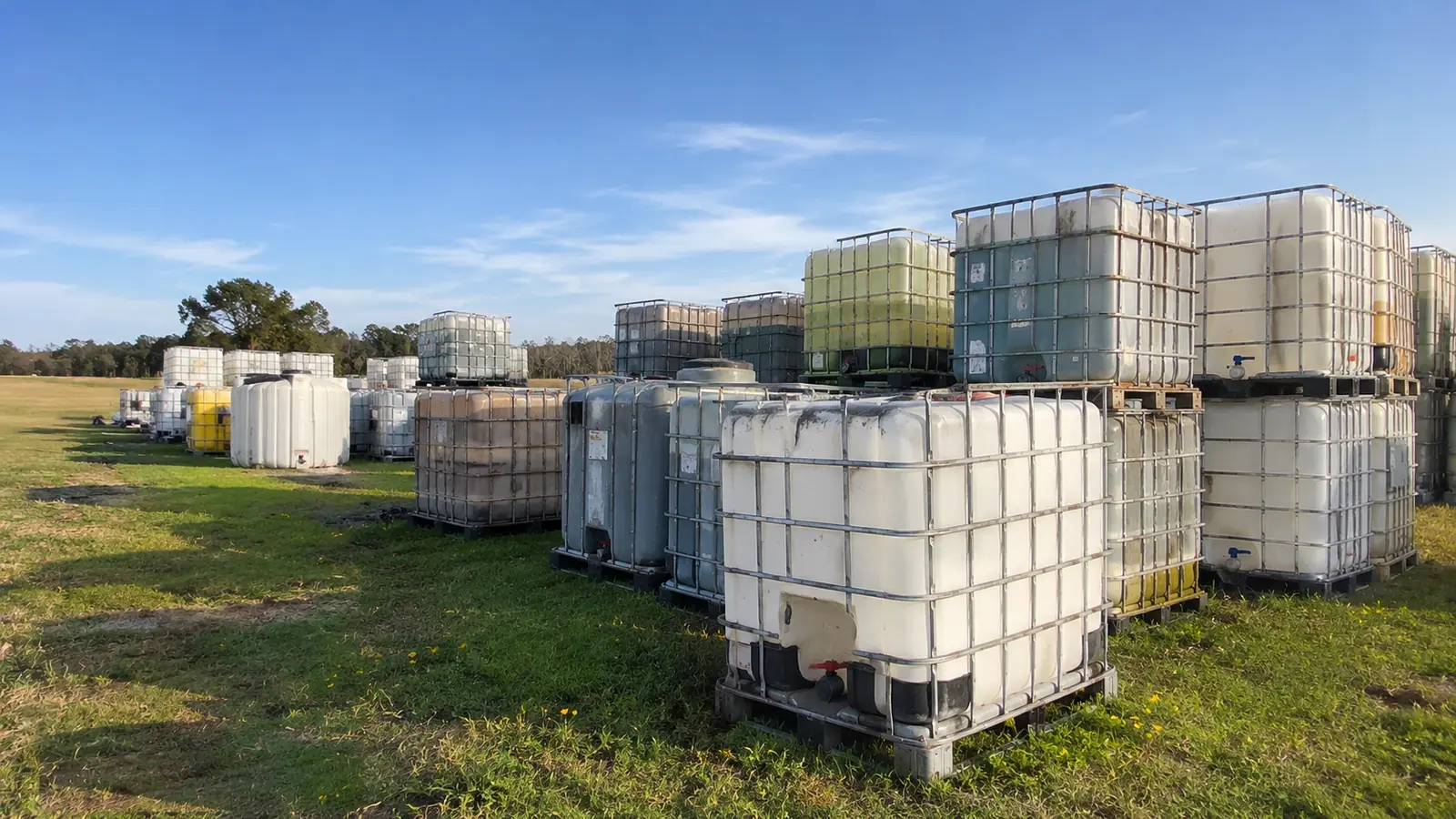
Customers frequently ask whether the per-unit price drops if they buy more. It does, a little. What they are really asking about — without knowing it — is freight, where the difference is not a little. It is a factor of eight.
Where the money actually goes
On a single reconditioned tote delivered three hundred miles, freight can comfortably exceed the price of the container. On forty-five units on a flatbed over the same distance, freight is a modest fraction of the unit cost. The container price barely moved; the delivered price halved.
This is because LTL freight charges are dominated by minimums, handling and the fact that a tote is a large, light, awkward object. You are not paying for weight. You are paying for the space and the handling.
The five tiers, and what changes at each
One to five units
Yard pickup is dramatically cheaper. Bring a trailer or a pickup with straps to 3201 N Shadeland Ave during yard hours and we will grade and load while you wait. If you cannot collect, LTL works but the freight will be a large share of the total and we will say so before you order.
Six to twenty-three units
LTL on a pallet-stacked flat. We strap and corner-protect. You need a dock or a forklift at your end, or a lift-gate truck, which is a surcharge. This is the tier where asking about a lift-gate before ordering saves the most grief.
Twenty-four to forty-four units
Partial truckload, and the sweet spot for cost per unit. Two stacks of twelve on a 48 foot flatbed is extremely efficient, and the per-unit freight drops sharply compared with LTL.
Forty-five to ninety units
Full truckload. Forty-five single-stacked on a flat, forty-eight in a 53 foot van, up to ninety double-stacked empty. We never double-stack loaded units. This is the lowest freight per unit available.
Multi-truck programmes
Scheduled releases against a blanket order with price held for the term. Common for seasonal ag-chem and de-icer customers, and it buys you both price stability and allocation when supply is tight.
Three ways to buy a truckload without needing a truckload
- Combine your own orders. If you will need forty units across the year, taking twenty-four in one delivery and storing them beats six deliveries of seven.
- Group with neighbours. Three breweries in one city, or two co-ops in one county, turn three LTL charges into one partial truckload. We will split the paperwork happily and we do this regularly.
- Ride on an existing lane. Ask us when we are next running to your region. Flexibility on date is frequently worth more than negotiating on price.
The return leg, which is free money
The single biggest lever on our freight cost is what the truck carries home. A delivery into your region paired with a buyback collection from the same region is two useful loads for one set of miles.
That is why collections above twenty units are usually free rather than a line item, and why our deadhead share sits at 13.6 per cent. If you have both a need and a yard full of empties, say so in the same email — it frequently changes the quote.
When small orders are still right
Plenty of our customers buy two units at a time and always will — breweries, small blenders, research labs, people building a rain kit. There is nothing wrong with it and there is no minimum order here. Just be aware that below about six units the freight is the decision, not the tote, and yard pickup is worth a drive if you are anywhere nearby.
Tell us the quantity, the ZIP and whether you have a dock, and we will quote the cheapest honest way to get it to you — including telling you to come and get it.
A worked comparison
Take a delivery of reconditioned 275 gallon units to a site 400 miles out, with a dock and a forklift. We will use relative numbers rather than prices, because prices move weekly.
- One unit, LTL. Freight is roughly the same as the container. Delivered cost per unit: about 2.0× the container price.
- Eight units, LTL. Freight spreads across the shipment. Delivered cost per unit: around 1.35×.
- Twenty-four units, partial truckload. Now the truck is the unit of cost rather than the handling. Delivered cost per unit: around 1.12×.
- Forty-five units, full truckload. Delivered cost per unit: around 1.06×.
- One unit, collected from our yard. Delivered cost per unit: 1.0×, plus your fuel.
The container price barely moved across that whole range. The delivered price halved. If you take one thing from this post, it is that you are negotiating the wrong line item when you push on unit price.
The storage trade
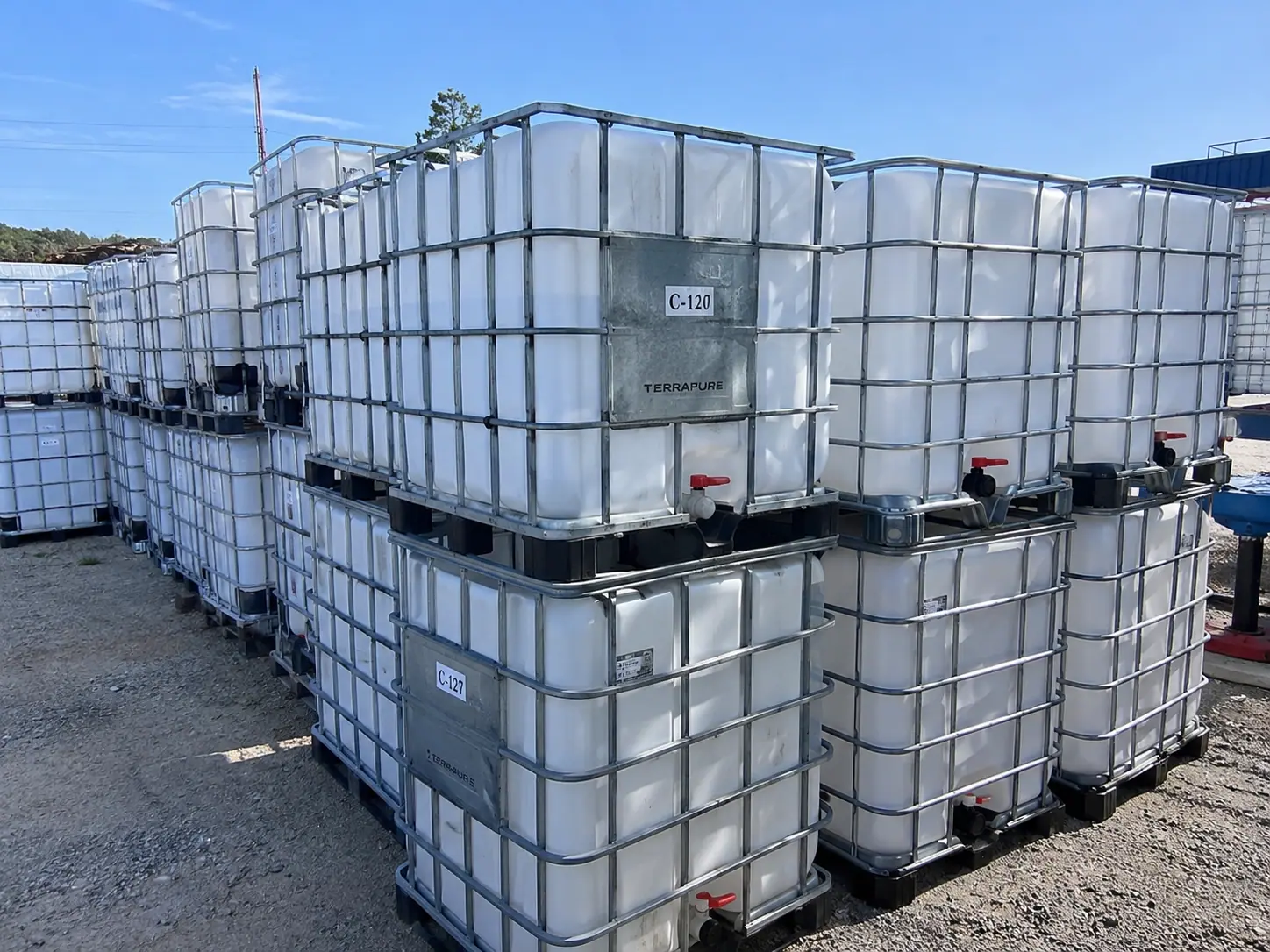
Buying a truckload to save freight only helps if you can store it. Forty-five units single-stacked occupy about 600 square feet of floor; stacked two high as empties, rather less.
The calculation worth doing is whether your annual consumption justifies holding stock. If you use forty units a year, one annual delivery beats six small ones on freight and costs you yard space for most of the year. If you use four hundred, you are buying truckloads anyway and the question does not arise.
Somewhere in the middle is a blanket order with scheduled releases: price and allocation agreed once, delivery when you want it. That is the structure most seasonal customers end up on — see booking in January.
Grouping, in practice
We split paperwork for grouped orders regularly and it is genuinely easy: one truck, one route, separate invoices and separate delivery receipts per site.
The constraint is geography. Three sites within an hour of each other works well. Three sites spread across a state does not, because each stop is a cost and at some point the stops exceed the LTL saving. If you are organising this, cluster tightly.
We see it most among breweries, which are frequently clustered in cities and frequently buying two to eight units each. Three breweries in one city is a textbook partial truckload.
Lift-gate deliveries, priced honestly
If you have no dock, a box truck with a lift-gate carries up to sixteen units. It costs more per unit than a flatbed and it is the only arrangement that reliably works.
What we would rather not do is quote a flatbed and discover the problem at your gate, which costs everybody a redelivery. Tell us the access situation in the form — dock, forklift, or neither — and the quote will be right the first time. More in the freight and delivery FAQ.
The return leg, quantified
Our deadhead share is 13.6 per cent, which means almost seven in eight of our truck miles carry something. That is the result of deliberately pairing deliveries with buyback collections, and it is the single biggest lever on our freight cost.
For you it means two things. Collections above twenty units are usually free rather than a line item. And if you have both a need and a yard full of empties, mentioning both in the same email frequently changes the quote — because a trip that does two useful things is priced differently from one that does one.