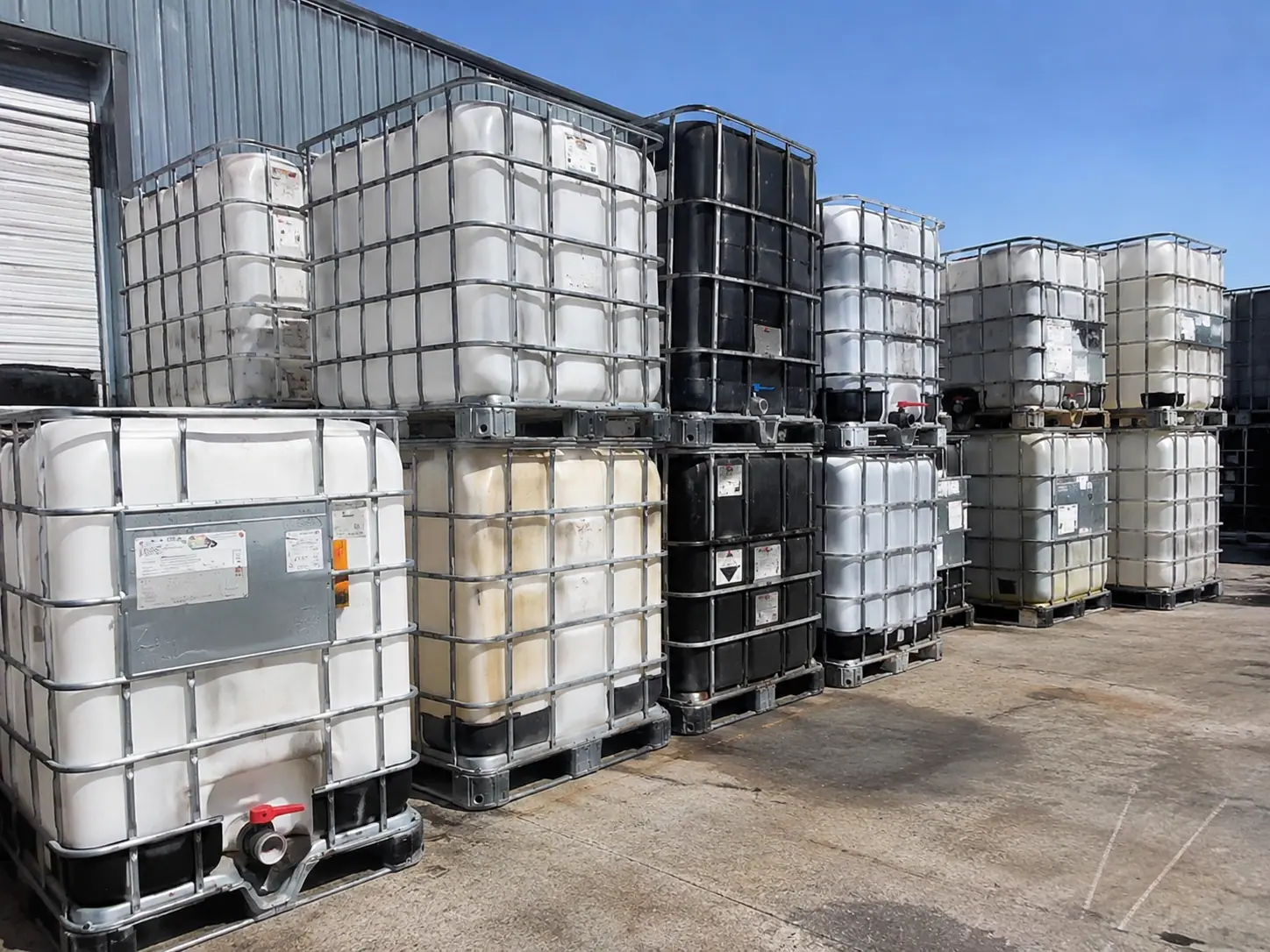
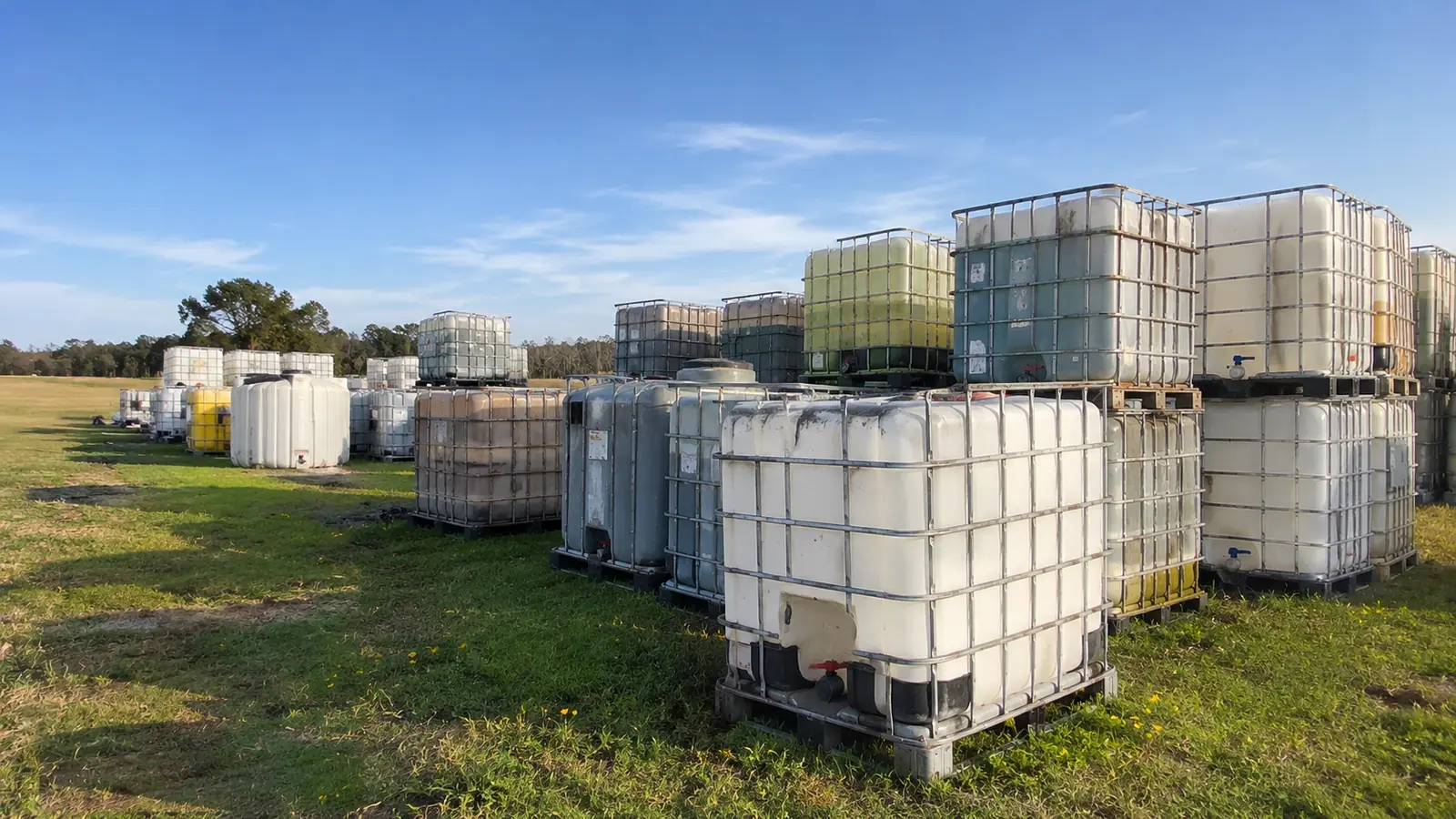
Buyers agonise over bottle clarity. They ask about cage squareness. They want to know the prior cargo in detail. Then they accept whatever base the tote happens to be standing on — and in our grading data the pallet is the single most common reason a returning unit needs work before it can be resold.
Four materials, four personalities
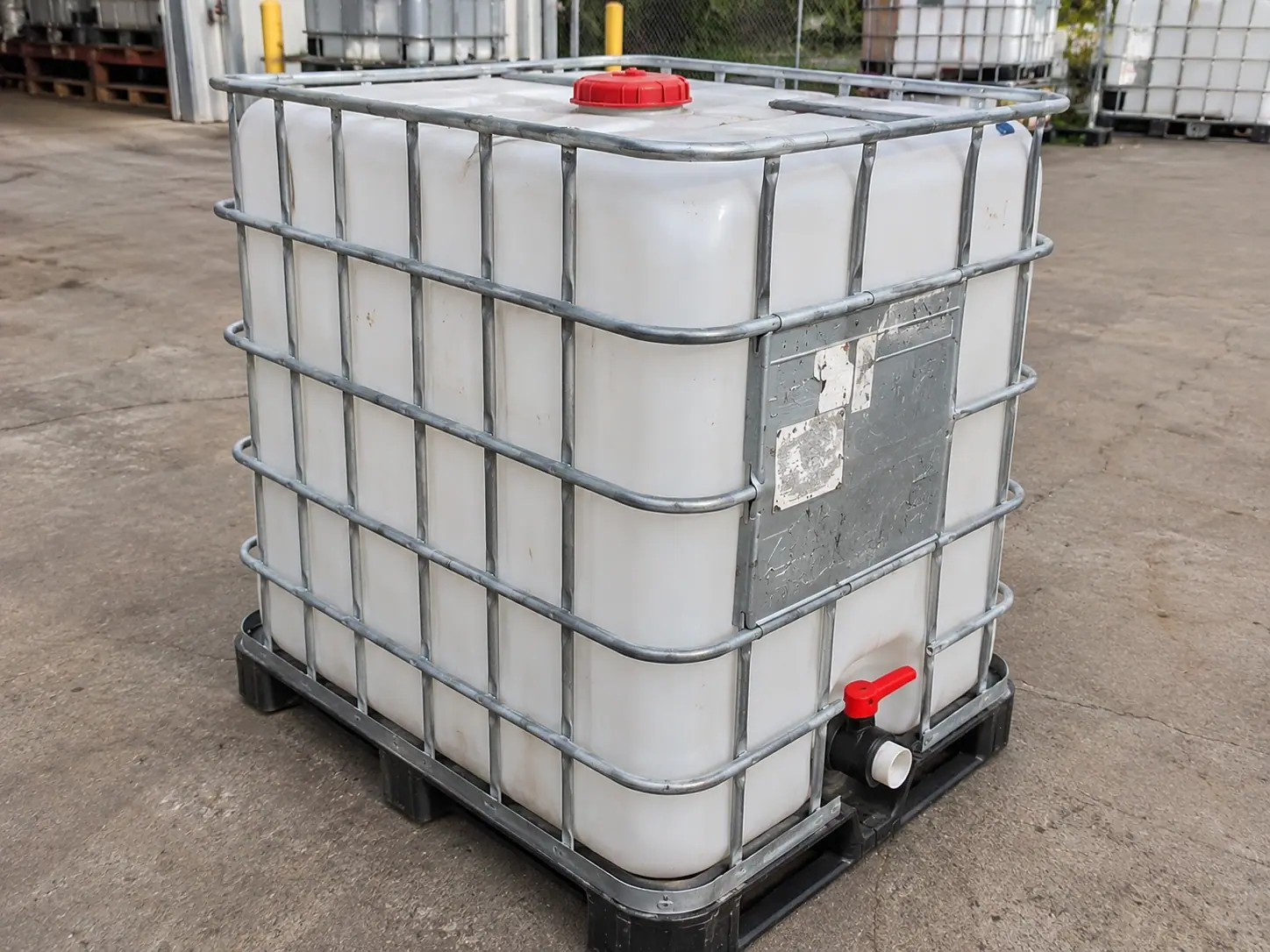
Plastic (HDPE)
Lightest at 25 to 30 pounds, washes perfectly, needs no treatment to cross a border, and is the default in food plants for exactly those reasons. Its weakness is cold-weather impact: a forklift tine into a plastic foot at fifteen degrees Fahrenheit will crack it, and a cracked foot fails inside a pocket rather than visibly.
Steel
Forty to forty-five pounds, effectively indestructible, and the only sensible choice if the tote will live outdoors or take heavy forklift traffic. It bends rather than breaks, which means it is repairable in a press. It is also the only base that gives you a proper grounding path, which matters for flammable cargo.
Composite
A steel frame with plastic decking, 32 to 38 pounds, and the configuration most new units ship with. It is the compromise, and it is a good one: close to steel for durability, close to plastic for washability. Its one failure mode is delamination at the edge where water gets in, and that is not repairable.
Wood
Cheapest, and cheapest for reasons that show up later. It absorbs whatever it stands in, splinters, rots, harbours pests, cannot be properly sanitised, and needs an ISPM 15 heat-treatment stamp on two opposing sides to cross a border. We still stock it, because for an indoor unit on a smooth floor it is perfectly adequate. But we will ask twice.
How to choose in one question
Not “what is in the tote” — the cargo almost never touches the pallet. The question is where will this tote live?
- Food or pharma plant: plastic. Wood is commonly prohibited outright by hygiene audits.
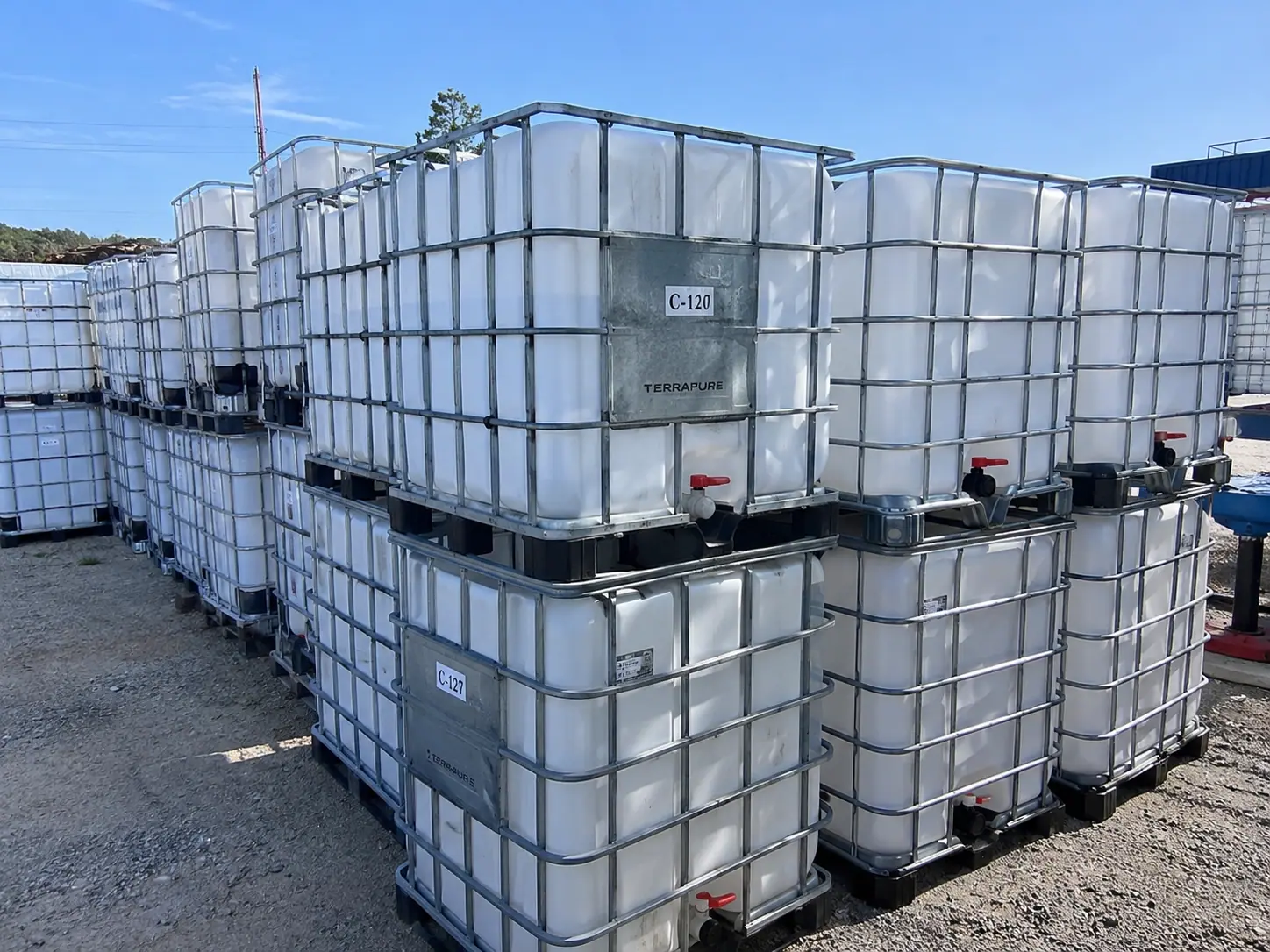
- Outdoor yard: steel or composite. Wood rots, plastic embrittles in UV.
- Heavy forklift traffic: steel. It tolerates pocket abuse nothing else survives.
- Export shipment: plastic or composite, and the ISPM 15 question disappears.
- Flammable cargo: steel, with a bonding lug. Plastic cannot give you a grounding path.
- Returnable or pooled fleet: composite. It survives repeated wash cycles better than anything else at the weight.
- Indoor, light use, tight budget: wood is genuinely fine.
What we see fail, and whether we can fix it
Cracked plastic feet are the most common single fault, and they are a straightforward foot replacement. Bent steel skids go in the press. Split wooden deck boards are sometimes repairable and usually not worth it — we swap the unit onto composite instead. Composite delamination is terminal. Corrosion at a steel weld, usually where caustic has pooled, is assessed case by case: grind and re-coat if it is shallow, scrap the pallet if it is not.
In every one of those cases the tote itself is fine. That is the point of this post. A pallet is cheap to replace and expensive to have fail, and nobody has ever regretted specifying steel on a unit that was going to live outdoors.
The height nobody accounts for
Pallet type changes overall height by an inch or two. That sounds trivial until you are stacking two 330 gallon units under a sprinkler head with eighteen inches of required clearance, at which point one inch is the whole margin. If you are working near a clearance limit, ask us for the exact height of the configuration you are ordering rather than the nominal figure from the dimensions tables.
A note on mixed fleets
If you run a pool of totes that come back to you, standardise the base. Mixed pallet types in one fleet means mixed heights, mixed stacking behaviour and a forklift operator who has to think about which unit they are picking. Standardising costs a little once and saves a lot continuously.
Full comparison tables, footprints, pocket dimensions and export notes are in chapter three of the size guide.
What the grading data actually says
Across the units we take in, the pallet is the component most likely to need work before a tote can be resold. Not the bottle, not the cage — the base. And the split by material is not subtle: wooden pallets fail at several times the rate of composite, and plastic fails disproportionately in winter-handled fleets.
That matters commercially because the pallet is also the cheapest component to replace. A tote that arrives with a cracked foot is a twenty-minute fix and sells as a Grade B. A tote that arrives with a rotted wooden base needs a new pallet, and if the rot has been wicking moisture into the cage welds for two seasons it may need more than that.
Pocket dimensions, which nobody checks
All standard IBC pallets are four-way entry, but pocket height and width vary between designs — roughly three and a half to four inches high, nine to eleven inches wide. If you run older or non-standard forklift tines, measure once against the configuration you are buying.
The specific failure is a tine that is marginally too thick entering a marginally short pocket: the operator forces it, the pocket deforms, and from then on that unit is awkward to pick for the rest of its life. It is also a safety issue, because a partially engaged tine is how totes get dropped.
The export question in one paragraph
Wooden packaging crossing an international border needs heat treatment under ISPM 15, stamped legibly on two opposing sides. Plastic, steel and composite need nothing. If there is any chance a unit will be exported, specifying a non-wood base removes an entire category of customs problem for a modest price difference.
We have seen shipments held over an illegible stamp. Nobody has ever been held over a composite pallet.
Hygiene audits
Food and pharmaceutical hygiene audits frequently prohibit wood outright in production areas, on the straightforward grounds that it is absorbent and cannot be properly sanitised. If your tote will enter a food plant, plastic is effectively the only defensible answer and it will save you an argument with an auditor who has already made up their mind.
The same logic applies to our own line: plastic pallets wash perfectly, composite washes well, wood does not wash at all and goes through the chipper or the repair bench.
A note on static and grounding
If your cargo is a low-conductivity flammable liquid, you need a bonding path, and only a steel base gives you one. A plastic pallet is an insulator sitting under an insulating bottle, which is precisely the configuration you do not want. That said, if you are in that situation at all, the honest answer is usually that a composite IBC is the wrong container — see static electricity and plastic totes.
The practical recommendation
If you are buying for a mixed fleet and want one answer: composite. It is close to steel for durability, close to plastic for washability, needs no export treatment, survives repeated wash cycles, and is what most new units ship with anyway so your fleet stays consistent.
Specify steel if the units live outdoors or take hard forklift traffic. Specify plastic if they enter a food plant. Specify wood only if the unit will live indoors on a smooth floor and the price difference genuinely matters to you — in which case it is a perfectly rational choice and we will supply it without further comment.
All the footprints, weights and pocket dimensions are in chapter three of the size guide, and replacement feet, skids and corner protectors are on the accessories page.